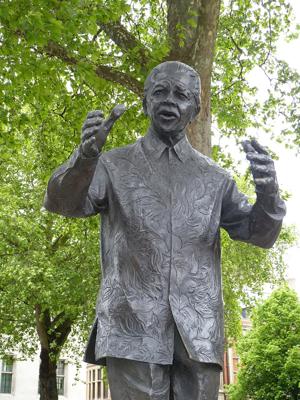
On December 1, 2013, the world mourned the passing of Nelson Mandela, a pivotal figure in the fight against apartheid in South Africa. His funeral drew significant attention, with leaders such as former United States Presidents Barack Obama, George W. Bush, Bill Clinton, and Jimmy Carter in attendance. Mandela’s legacy as an advocate for peace and reconciliation continues to resonate globally.
Mandela’s journey began as a young Black lawyer in South Africa, where he emerged as a leader in the struggle against the oppressive apartheid regime. This system enforced racial discrimination against Black and Asian populations, leading to widespread injustice. His activism led to a long imprisonment at Robben Island, where he spent 27 years as a political prisoner. Despite this, Mandela’s spirit remained unbroken, and he later adopted the motto to either “live for freedom or die for it.”
Following his release in 1990, Mandela played a crucial role in dismantling apartheid and was elected as the first Black president of South Africa in 1994. His ascent from rural obscurity to the highest office in the nation is remarkable, particularly considering his long imprisonment as an enemy of the state. Yet, what sets Mandela apart is not merely his rise to power but his approach once he attained it. He chose forgiveness over vengeance, emphasizing reconciliation and unity in a deeply divided nation.
In his autobiography, “Long Walk to Freedom,” Mandela reflects on his early influences, particularly the Methodist Church, which his mother attended. He recalls beginning his education at a Methodist school run by missionaries and later becoming active in the Students Christian Association, where he taught Bible classes. These experiences likely played a role in shaping his values and commitment to justice.
Nevertheless, the historical record of Christian influence in South Africa is complex. While Mandela acknowledged the church’s positive contributions, he also recognized its complicity in supporting apartheid. He noted that the Dutch Reformed Church provided a religious justification for the policies of racial segregation. This duality illustrates the challenges faced by those who strive to uphold moral principles in the face of societal prejudice.
Mandela’s life underscores a critical message: the extent to which individuals embody the teachings of Jesus can significantly impact society. He consistently advocated for forgiveness, love, and compassion, principles he regarded as essential for healing a fractured nation. In a speech at an Easter conference in 1994, Mandela declared, “… the Good News borne by our risen Messiah who chose not one race, who chose not one country, who chose not one language, who chose not one tribe, who chose all of humankind!”
Today, Mandela serves as a powerful reminder that individual actions can lead to monumental change. His commitment to practicing forgiveness and reconciliation in his own life encourages a broader movement toward acceptance and respect within communities worldwide.
In every aspect of life—from families to workplaces and educational institutions—individuals have the capacity to enact these transformative values. As Mandela demonstrated, the willingness to embrace the radical teachings of compassion can inspire generations and foster a more inclusive society.