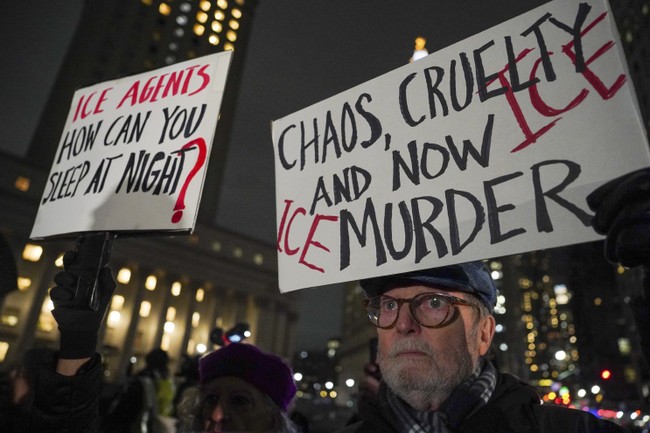
Protesters gathered in New York City on March 6, 2024, to express their outrage following an incident in Minneapolis where an Immigration and Customs Enforcement (ICE) agent shot a female driver in self-defense. The demonstration, which organizers described as peaceful, featured chants that included calls for violence against key political figures, specifically targeting Homeland Security Secretary Kristi Noem and ICE agents.
As the march progressed, videos obtained from the scene depicted demonstrators shouting phrases such as “Kristi Noem will hang” and “Save a life, kill an ICE agent.” One woman attempted to counter the rhetoric, stating, “two wrongs don’t make a right,” but her voice was quickly drowned out by the crowd. The protest also included derogatory chants aimed at political commentator Charlie Kirk, illustrating the charged atmosphere.
Some commentators expressed concern over the aggressive tone of the protest, questioning whether newly inaugurated New York City Mayor Zohran Mamdani would address the violent language used by demonstrators. Critics suggested that Mamdani might not condemn such rhetoric, given his political affiliations and the support he may derive from the protesters.
The situation has sparked a debate about the rising tensions surrounding immigration policies and law enforcement practices in the United States. Posters at the protest contained messages asserting that “life and liberty are not possible” in the current climate, reflecting a belief among some that dialogue with those advocating for political violence is futile.
Observers noted that the calls for violence against public officials signal increasingly polarized views within segments of the population regarding law enforcement and governance. The protesters’ demands highlight a growing frustration with perceived injustices related to immigration enforcement and broader societal issues.
Many expressed concern over the implications of such protests, suggesting that the acceptance of political violence could lead to a breakdown of civil discourse. As cities across the United States grapple with these issues, it remains to be seen how political leaders and communities will respond to the escalating tensions and the calls for violence.
The events in New York City serve as a stark reminder of the charged political climate and the deep divisions that exist within American society, particularly concerning immigration policy and law enforcement. As protests like this continue, the need for constructive dialogue becomes increasingly urgent to foster understanding and address the underlying issues that fuel such unrest.