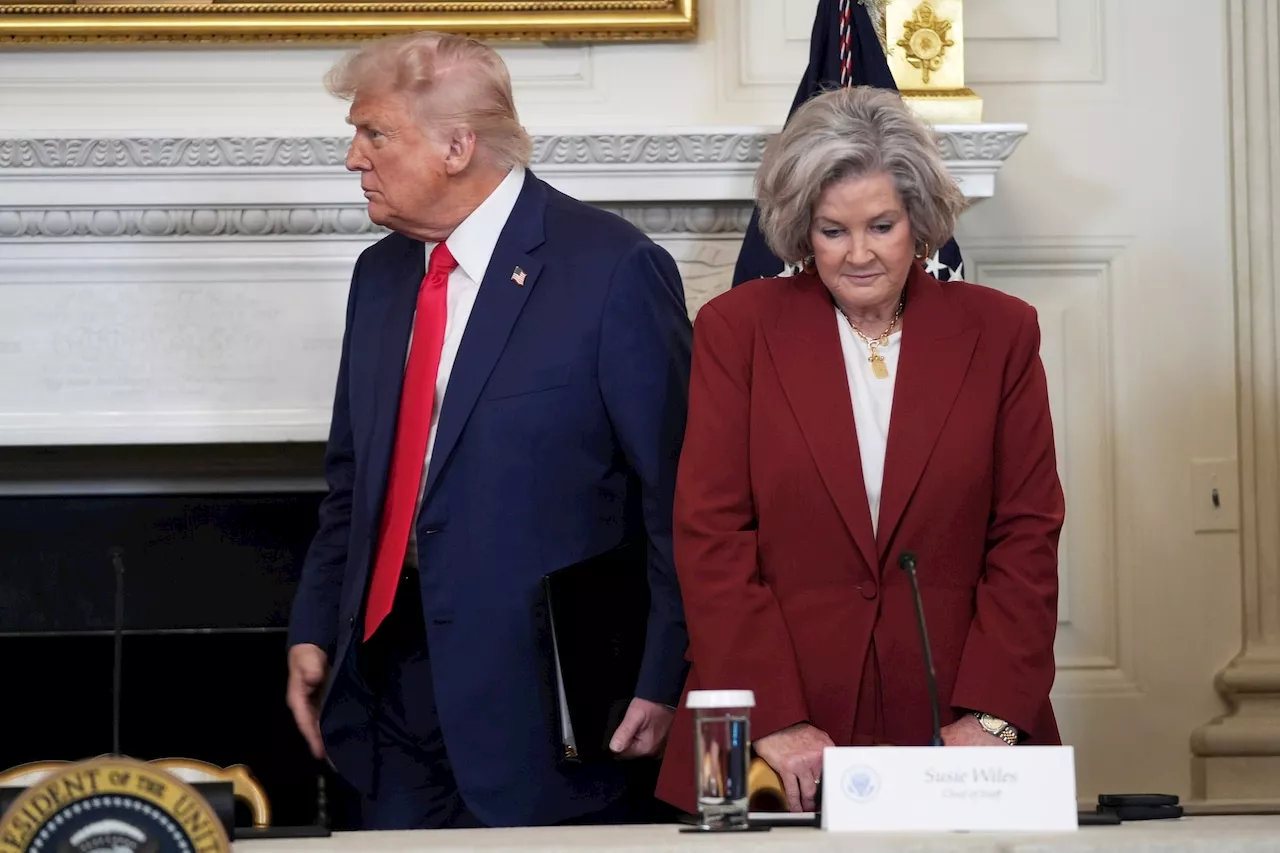
The remarks made by the President’s chief of staff, Susie Wiles, have ignited discussions about the limits of presidential authority in the United States. In an interview with Vanity Fair, Wiles stated that her boss governs with “a view that there’s nothing he can’t do. Nothing, zero, nothing.” This assertion raises questions about whether the President perceives himself as extraordinarily capable or as someone who believes he possesses unchecked power.
Wiles’ comments come against a backdrop of controversial actions and statements from the President, particularly regarding constitutional boundaries. The President, who assumed office as the 47th president, has previously indicated his intention to govern without restraint, claiming in a cabinet meeting captured on video, “I can do whatever I wanna do. I’m the President.” Such declarations have prompted significant concern among legal experts and political analysts regarding the potential implications for democratic governance.
Concerns Over Presidential Authority
The President’s self-assuredness has been matched by a series of actions that many interpret as authoritarian. Critics argue that his approach undermines the foundational principles of the U.S. Constitution, particularly regarding the separation of powers and checks and balances. The President’s management style, characterized by frequent dismissals of personnel, further fuels the perception that he prioritizes personal authority over collaborative governance.
In addition to Wiles’ statements, the President’s actions since taking office have drawn scrutiny. His claims of unlimited power resonate with those who fear that he may disregard constitutional limits in pursuit of his agenda. The juxtaposition of his self-assuredness with his limited achievements, particularly in areas such as international diplomacy, raises questions about his effectiveness as a leader.
While Wiles may view her boss’s confidence as an asset, it could also be interpreted as a troubling sign of potential overreach. The implications of such a governing philosophy extend beyond political rhetoric; they could affect the very fabric of American democracy.
Public Reaction and Implications
Public responses to the President’s statements and Wiles’ endorsement vary widely. Some supporters view his assertiveness as necessary for decisive leadership, particularly in times of national uncertainty. Conversely, critics express grave concern about the implications of a president who openly rejects the limits of his office.
As political discourse continues to evolve, the balance between presidential confidence and constitutional constraints will remain a focal point of debate. Observers will closely monitor how these dynamics unfold in the coming months, especially as the President prepares for future policy initiatives.
The conversation about the President’s self-perception and governance style underscores a pivotal moment in U.S. political history. The extent to which he can navigate the delicate interplay between ambition and accountability will likely define his legacy.