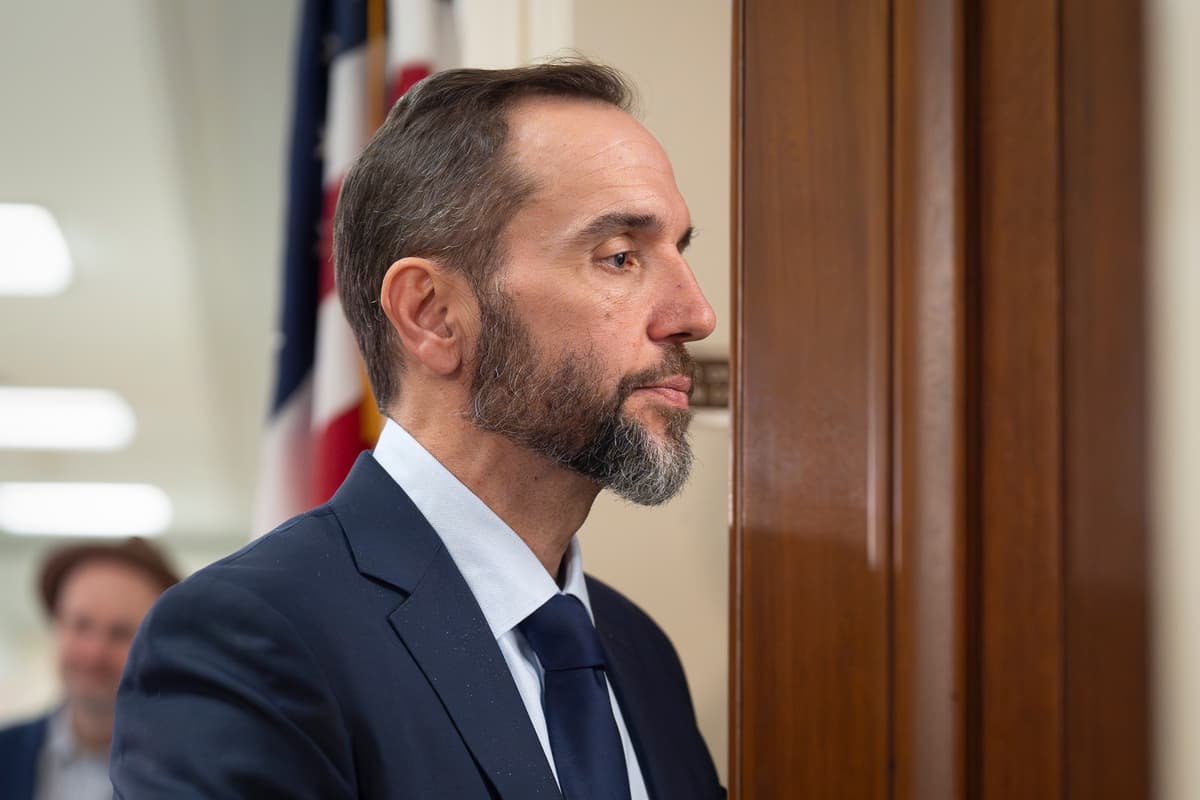
Special Counsel Jack Smith faced intensified scrutiny following the release of internal emails from the FBI and Department of Justice (DOJ) that cast doubt on the legality of the search conducted at Mar-a-Lago. These documents were provided to Congress just hours before Smith’s testimony before the House Judiciary Committee on October 25, 2023. The emails, described by some as a “bombshell,” reveal significant dissent within the FBI regarding the decision to execute a search warrant secured by Smith.
The emails indicate disagreements among FBI officials over whether the legal standard of “probable cause” was met to justify the search. One email highlighted that “we are not in agreement for PC [probable cause] on the SW [search warrant],” while another suggested “alternative, less intrusive and likelier, quicker options for resolution.” Ultimately, the warrant was authorized by Attorney General Merrick Garland and approved by magistrate judge Bruce Reinhart.
The search, which included areas such as First Lady Melania Trump’s bedroom and the private quarters of Donald Trump’s son Barron Trump, has drawn considerable criticism from congressional Republicans. They argue that the scope of the search was excessive. One email noted, “If a primary goal of this investigation is to identify and recover classified records quickly… the six weeks spent fixated on probable cause for a search warrant have been counterproductive.”
As Smith’s testimony unfolded, he defended his prosecution strategy regarding Trump’s alleged interference in the 2020 presidential election. He asserted that he had gathered evidence sufficient to convict Trump of criminal election interference “beyond a reasonable doubt.” In response to suggestions that his actions were politically motivated, Smith dismissed such claims as “ludicrous.”
Smith emphasized, “If asked whether to prosecute a former president based on the same facts today, I would do so regardless of whether the president was a Republican or Democrat.” His appointment as special counsel came a mere two days after Trump announced his intention to run for president again.
In addition to the Mar-a-Lago investigation, a separate inquiry known as “Operation Arctic Frost” is emerging as another contentious issue. This investigation involves the surveillance of telephone metadata from eight senators and one congressman. Smith not only obtained warrants for this surveillance but also secured “do not disclose” orders that kept the lawmakers unaware of the monitoring.
The existence of this surveillance program was brought to light by Senator Charles Grassley, who released emails indicating that the DOJ had concerns regarding potential “litigation risk” due to the absolute immunity lawmakers have for legislative activities.
Congress is set to hold hearings on these matters, which may require further testimony from Smith in the new year. Lawmakers’ ability to probe the documents related to the Mar-a-Lago case remains limited, as Smith’s final report has yet to be released. That report is currently sealed by order of Judge Aileen Cannon, who determined that its release could infringe upon the due process rights of Trump and his two co-defendants, Waltine Nauta and Carlos De Oliveira.
The Knight First Amendment Institute at Columbia University and American Oversight have been advocating for the release of Smith’s report, arguing that the rationale for its secrecy has expired. The 11th United States Appeals Circuit, which oversees Cannon’s decisions, has criticized her for “undue delay” and has ordered her to respond to the release requests by early January.
As the political landscape continues to evolve, the implications of these investigations and the actions of Smith are likely to remain at the forefront of national discourse.