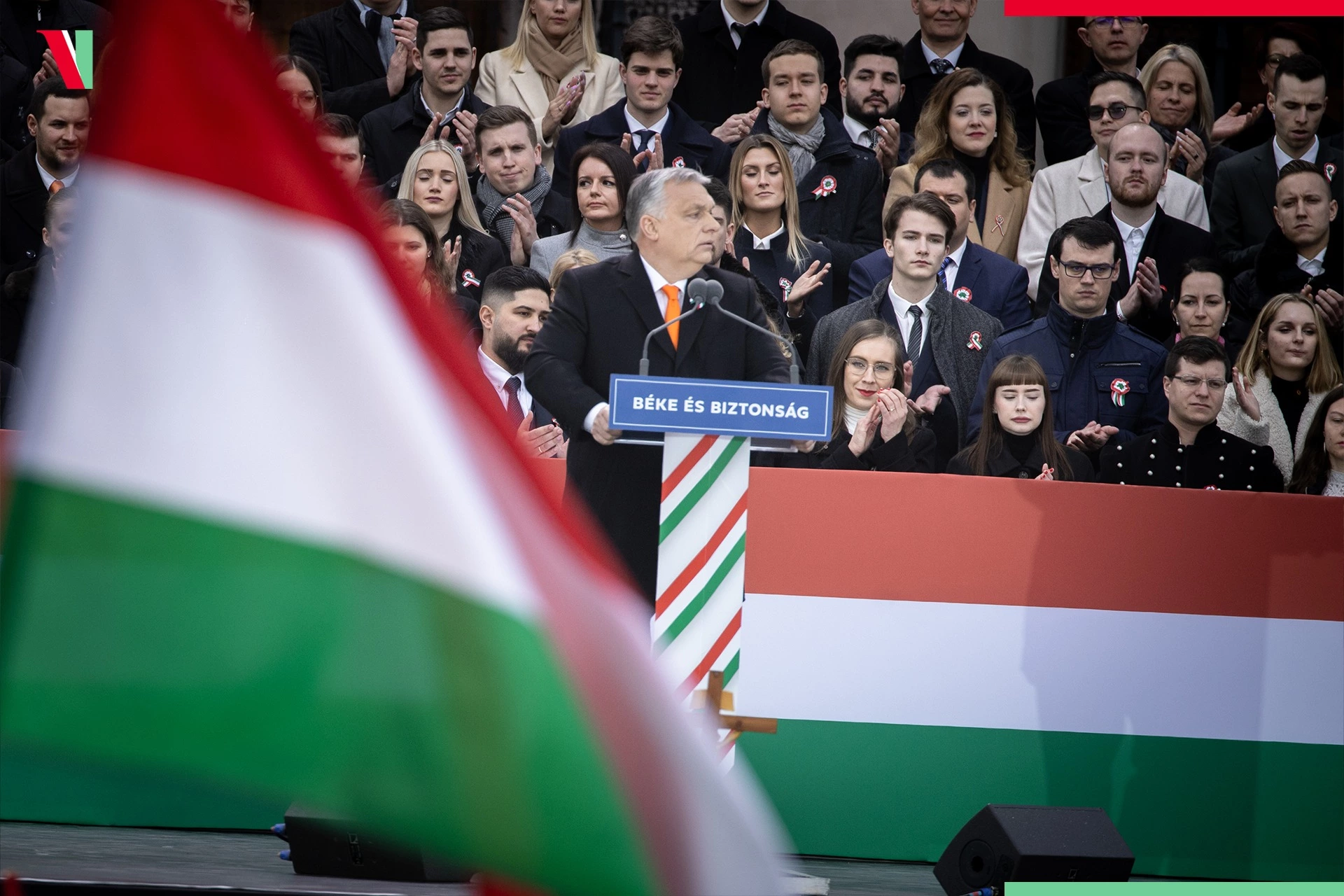
Pro-government groups in Hungary are gearing up for a significant event as the Civil Összefogás Fórum – Civil Összefogás Közhasznú Alapítvány (COF-COKA) announced the return of its “Peace March” to Budapest on March 15, 2024. This date coincides with Hungary’s national holiday, which commemorates the 1848–49 Revolution and War of Independence. The march aims to rally support for Hungary’s sovereignty, peace, and national unity.
At a recent press conference, COF-COKA President László Csizmadia stated that the event has already been registered with local authorities. He emphasized the importance of the march in demonstrating solidarity with Poland and reinforcing the historical friendship between Hungarian and Polish civil communities. Csizmadia called upon “peace-loving” Hungarians to attend in large numbers, particularly in light of the upcoming parliamentary elections. He expressed the goal of making this year’s Peace March the largest to date, sending a powerful message to Europe that Hungary is “on the right path.”
Political Context and Foreign Policy Criticism
A significant portion of the announcement focused on the current political climate and foreign policy concerns. Csizmadia criticized the European Union for its handling of the ongoing war in Ukraine, accusing Brussels of exacerbating the situation through military support and sanctions rather than pursuing diplomatic solutions. He claimed that EU leaders have compromised their negotiating power and are steering Europe toward increased instability.
Further criticism was directed at the leadership of the North Atlantic Treaty Organisation (NATO). Csizmadia asserted that Secretary General Mark Rutte is undermining the alliance’s strength and endorsing plans for a more centralized European military structure. This perspective reflects growing unrest among some factions regarding international military dynamics and European cooperation.
Concerns Over Election Monitoring
The press conference also addressed concerns regarding international oversight of Hungary’s elections. Representatives from COF-COKA expressed their dissatisfaction with a recent report from the Organisation for Security and Co-operation in Europe (OSCE), labelling it politically biased. They criticized the report for relying too heavily on opposition figures and what they termed “foreign-funded” non-governmental organizations.
Despite these criticisms, COF-COKA reaffirmed its commitment to fair and lawful elections, emphasizing that public trust in the democratic process hinges on impartial and professional monitoring. The organization appears to be positioning itself as a defender of Hungary’s electoral integrity while simultaneously rallying support for the current government.
As the Peace March approaches, it remains to be seen how many supporters will respond to Csizmadia’s call. The event highlights the ongoing political dynamics within Hungary, particularly as the nation prepares for crucial parliamentary elections later this year.