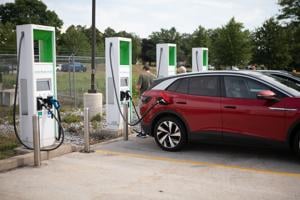
Pennsylvania Governor Josh Shapiro has taken a decisive step against the Trump Administration by joining a multi-state lawsuit that challenges the federal government’s decision to withhold over $2 billion in funding designated for electric vehicle (EV) initiatives. The lawsuit, filed this week, aims to contest what the states consider an unlawful freeze on funds that were approved by Congress and allocated for the development of sustainable transportation.
The coalition, which includes several states, argues that the Trump Administration’s actions violate established legal agreements. According to the lawsuit, the funds are essential for promoting clean energy and reducing carbon emissions, aligning with both state and federal goals to transition toward greener technologies. The lawsuit specifically targets the U.S. Department of Energy, which oversees the distribution of these funds.
Shapiro emphasized the significance of this financial support, stating, “Withholding these funds undermines our efforts to combat climate change and invest in the future of our communities.” The Governor highlighted that the funding is not merely a financial issue but a crucial step towards ensuring Pennsylvania remains competitive in the growing EV market.
Impact on Electric Vehicle Development
The implications of this funding freeze extend beyond state borders, affecting the broader EV market across the United States. The multi-state coalition contends that the funding is vital for infrastructure improvements, including the establishment of charging stations and incentives for consumers to purchase electric vehicles. These initiatives are seen as essential in reaching national carbon reduction targets.
In 2023, the Biden Administration set ambitious goals to increase EV adoption, aiming for 50% of all new vehicle sales to be electric by 2030. The frozen funds could hinder these federal targets, as states rely on this financial support to implement necessary programs and infrastructure.
The lawsuit is not just a legal challenge; it reflects a growing tension between state governments and federal leadership regarding climate policies. Shapiro’s actions resonate within a broader movement among governors and state leaders to assert their authority in environmental matters. Several other states have already voiced their opposition to the funding freeze, indicating widespread concern over the potential setbacks in climate action.
Legal and Political Ramifications
As this lawsuit unfolds, it could have significant political consequences. If successful, it may not only restore the funding but also set a precedent for how federal and state governments collaborate on environmental initiatives. Legal experts note that the case will likely hinge on interpretations of executive authority and congressional appropriations.
The outcome could influence future funding decisions and the federal government’s approach to environmental policy. Additionally, it may galvanize other states to pursue similar legal actions if the courts rule in favor of the plaintiffs.
This legal challenge highlights the ongoing debate surrounding climate policy in the United States. As various states push for aggressive action on climate change, the resolution of this case may play a critical role in shaping the future of EV funding and the broader transition to sustainable energy sources.
In conclusion, Josh Shapiro‘s participation in this lawsuit underscores the importance of state-level advocacy in the face of federal policy changes. The outcome may have lasting implications for both Pennsylvania and the national push towards electric vehicles, impacting how states can effectively mobilize resources to combat climate change.