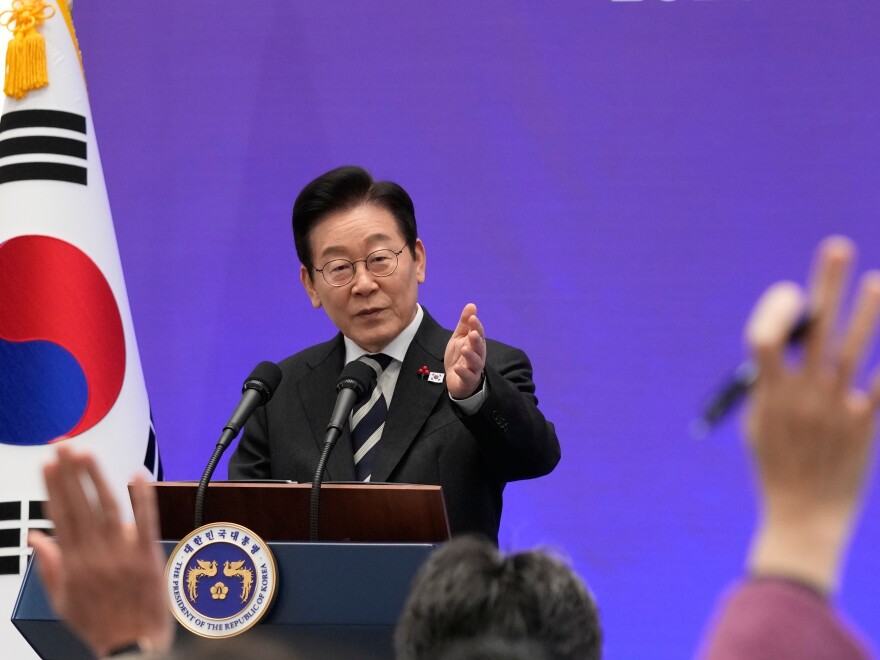
One year after a failed attempt to impose martial law shook South Korea, President Lee Jae Myung commended the resilience of the nation’s democracy at a press conference on Wednesday. The turmoil began when then-President Yoon Suk Yeol declared martial law, accusing the opposition of “legislative dictatorship.” This declaration sparked widespread protests, leading to thousands gathering around the National Assembly to defend democratic governance. Ultimately, the National Assembly successfully voted down the martial law, forcing Yoon to lift it within six hours.
During the press conference, Lee highlighted the pivotal role ordinary citizens played in safeguarding democracy, stating they had “astonished the world” by restoring the democratic government from what he termed a self-coup. This term describes a situation where an elected leader attempts to dismantle checks and balances to consolidate power.
Legal Consequences for Former Leadership
The fallout from the martial law crisis has led to significant legal ramifications for Yoon and several of his subordinates. Following the declaration, law enforcement quickly initiated investigations into Yoon for charges of insurrection. In a historic move, he became the first sitting president in South Korea to be arrested in January 2025. On December 14, 2024, the National Assembly impeached Yoon, with a coalition of lawmakers from both his party and the opposition contributing to the vote.
The Constitutional Court subsequently upheld the impeachment in April 2025. Yoon now faces multiple indictments, including charges of masterminding an insurrection and abuse of power. Allegations have emerged that he orchestrated military provocations against North Korea to justify his martial law declaration, raising serious concerns about national security.
In addition to Yoon, numerous military leaders and top officials, including the defense and interior ministers, are under scrutiny. The trial of Prime Minister Han Duck-soo is progressing rapidly, with a verdict anticipated by January 21, 2026.
Institutional Reforms and Political Landscape Changes
In response to the crisis, the National Assembly has implemented structural reforms to prevent a recurrence of such a situation. In July, new regulations were introduced, establishing stricter conditions under which martial law can be declared. These reforms prohibit military and police personnel from entering the parliamentary compound without consent from the Speaker, even during martial law.
Additionally, proposed legislation aims to empower public servants, including military members, to disobey unlawful orders from superiors. Ahn Gyu-back, the first civilian defense minister in 64 years, has initiated a comprehensive internal audit of military units involved in the martial law attempt and reshuffled key military leadership.
President Lee has also suggested constitutional amendments to change the presidential term from a single five-year term to two four-year terms, introducing mid-term elections to enhance accountability.
The crisis has intensified political polarization within South Korea. A recent poll indicates that 77% of respondents believe political division has worsened since the martial law incident. The People Power Party (PPP), now in opposition, faces internal conflict over whether to issue an apology for Yoon’s actions. As local elections approach, the party must decide between appealing to centrist voters or maintaining support from its conservative base.
During a press conference, less than a quarter of PPP lawmakers chose to apologize, reflecting this ongoing dilemma.
President Lee emphasized the need for accountability while balancing reconciliation, stating, “The intention is not to mercilessly punish the perpetrators… but we can’t sweep them under the rug.” He advocates for national unity without compromising the accountability process.
Global Implications of the Crisis
The martial law crisis has had significant repercussions for South Korea’s international standing. The country, once viewed as a model of democratic progress following its transition from military rule in the 1980s, faced embarrassment on the global stage. The Biden administration, which had invested heavily in Yoon as a leader of a “model democracy,” found its reputation challenged by allegations of provocation against North Korea.
As tensions continue, these developments threaten to undermine the longstanding U.S.-South Korea alliance, raising concerns about the safety of U.S. troops stationed in South Korea.
During the recent press conference, President Lee expressed hope that South Korea’s experience would serve as a “historic example for the restoration of democracy” worldwide. The success of this aspiration will largely hinge on the country’s ability to navigate its political landscape and prevent further democratic backsliding.