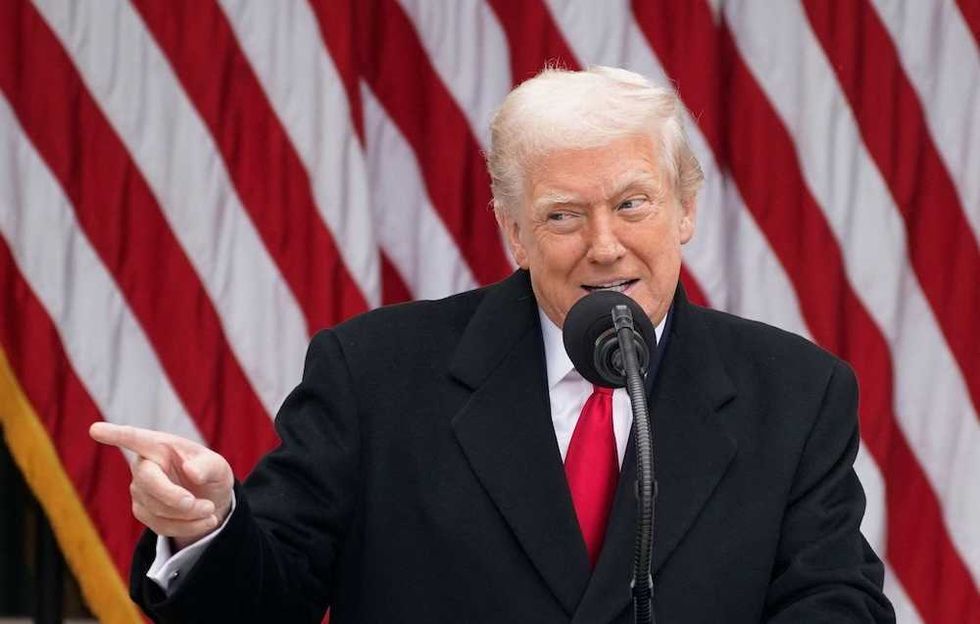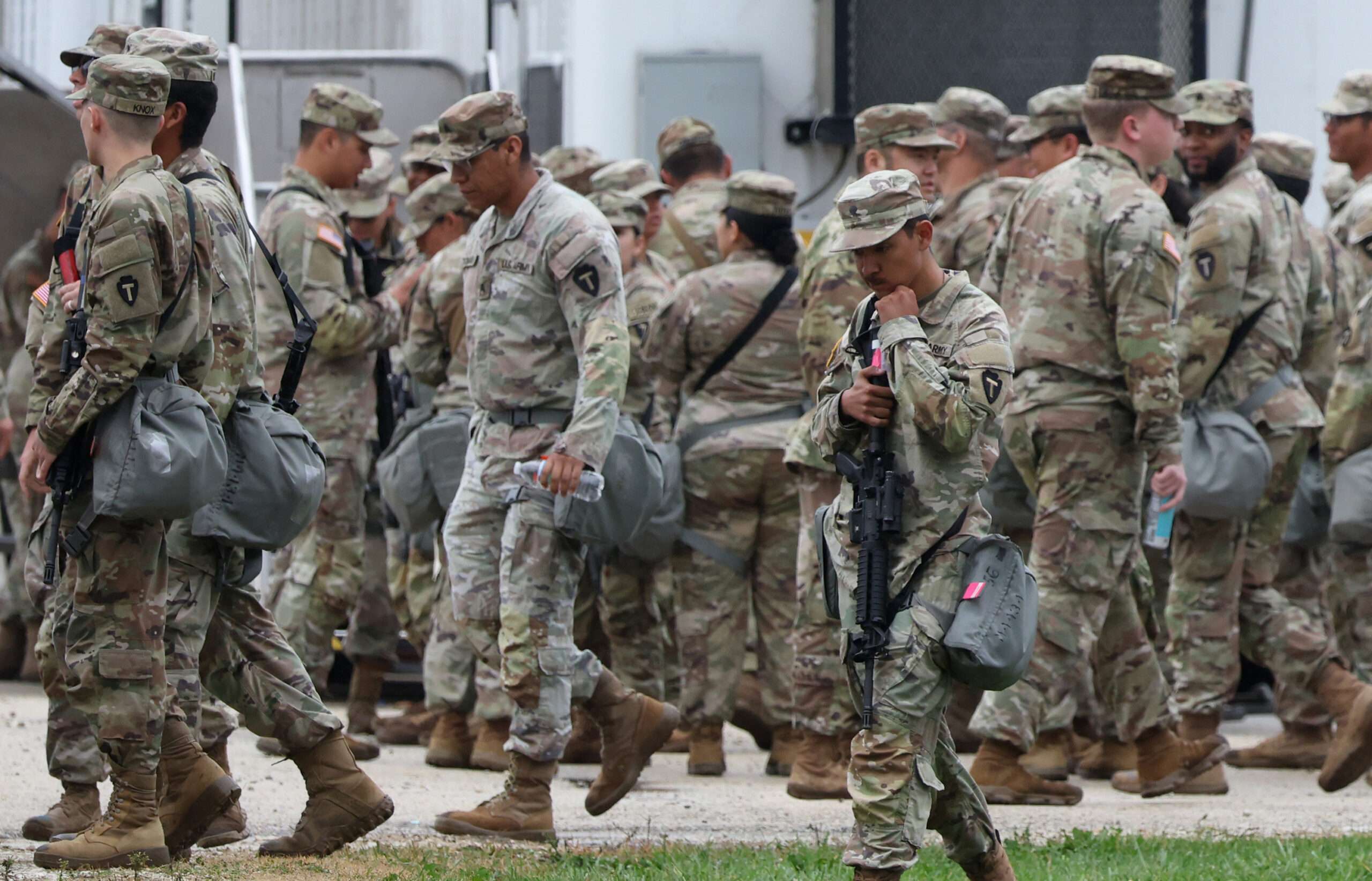
On Monday, the Supreme Court ruled against former President Donald Trump in a significant case concerning his attempt to deploy the National Guard for domestic law enforcement in Illinois. The ruling, delivered in the case of Trump v. Illinois, rejected Trump’s motion for a stay on a lower court’s decision, indicating that the majority may view his actions as unlawful. As a result, Trump’s utilization of the National Guard in Illinois remains blocked pending further examination.
The basis for Trump’s deployment of the National Guard stems from claims of needing to address anti-ICE protests in the Chicago area, some of which reportedly involved violent incidents. To justify this action, Trump invoked 10 U.S.C. Section 12406, which allows the federalization of state National Guard forces for law enforcement only under specific circumstances: invasion by a foreign nation, rebellion against the United States government, or the President’s inability to execute the laws using regular military forces.
The Supreme Court’s unsigned per curiam opinion suggests that the majority interprets “regular forces” as referring specifically to the United States military. The Court stated, “The Government has failed to identify a source of authority that would allow the military to execute the laws in Illinois.” This interpretation implies that for Trump to mobilize the National Guard under this statute, he must demonstrate a failure of the regular military to uphold federal law, a condition the Court finds unmet in this case.
The legal framework surrounding the use of military forces for domestic law enforcement is further complicated by the Posse Comitatus Act, which restricts military involvement in civilian law enforcement unless explicitly authorized by the Constitution or federal law. The Court noted that the President had not cited any statute that would allow the military to intervene in Illinois under these circumstances.
Notably, Justice Brett Kavanaugh agreed with the ruling’s outcome but contended that the majority’s reasoning was overly extensive. He concurred that Section 12406 can only be invoked when the President is legally authorized to deploy the military. Dissenting opinions from Justice Samuel Alito and Justice Neil Gorsuch raised concerns about procedural issues regarding how the Court considered the matter and the factual basis surrounding the protests.
In explaining the decision, the Court highlighted that the term “regular forces” typically pertains to military contexts rather than civilian law enforcement. The majority’s view underscores the necessity of having a legitimate breakdown of law and order to justify invoking such extraordinary measures.
The implications of this ruling extend beyond Illinois. Legal experts suggest it may influence ongoing cases in California and Oregon, where similar issues of military use for law enforcement are being debated. As noted by legal analyst Jack Goldsmith, while this ruling is a significant setback for Trump, it does not preclude further attempts to employ military forces for domestic purposes, including potential recourse to the Insurrection Act.
As the legal battle continues, the Supreme Court’s decision serves as a critical checkpoint in the ongoing discussion regarding the limits of presidential power in domestic law enforcement contexts. The ruling not only reinforces the necessity for clear statutory authority but also highlights the importance of adhering to constitutional principles concerning military involvement in civilian governance.