President Donald Trump indicated he has not ruled out the deployment of ground troops in Iran, stating he would utilize them “if they were necessary.” In an interview with The New York Post, Trump emphasized that unlike previous presidents who have declared “no boots on the ground,” he maintains a more flexible stance. “I say ‘probably don’t need them,’ or ‘if they were necessary,'” he remarked.
During a briefing earlier on October 15, 2023, Defense Secretary Pete Hegseth echoed Trump’s sentiment, stating that while there are currently no U.S. service members on the ground in Iran, discussions about future military actions remain open. “We’re not going to go into the exercise of what we will or will not do,” he added.
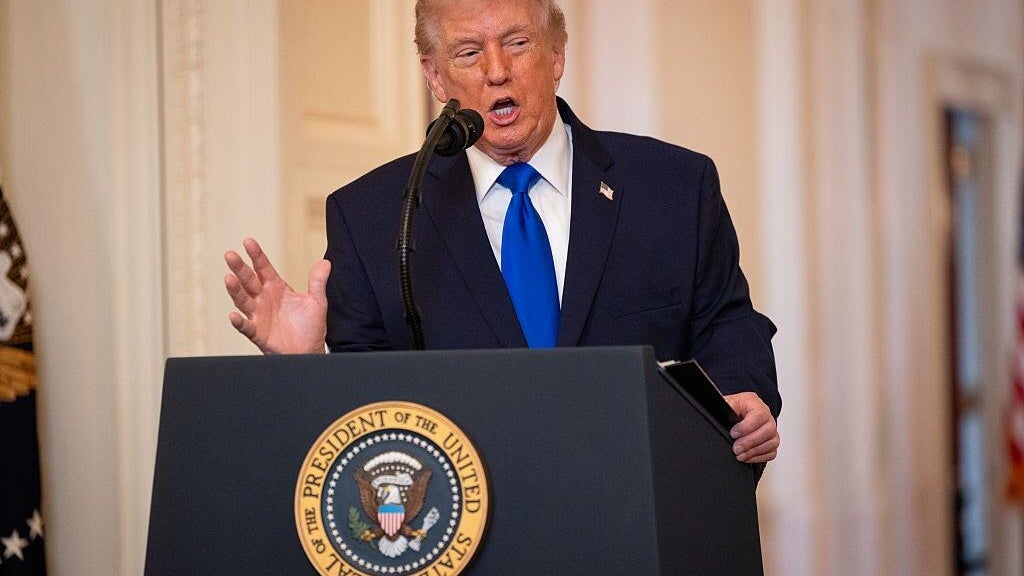
The president is scheduled to address the nation at the White House during a Medal of Honor ceremony, which marks his first public appearance since the onset of the U.S.-Israeli war with Iran over the weekend. A senior administration official confirmed that Trump would likely discuss the ongoing conflict during his remarks.
While Trump has shared pre-recorded messages throughout the conflict, he has not yet spoken publicly about the bombing campaign. He was in residence at Mar-a-Lago in Florida during the initial stages of the war, monitoring developments closely before returning to Washington on Sunday evening.
At least four U.S. service members have been reported killed in Operation Epic Fury, according to the U.S. military. Hegseth stated that these casualties resulted from a munition striking a tactical operations center in Kuwait. In a video address on Sunday night, Trump acknowledged the likelihood of further American casualties but assured that combat operations “will continue until all of our objectives are achieved.”
“We pray for the full recovery of the wounded and send our immense love and eternal gratitude to the families of the fallen,” Trump stated, adding, “And sadly, there will likely be more before it ends. That’s the way it is.”
The conflict escalated significantly following Israeli airstrikes that killed Iranian Supreme Leader Ayatollah Ali Khamenei and numerous other senior officials. Over the first 24 hours of the bombing campaign, more than 1,000 targets were reportedly struck, according to General Dan Caine, the chairman of the Joint Chiefs of Staff.
In response to these actions, Iran has launched missile and drone attacks against Israel, U.S. facilities, and Gulf nations. Trump mentioned that he anticipates U.S. military operations to continue for “four or five weeks.” Hegseth, when questioned about the timeline, dismissed the inquiry as a “gotcha-type question,” affirming that the president has broad authority to determine the duration and nature of military engagement.
“President Trump has all the latitude in the world to talk about how long it may or may not take—four weeks, two weeks, six weeks. It could move up. It could move back,” he explained. “We’re going to execute at his command the objectives we’ve set out to achieve.”