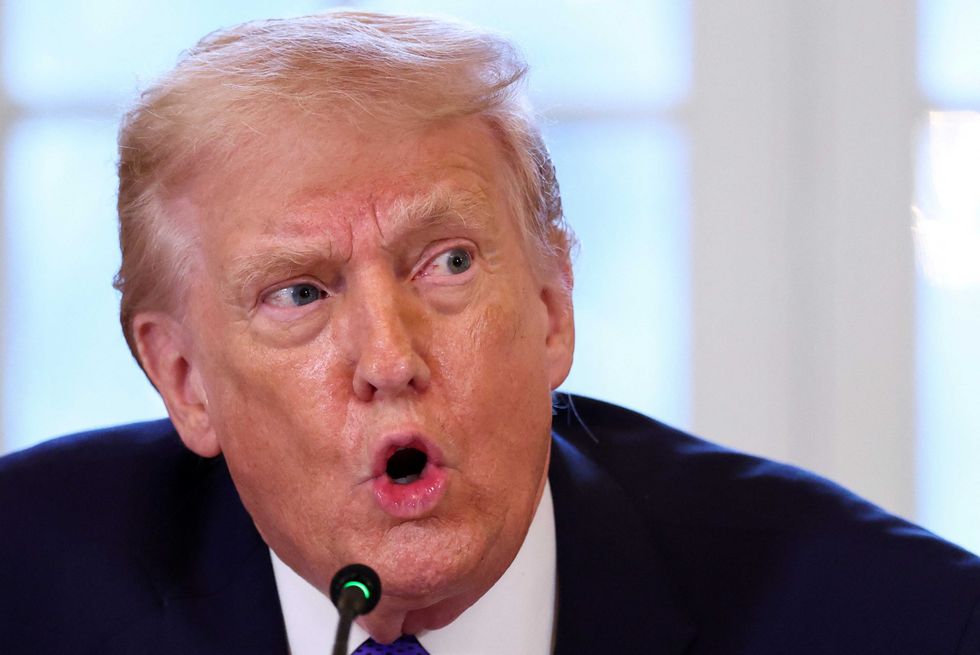
President Donald Trump has introduced a controversial rationale for the potential acquisition of Greenland, suggesting that U.S. control over the territory would prevent Russian and Chinese influence in the region. During a meeting on June 23, 2023, with American oil executives focused on the military situation in Venezuela, Trump articulated his concerns regarding international competition for Greenland.
While discussing the geopolitical landscape, Trump expressed his belief that Venezuela currently aligns with U.S. interests. He stated, “Right now they seem to be an ally and I think it’ll continue to be an ally. We don’t want to have Russia there. We don’t want to have China there.”
His remarks indicate a strategic perspective where the acquisition of Greenland is viewed as a means to secure U.S. interests against adversaries. Trump warned that without American intervention, the U.S. could find itself sharing a border with either Russia or China.
This statement comes in the context of ongoing discussions about the importance of energy independence and security in the Americas. As the U.S. continues to navigate complex relationships in South America, Trump’s comments reflect a broader strategy of asserting dominance in regions of geopolitical significance.
The idea of acquiring Greenland is not new. Trump previously expressed interest in purchasing the island in 2019, a notion that was met with widespread ridicule both domestically and internationally. However, Trump’s recent comments have reignited discussions about the strategic importance of Greenland, particularly in light of its natural resources and geopolitical location.
The implications of such a move could have far-reaching effects on international relations, particularly with Russia and China, both of which have increased their presence in the Arctic region. Trump’s administration has previously criticized both countries for their aggressive postures in various global arenas.
As the situation develops, the U.S. administration’s stance on Greenland and its broader implications for foreign policy will likely continue to evolve. For now, Trump’s remarks serve as a reminder of the complexities and realities of modern geopolitics, where territorial claims and alliances are increasingly intertwined with energy resources and national security.
This commentary illustrates the ongoing debate over how best to approach complex international relationships and the role of territorial control in safeguarding national interests.