Donald Trump’s political style cannot be easily categorized. His approach, characterized by a focus on national interest over party lines, reflects a broader American tradition of realism. This perspective emphasizes practicality in governance, often prioritizing the needs of the nation above ideological commitments.
Trump’s economic policies exhibit a continuity with historical protectionist practices. From Henry Clay’s “American System” in the 1800s to William McKinley’s tariffs in the 1890s, protectionism has been a recurring theme in U.S. history. Even during the globalization era under Bill Clinton, the focus remained on enforcing trade rules that safeguarded American workers. Today, Trump revives this mindset by employing tariffs and tax incentives to bolster domestic manufacturing and enhance national self-reliance within an interconnected global economy.
His approach to border security builds upon a bipartisan legacy. Previous presidents, including Bill Clinton, George W. Bush, and Barack Obama, expanded enforcement measures and increased deportations. Trump reframes this issue around national identity, asserting that robust borders are essential for maintaining sovereignty and security. Concerns about transnational gangs, such as MS-13 and Venezuela’s Tren de Aragua, contribute a law enforcement dimension that transcends party lines, raising significant questions about public safety and national integrity.
Trump’s presidency unfolds amid deep political polarization in the United States. Many citizens feel disconnected from both major parties, creating fertile ground for his populist appeal. His rallies emphasize themes of patriotism and working-class pride, reshaping perceptions of civic participation. This contrasts sharply with the elite optimism of John F. Kennedy’s “Camelot” era. While Kennedy projected refinement and international idealism, Trump’s communication style is blunt and often unscripted, appealing to voters who prioritize authenticity over polished rhetoric.
His distinctive communication approach mirrors that of European populists, utilizing mass media and social media to circumvent traditional news outlets. This direct connection with voters redefines political communication, eroding institutional barriers while blurring the lines between leadership and performance.
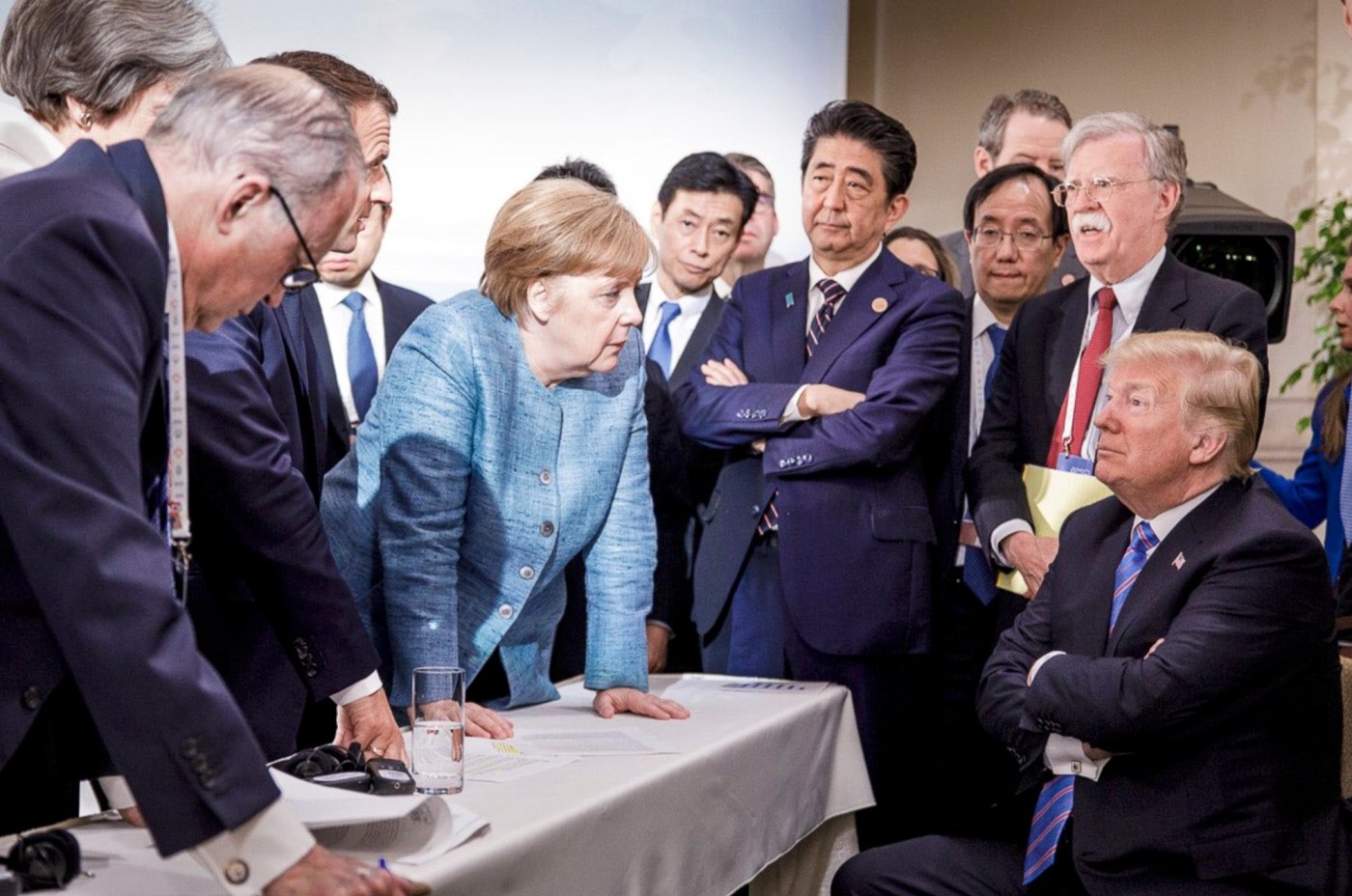
In foreign affairs, Trump’s policies resonate with a realist tradition that predates his administration. Franklin D. Roosevelt prioritized American strategic interests during World War II, even when it strained relations with allies such as Winston Churchill. Similarly, Trump supported Brexit as an affirmation of British national sovereignty, challenged longstanding financial inequities within NATO, and rejected international agreements perceived as detrimental to America’s economic and strategic strength. A notable photograph from the 2018 G7 summit, depicting Angela Merkel leaning toward a seated President Trump, symbolizes the ongoing tension between cooperation and independence.
Domestically, Trump’s use of executive authority aligns with a historical continuum established by the Constitution, which created a strong, accountable presidency. U.S. presidents have historically leveraged executive power to maintain order and protect national interests. The use of military forces, including what Americans now recognize as the National Guard, is a longstanding practice. For instance, George Washington called up the militia during the Whiskey Rebellion of 1794 to enforce federal law and restore stability, establishing a precedent for federal responsibility in maintaining order.
The COVID-19 pandemic has revived another enduring theme: national self-sufficiency. Supply chain disruptions and rising costs have underscored the importance of domestic production and industrial security. Trump’s renewed presidency emphasizes economic realism, asserting that a nation must be capable of sustaining itself during crises.
Throughout American history, presidencies have navigated the delicate balance between ideals and practical governance. From George Washington’s steady leadership to Andrew Jackson’s populism, Franklin Roosevelt’s wartime pragmatism, John F. Kennedy’s visionary idealism, Bill Clinton’s global engagement, George W. Bush’s assertive defense of liberty, and Barack Obama’s measured internationalism, each presidency has reshaped this balance. Ultimately, the modern presidency remains a battleground where idealism and realism interact, testing the nation’s moral ambitions against its complex responsibilities.
Regardless of one’s opinion about Trump’s style, his presidency reflects a consistent theme in American history: the belief that leadership must prioritize the people’s interests and that realism, tempered by accountability, is central to the American narrative. This exploration of Trump’s leadership style illustrates the enduring complexities of American governance and its ongoing evolution.