U.S. special envoy Steve Witkoff met with Russian President Vladimir Putin in Moscow on March 5, 2024, to discuss a proposed peace plan aimed at ending the nearly four-year conflict in Ukraine. The meeting, which also included Jared Kushner, President Donald Trump’s son-in-law, is part of ongoing diplomatic efforts involving U.S. officials and Ukrainian representatives.
Before the discussions commenced, Putin accused Ukraine’s European allies of undermining U.S.-led initiatives to resolve the war, labeling their demands as “absolutely unacceptable.” The Kremlin spokesperson, Dmitry Peskov, indicated that the talks would continue “as long as needed,” with only Witkoff, Kushner, and a U.S. interpreter present.
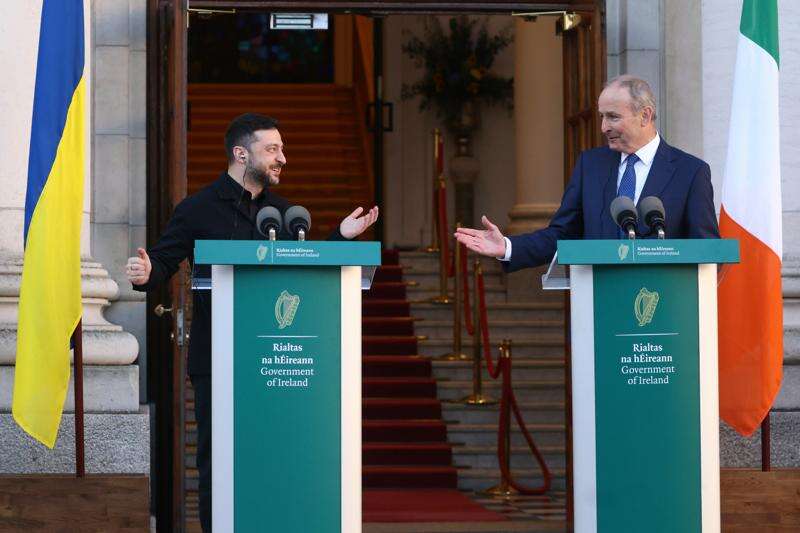
While these negotiations unfolded, Ukrainian President Volodymyr Zelenskyy was in Ireland as part of a broader European tour to garner support against Russia’s invasion.
According to a draft of the peace plan obtained by The Associated Press, the proposal includes territorial concessions to Russia and restrictions on the size of Ukraine’s military. Ukrainian officials have been collaborating with their European allies to revise the plan, emphasizing the need for a comprehensive and lasting peace agreement.
Discussions and Tensions Surrounding the Peace Efforts
The meeting between Witkoff and Putin comes shortly after U.S. officials engaged in talks with a Ukrainian delegation regarding the peace initiative. U.S. Secretary of State Marco Rubio described those discussions as “productive,” while stressing that further work was necessary.
During the meeting, Putin also threatened retaliation for recent Ukrainian strikes on vessels transporting Russian oil in Turkey’s exclusive economic zone. He warned that Moscow would increase the range of its strikes against Ukrainian ports and ships and would consider retaliatory measures against vessels from countries that assist Ukraine in such operations.
Putin’s comments reflected his view that Ukraine’s European allies lacked a genuine peace agenda, claiming they were obstructing the peace process with unacceptable demands. He characterized their actions as attempts to shift blame onto Russia for the ongoing hostilities.
Ukraine’s Response and International Support
In response to Putin’s assertions, Ukraine has denied claims of Russian control over the eastern city of Pokrovsk, which Putin described as strategically significant. The Ukrainian General Staff referred to Putin’s statements as “a propaganda stunt,” reaffirming that their military was preparing additional supply routes for troops in the region.
Zelenskyy, addressing the press in Dublin, expressed optimism about the U.S. efforts to facilitate a resolution. He mentioned that there were “20 points” drafted in Geneva and finalized in Florida that still require further refinement. “We need a decent peace, and for it to truly happen, everyone must be on the side of peace,” he stated.
During Zelenskyy’s visit to Ireland, Prime Minister Micheál Martin announced a new funding package of 125 million euros (approximately $145 million) for Ukraine, which includes 100 million euros in non-lethal military assistance and 25 million euros to bolster Ukraine’s energy infrastructure. Martin emphasized that Ireland would advocate for Ukraine’s membership in the European Union, declaring, “Ukraine is part of our European family.”
Zelenskyy’s visit was marked by a ceremonial welcome at Government Buildings in Dublin, where he expressed gratitude for Ireland’s unwavering support in Ukraine’s struggle against Russian aggression.
The ongoing negotiations and international engagements highlight the complexities of the situation, with both the U.S. and European nations striving to find a path toward peace while managing regional stability amid ongoing military actions.