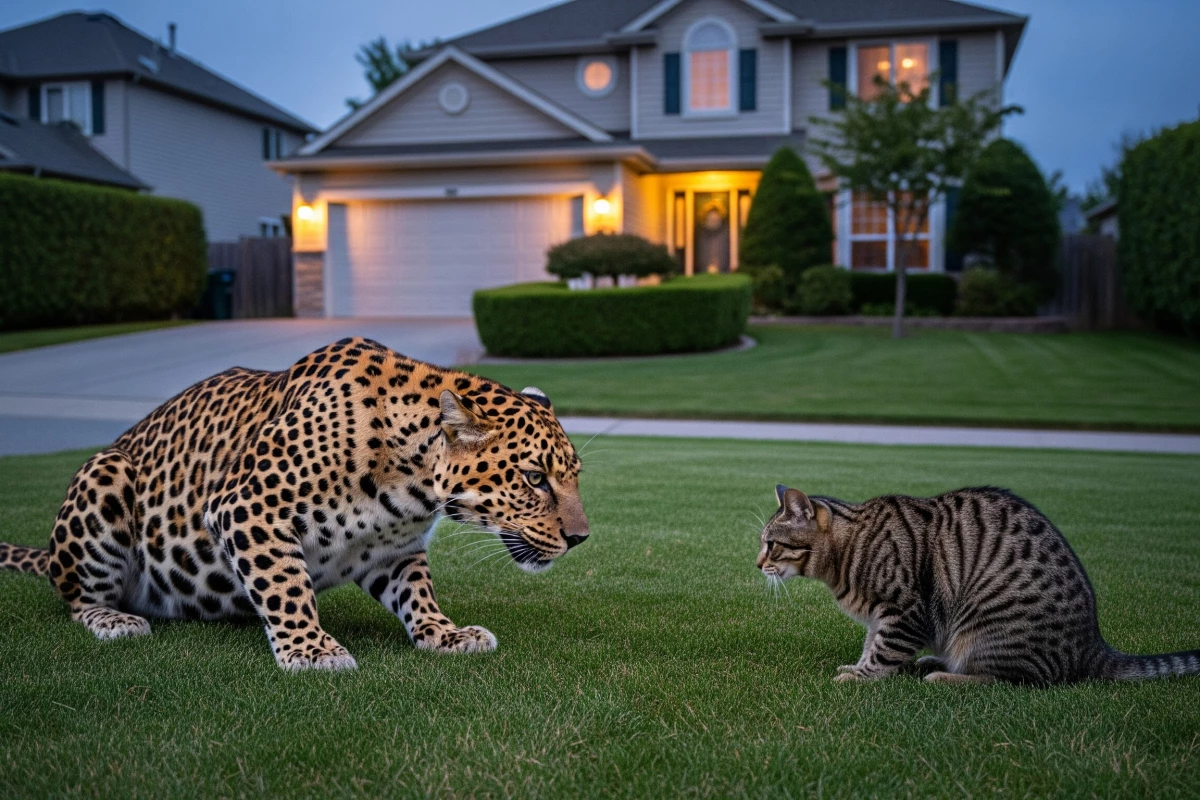
The rise of AI-generated wildlife videos on social media platforms is altering public perceptions of nature, according to research from the University of Córdoba in Spain. These videos, which include playful scenarios such as bunnies on trampolines and leopards in suburban backyards, can mislead viewers about animal behavior and ecosystems.
Researchers have found that these synthetic clips can spread rapidly, blurring the line between reality and fabrication. In one notable instance, an AI-generated video featuring a leopard being chased off by a house cat garnered over a million likes and more than 15,000 shares. This rapid dissemination raises concerns about how distorted portrayals of wildlife can shape societal understanding.
José Guerrero-Casado, the lead author of the study, emphasized the potential harm of these creations. He stated, “They reflect characteristics, behaviors, habitats, or relationships between species that are not real.” Such distortions can lead to misconceptions about the rarity of species and their natural behaviors, ultimately undermining conservation efforts.
Impact on Public Understanding of Wildlife
The increasing visibility of AI-generated wildlife content contributes to a misguided understanding of ecosystems. When rare species are portrayed as common or dangerous animals are shown as benign companions, the urgency for conservation diminishes. This is particularly concerning for younger audiences who may be more impressionable. A child exposed to a fabricated video of a crocodile and a raccoon interacting may come to view such pairings as normal.
As these clips proliferate, the risk grows that society will develop a skewed perception of wildlife. Researchers warn that this could lead to a lack of awareness regarding the true behaviors and habitats of animals. When individuals begin to expect unrealistic interactions, the significance of real wildlife encounters becomes diminished.
The study highlights three areas of distortion: the rarity of animals, their behaviors, and their habitats. As a result, people may misinterpret the health of wildlife populations and overlook critical conservation needs.
Addressing the Challenges of AI Wildlife Content
To combat the negative implications of AI-generated wildlife videos, experts suggest a multi-faceted approach. Clear labeling of synthetic content, improved oversight by social media platforms, and increased transparency about the nature of these videos are essential.
Education plays a crucial role in this effort. If people understand how such clips are created and why they spread, they are less likely to confuse them with authentic wildlife encounters. “There is already a total disconnect between citizens and wildlife,” noted co-author Rocío Serrano. She pointed out that many children lack knowledge about local fauna, largely due to the prevalence of misleading content.
As the landscape of digital media evolves, so too does the challenge of maintaining an accurate understanding of the natural world. The study, published in Conservation Biology, underscores the importance of distinguishing between real wildlife and artificial representations.
The implications of this trend are significant. As AI-generated content becomes more prominent, it risks overshadowing the realities of wildlife and ecosystems, which are already under strain. If society continues to prioritize sensationalized portrayals, the true beauty and vulnerability of nature may be forgotten.
In conclusion, the proliferation of AI-generated wildlife videos presents a formidable challenge for conservationists. By fostering a greater understanding of what constitutes real wildlife, both the public and organizations can work towards a more accurate appreciation of the natural world and the urgent need to protect it.