Recent research has revealed important insights into the organized craft production of prehistoric communities in Argentina, particularly through the analysis of ancient bone arrow points. The study, led by Dr. Matías Medina and his colleagues Sebastián Pastor and Gisela Sario, was published in the International Journal of Osteoarchaeology and sheds light on the manufacturing techniques of these tools, which were prevalent during the Late Prehispanic Period, approximately 1220 to 330 cal BP.
For decades, understanding the diverse bone materials used by the inhabitants of the Sierras de Córdoba was limited. The new findings help fill a significant gap in knowledge regarding how these ancient communities organized their daily lives and craft production.
Insights into Prehistoric Craftsmanship
The Late Prehistoric Period in this region was marked by communities that practiced flexible mixed economies, combining hunting and gathering with agricultural practices. This adaptability allowed them to maintain high mobility while occupying seasonal camps. Despite this, archaeological records primarily consist of low-visibility materials, including bone tools, which had not been thoroughly studied until now.
Dr. Medina emphasized the scarcity of publications focused on bone technology in South America. Previous research often reduced information to simple descriptions that served mainly as chronological markers. He noted, “The manufacturing techniques used to produce bone arrow points in the Sierras de Córdoba have never been analyzed in depth, and the issue warrants incorporation into discussions of weapon-delivery systems.”
To address this void, the study examined 117 bone artifacts collected from the Museo Arqueológico Numba Charava. These items were gathered non-systematically throughout the 20th century from various sites across the southern Punilla Valley, which means many lack precise provenance.
Crafting Techniques and Cultural Significance
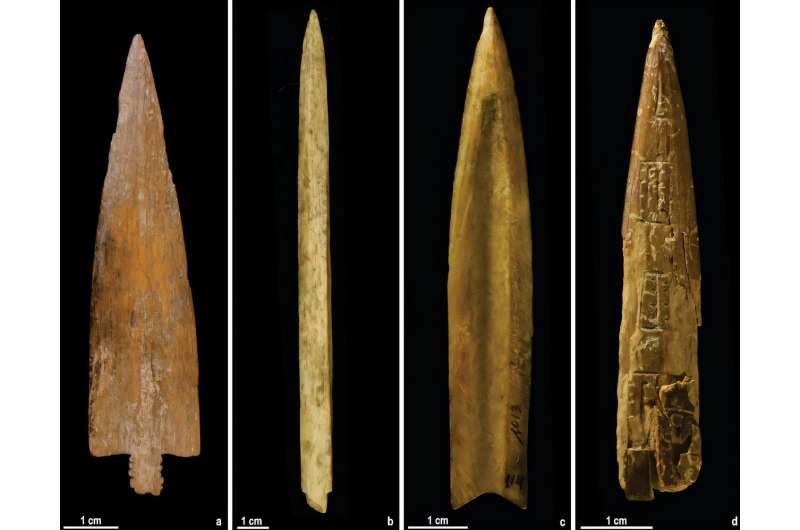
The analysis revealed that the primary material used for these arrow points was the bones of the guanaco, a type of llama hunted for food. These bones were reworked into tools, while bones from other animals, such as pampas deer, were less commonly found. Typically, the arrow points were crafted from metapodia, the long bones of the extremities. The manufacturing process involved splitting the bones lengthwise, flattening them with grinding, and shaping them into arrowheads through scraping and whittling.
Some points featured barbs and decorative elements, which were polished to create a smooth surface that minimized air resistance and enhanced durability. Dr. Medina pointed out the rarity of decorative points, stating, “Only three bone arrow points with incised decoration on the blade were reported in the archaeological literature.” These decorations, comprised mainly of lines and triangles, are similar to those found on other artifacts from central Argentina.
Interestingly, the study suggests that these bone arrow points were likely used more for warfare than for hunting. The presence of decorative elements may have expressed social identity, leaving a lasting cultural mark on opponents. Dr. Medina remarked that such stylistic attributes served as reminders of the maker’s cultural affiliation.
The implications of this research extend beyond the Sierras de Córdoba, offering a comparative framework for understanding similar technologies in neighboring regions. Dr. Medina noted the need for comparisons with areas such as the Low Paraná and Uruguay River floodplains, which are over 500 km away. There, distinct bone technologies developed in response to limited stone resources, emphasizing the importance of context in archaeological studies.
The findings underscore that the production of arrow points was a localized and individualized process. Each point was unique, reflecting the time and skill invested in its creation, likely transmitted through familial lines. This reinforces the idea that the nuclear family served as the primary social unit for food and tool production during this period.
As research continues, the study opens up pathways for further exploration of technological alternatives and the social dynamics of prehistoric communities. Understanding these ancient practices not only enriches our knowledge of their daily lives but also illuminates the cultural significance of their crafted tools.
This research is a vital contribution to the field, providing a clearer picture of how technology and culture intertwined in the lives of prehistoric peoples in Argentina. The study affirms the importance of thorough archaeological analysis in uncovering the complexities of past human societies.