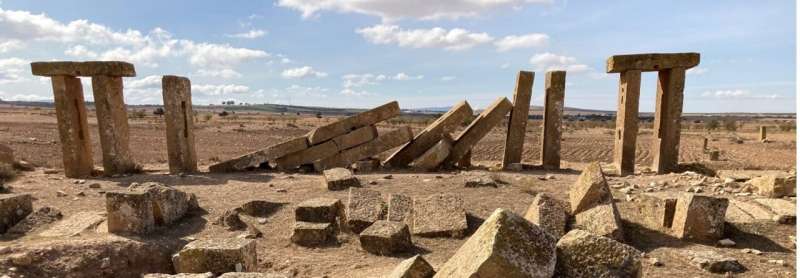
Archaeologists from Ca’ Foscari University of Venice have discovered what is believed to be the second-largest Roman olive oil mill in the entire Empire. This significant find is part of an ongoing excavation in the Kasserine region of Tunisia, specifically in the ancient Roman city of Cillium, near the modern border with Algeria. The discovery highlights the importance of olive oil production in the economy of Roman Africa, particularly during the period from the 3rd to the 6th centuries AD.
The excavation, which began in 2025, is led by a team that includes Prof. Luigi Sperti, the deputy director of the Department of Humanities and Director of the Venice Archaeology Study Center (CESAV). Researchers are focusing on two ancient olive farms located in the heart of the Jebel Semmama massif. This region’s unique climate, characterized by high steppes and modest rainfall, provided ideal conditions for olive cultivation, a vital agricultural resource for the Romans.
Key Discoveries at Henchir el Begar
One of the primary sites of interest is Henchir el Begar, identified as the ancient Saltus Beguensis. This site was part of a large rural estate owned by Lucillius Africanus, a prominent figure in the 2nd century AD. The site is notable for a Latin inscription dating back to 138 AD, which commemorates a senate consultation authorizing a bimonthly market—an event that held significant social and political importance.
The excavation site spans approximately 33 hectares and is divided into two main sectors. Hr Begar 1 features the largest and most impressive Roman oil mill in Tunisia, showcasing a monumental torcularium equipped with twelve beam presses. Meanwhile, Hr Begar 2 contains a second facility with eight presses, indicating a long history of olive oil production at this location.
Archaeologists also uncovered a rural vicus where colonists and possibly local inhabitants resided. Numerous stone millstones were found on the surface, illustrating a mixed production of cereals and oil. Recent geophysical surveys using ground-penetrating radar have revealed a complex network of residential structures and roads, suggesting an organized rural community.
International Collaboration in Archaeological Research
This archaeological mission is the result of a collaborative effort that began in 2023, initiated by Prof. Samira Sehili from Université La Manouba in Tunisia and Prof. Fabiola Salcedo Garcés from Universidad Complutense de Madrid in Spain. Since 2025, Prof. Sperti has co-directed the project with formal recognition from Tunisia’s Ministry of Foreign Affairs and International Cooperation. This collaboration fosters international scientific partnerships and enhances research opportunities in the field of production archaeology.
Among the valuable artifacts unearthed are a decorated copper and brass bracelet, a white limestone projectile, and architectural remnants, including a portion of a Roman press repurposed in a Byzantine wall. Prof. Sperti notes, “This mission offers an unprecedented insight into the agricultural and socio-economic organization of the frontier regions of Roman Africa. Olive oil was a very important product in the daily life of the ancient Romans, used not only in cooking but also for body care and lighting. Shedding light on the production, marketing, and transport of this product on such a large scale presents a unique opportunity for research and economic development.”
The findings at Henchir el Begar not only underscore the historical significance of olive oil in Roman society but also demonstrate the role of archaeology in understanding and preserving the legacy of ancient civilizations in the Mediterranean region. As this excavation continues, it promises to reveal more about the intricate relationships between Roman settlers and indigenous communities, enriching our knowledge of this pivotal period in history.