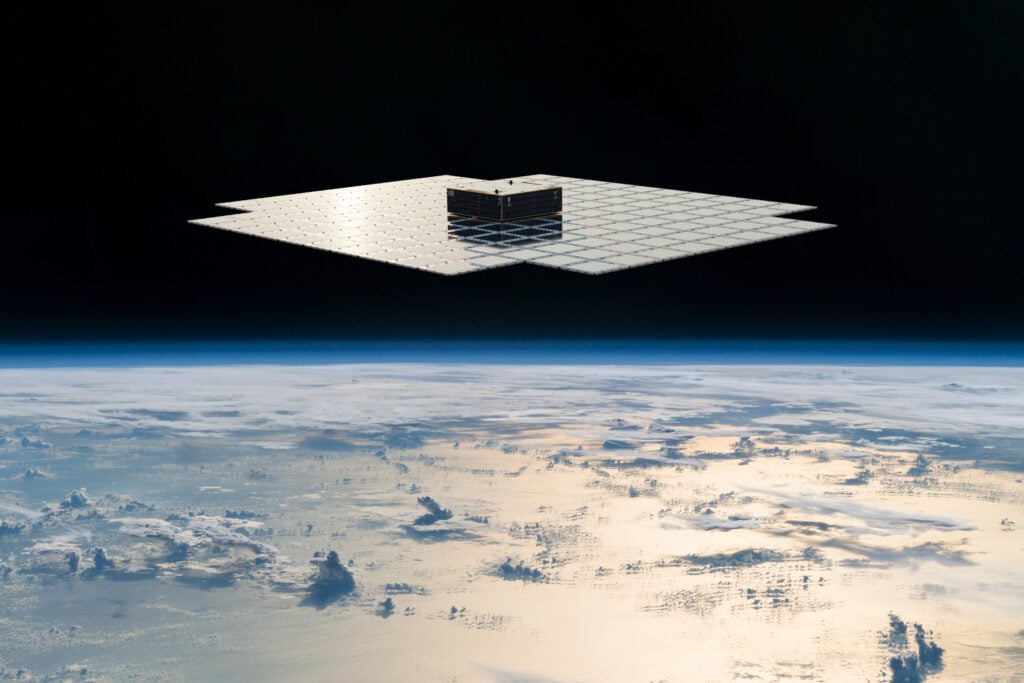
AST SpaceMobile has successfully launched its largest satellite, the BlueBird 6, marking a significant step forward in developing a space-based cellular network. The satellite lifted off on December 23, 2023, at 22:25 ET from the Satish Dhawan Space Center in India, aboard an LVM3 rocket. This launch represents the first of AST SpaceMobile’s next-generation satellites, which aim to provide direct cellular broadband services accessible by standard mobile phones.
The BlueBird 6 is approximately three times larger than earlier models, making it the largest commercial satellite in Earth’s orbit. Previous iterations, including the BlueWalker 3, were launched in September 2022, primarily to test technology that enables the establishment of cellphone towers in space. This prototype achieved a milestone by facilitating the first 5G phone call from space to a regular Samsung Galaxy S22.
With the recent launch, AST SpaceMobile is positioning itself to compete directly with SpaceX‘s Starlink. Currently, SpaceX operates more than 9,000 satellites, which accounts for around 60% of all satellites in orbit. Nevertheless, AST’s BlueBird satellites are designed with larger antennas and a unique advantage: they will provide direct-to-cell service without requiring additional hardware for customers.
Ambitious Plans for the Future
AST SpaceMobile has ambitious plans to expand its constellation, aiming to deploy a total of 243 satellites into orbit. Following the launch of BlueBird 6, the company expects to launch between 45 and 60 more next-generation satellites by the end of 2026. Each satellite is engineered to support 10 gigahertz of bandwidth and deliver speeds of 120 megabytes per second per cellphone. This capability positions AST to potentially offer 5G services across the United States and selected markets.
The design of BlueBird 6 includes a vast array that, once unfurled, will span approximately 2,400 square feet (about 223 square meters). This significant increase in size allows the satellite to enhance its visibility and operational capacity in space, outshining many other objects in the sky.
Competitive Landscape and Industry Concerns
The competition between AST SpaceMobile and SpaceX has intensified recently. Earlier in July, SpaceX raised concerns with the Federal Communications Commission (FCC), claiming that AST SpaceMobile’s operations could threaten the sustainability of low Earth orbit. In response, AST SpaceMobile accused SpaceX of attempting to intimidate competitors and spreading misinformation regarding its technological capabilities.
As both companies expand their satellite fleets, the increasing congestion in Earth’s orbit raises concerns about the impact on astronomical observations and the night sky. Their rivalry not only reflects the burgeoning space technology sector but also highlights the challenges of managing an increasingly populated orbital environment.
In summary, with the launch of BlueBird 6, AST SpaceMobile has taken a significant step toward establishing a competitive space-based cellular network. As the company continues to unfold its plans for future satellites, the dynamics of the satellite communications industry are set to evolve, impacting how consumers access mobile services worldwide.