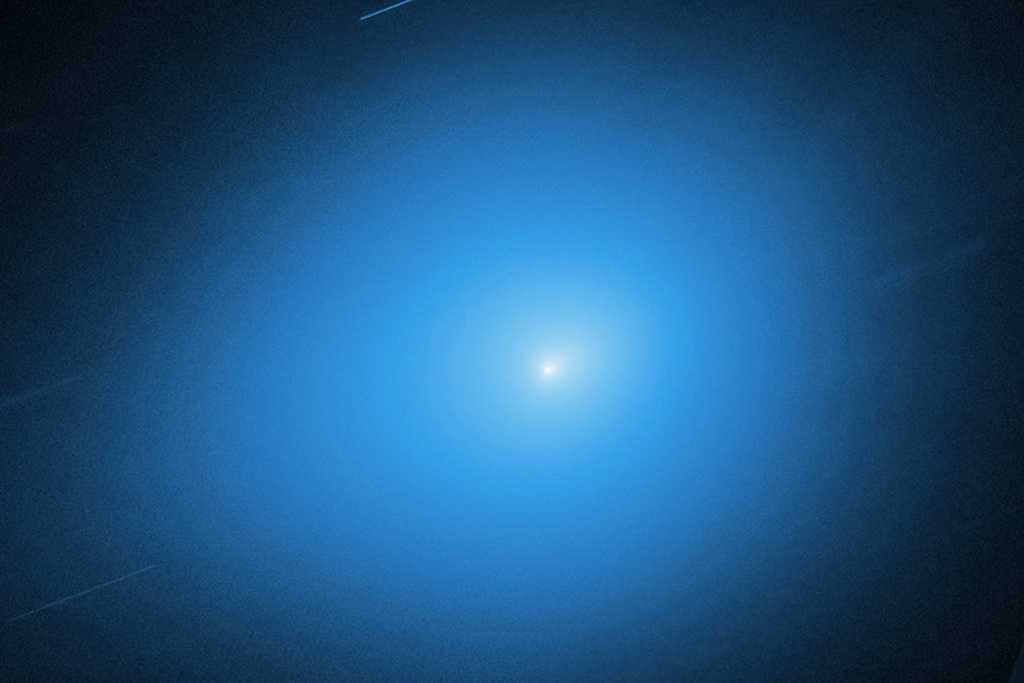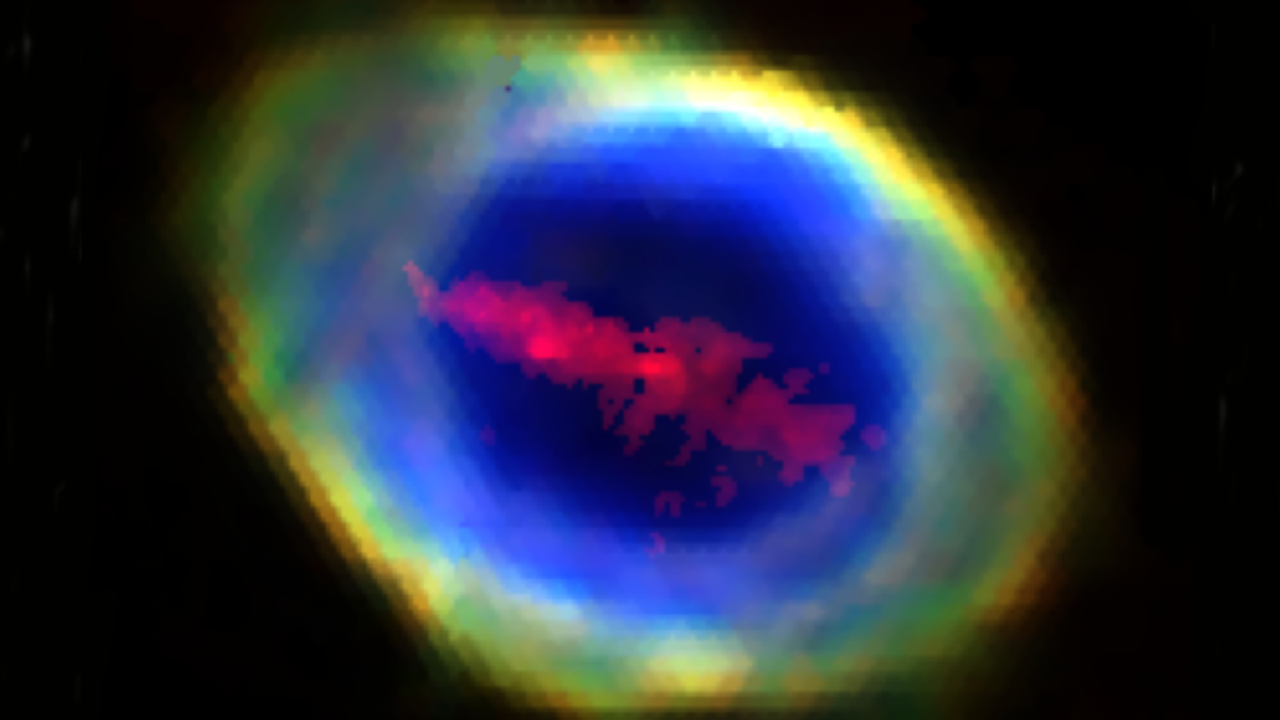
Astronomers have made a significant discovery within the well-studied Ring Nebula, also known as Messier 57, located approximately 2,000 light-years from Earth. A team utilizing the William Herschel Telescope (WHT) in La Palma, Spain, has identified a substantial “bar” of iron atoms within this planetary nebula, revealing new complexities in an object long familiar to researchers.
The Ring Nebula is the glowing remnant of a sun-like star that exhausted its nuclear fuel, shedding its outer layers while its core collapsed to form a white dwarf. The discovery was facilitated by a new instrument called WEAVE (WHT Enhanced Area Velocity Explorer), which allowed the team to observe the nebula with unprecedented detail.
New Insights into the Ring Nebula
The iron bar, which extends approximately 1,000 times the distance between Pluto and the Sun and has a mass comparable to that of Mars, fits within the inner layer of the oval-shaped nebula. According to team leader Roger Wesson from the University College London (UCL), the capabilities of WEAVE have enabled a fresh perspective on the Ring Nebula. Wesson stated, “By obtaining a spectrum continuously across the whole nebula, we can create images at any wavelength and determine its chemical composition at any position.”
The team’s observations revealed the previously unknown structure of ionized iron atoms at the nebula’s center, which had not been detected in earlier studies. The technological advancements provided by WEAVE’s Large Integral Field Unit (LIFU) mode made this discovery possible, allowing for comprehensive imaging across all visible wavelengths.
Exploring the Formation of the Iron Bar
The origins of this iron bar remain uncertain. One hypothesis suggests that its formation is linked to the process by which the original star expelled its outer layers. Alternatively, it may represent the vaporization of a rocky planet that was orbiting the star as its outer layers expanded. This raises intriguing questions about the future of our solar system, as the Ring Nebula could be a glimpse into the fate of Earth in approximately 5 billion years when the Sun will undergo a similar transformation into a red giant.
UCL astronomer Janet Drew emphasized the need for further research, stating, “We definitely need to know more — particularly whether any other chemical elements co-exist with the newly-detected iron, as this would probably tell us the right class of model to pursue.” The team plans additional studies with WEAVE to delve deeper into the iron bar’s formation mechanisms, aiming to enhance their understanding of this phenomenon.
Scott Trager, WEAVE Project Scientist at the University of Groningen, expressed optimism about the future potential of the instrument, saying, “The discovery of this fascinating, previously unknown structure in a night-sky jewel, beloved by skywatchers across the Northern Hemisphere, demonstrates the amazing capabilities of WEAVE.”
The research team’s findings were published on January 15, 2024, in the journal Monthly Notices of the Royal Astronomical Society. As investigations continue, astronomers hope to uncover whether similar structures exist in other planetary nebulae, potentially transforming our understanding of these cosmic phenomena.