Researchers have identified a natural strategy in crops that helps them adapt to rising temperatures, a growing concern for global food security. By studying the diurnal floret opening time (DFOT) of over 100 plant species, scientists from China Agricultural University found that “early-morning flowering” (EMF) can effectively shield crops from damaging midday heat. Crops such as sorghum, pearl millet, and indica rice can enhance seed set and reproductive success by shifting flowering to cooler morning hours.
The study, published on August 28, 2025, in the journal Seed Biology, highlights the urgency of addressing climate-induced heat stress, which has intensified over the past 50 years. Projections indicate that this trend will worsen by the end of the century, impacting staple crops like maize, rice, and soybean that often flower during peak summer temperatures. Such exposure can impair pollination and grain development, leading to significant yield losses.
Traditional methods to combat these issues, such as changing sowing dates or enhancing biochemical tolerance, have proven inadequate, especially in rapidly warming regions or among multi-cropping systems. This research underscores the remarkable diversity in flowering habits among plants, which can be harnessed as a resource to mitigate the effects of heat stress.
Linking Flowering Times to Temperature Changes
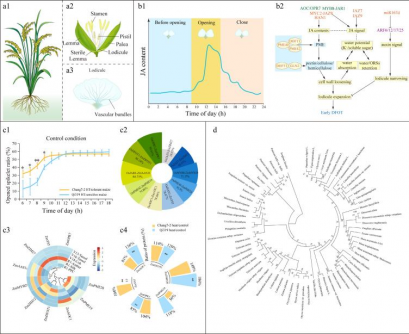
The research team conducted a comprehensive investigation, integrating global climate records, field data, and molecular analyses to assess how increased temperatures affect crop reproduction. They analyzed temperature data from 1850 onwards, focusing on 50 cropland sites across Asia, Africa, Europe, and the Americas. The findings revealed that from 2004 to 2023, daily maximum temperatures during hot seasons rose by an average of 1.25°C (or 0.062°C per year), while the duration of midday heat episodes increased by 1.08 hours (or 0.05 hours per year). The highest mean maximum temperature recorded was 34.0°C in Africa in 2023, with North America exhibiting the most rapid warming.
To explore biological adaptation, the researchers compiled DFOT data from 102 flowering species, categorizing them into morning, midday, and night-flowering groups. They observed significant differences in optimal flowering temperatures among cereal crops: 26.1°C for morning-flowering, 22.3°C for midday, and 29.3°C for night-flowering species. Notably, maize and indica rice, which bloom in the early morning, demonstrated higher temperature thresholds for seed set at 37.5°C and 37.4°C, respectively. In contrast, japonica rice had a lower threshold of 36.7°C, while sorghum and pearl millet, which flower at night, showed even greater resilience at 38°C and 42.4°C.
Controlled experiments confirmed that EMF wheat and rice varieties consistently yielded higher seed sets under heat stress. Additionally, maize benefited from earlier pollination, aligning with cooler morning hours.
Implications for Crop Management and Breeding
At the molecular level, the research identified genes such as OsMYB8 and EARLY MORNING FLOWERING 1 that regulate DFOT by altering lodicule cell wall structures. Homologs of these genes were found in over 60 plant species, suggesting a broad applicability of these findings.
The implications of this research extend beyond breeding; EMF traits could be integrated into crop management practices. This might include precision sowing techniques or even drone-assisted morning pollination, which would benefit insect-pollinated species that thrive in cooler morning conditions. Unlike traditional biochemical tolerance breeding, which struggles to keep pace with climate change, manipulating DFOT offers an immediate adaptation strategy rooted in the natural rhythms of plants.
This study provides a crucial blueprint for developing climate-resilient crop varieties, ensuring stable yields in increasingly unpredictable environments. As global temperatures continue to rise, leveraging natural flowering habits may play a pivotal role in safeguarding food production against climate-induced heat stress.
The research was supported by various funding sources, including the National Key Research & Development Program of China and the Pinduoduo-China Agricultural University Research Fund. The findings emphasize the need for innovative agricultural practices to meet the challenges posed by a warming planet.