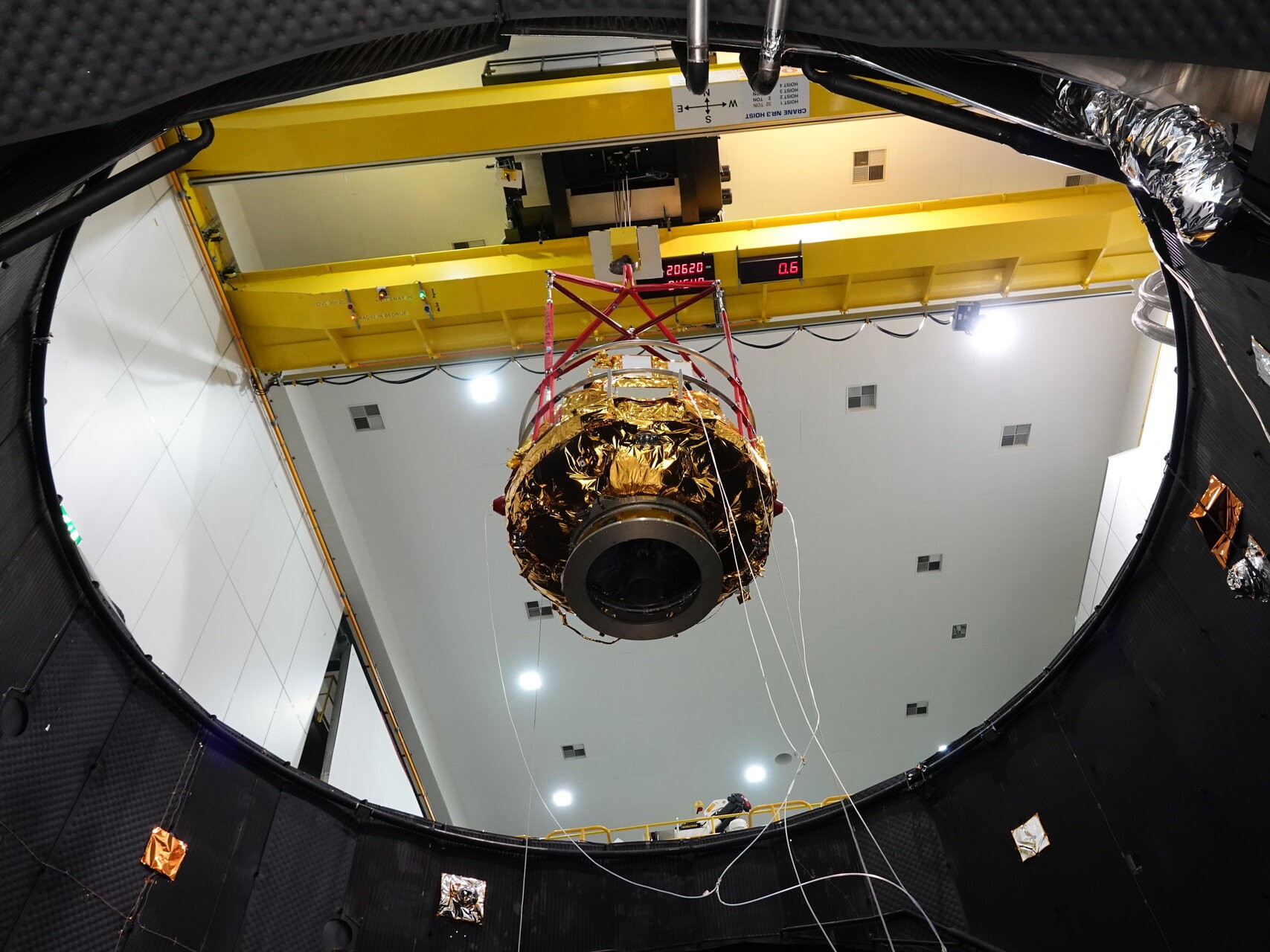
A groundbreaking mission launched by the European Space Agency (ESA) aims to provide the first comprehensive understanding of how Earth reacts to radiation emitted by the Sun. The mission, known as the Solar Orbiter, was successfully launched on February 10, 2020, and has already begun its journey to gather vital data that could transform our knowledge of solar activity and its impact on our planet.
The Solar Orbiter will explore the Sun’s polar regions and conduct close-up observations of solar phenomena, including solar flares and coronal mass ejections. These events can significantly affect Earth’s environment, including satellite operations and power grid stability. By studying these processes in detail, scientists hope to develop better predictive models for space weather, which can have profound implications for technology and safety on Earth.
Mission Objectives and Key Features
The mission’s primary objectives include investigating the Sun’s magnetic field and how it influences solar activity. Equipped with ten scientific instruments, the Solar Orbiter will provide unprecedented insights into solar dynamics. One of the key instruments is the Spectral Imaging of the Coronal Environment (SPICE), which will capture high-resolution images of the solar corona, allowing researchers to analyze the composition and temperature of solar emissions.
ESA officials have emphasized the significance of this mission, stating it will bridge the gap between solar and Earth sciences. According to ESA Director of Science, Gunther Hasinger, “Understanding solar activity is crucial for protecting our technological infrastructure and ensuring the safety of astronauts on missions beyond Earth.” The Solar Orbiter will not only enhance our knowledge of solar physics but will also contribute to the ongoing efforts to safeguard modern technology.
Collaboration and Future Implications
The Solar Orbiter is a collaborative effort between ESA and NASA, showcasing an impressive international partnership in space exploration. The mission will also work in conjunction with other space missions, including the International Space Station (ISS), to provide complementary data that will enhance our understanding of solar-terrestrial interactions.
As the Solar Orbiter continues its mission, scientists anticipate that the data collected will lead to significant advancements in predicting solar storms and their potential effects on Earth. This knowledge could play a crucial role in protecting satellites, power grids, and communication networks from the disruptive impacts of solar radiation.
The implications of this mission extend far beyond scientific inquiry. With increasing reliance on technology, understanding solar radiation’s effects on Earth is essential for maintaining the integrity of global communications and power systems. As the Solar Orbiter gathers data over the coming years, the findings are expected to shape policies and strategies aimed at mitigating the risks associated with solar activity.
In summary, the Solar Orbiter mission represents a significant leap forward in our understanding of the Sun and its relationship with Earth. With its innovative technology and collaborative approach, this mission is poised to unveil critical insights that will benefit both science and society as a whole.