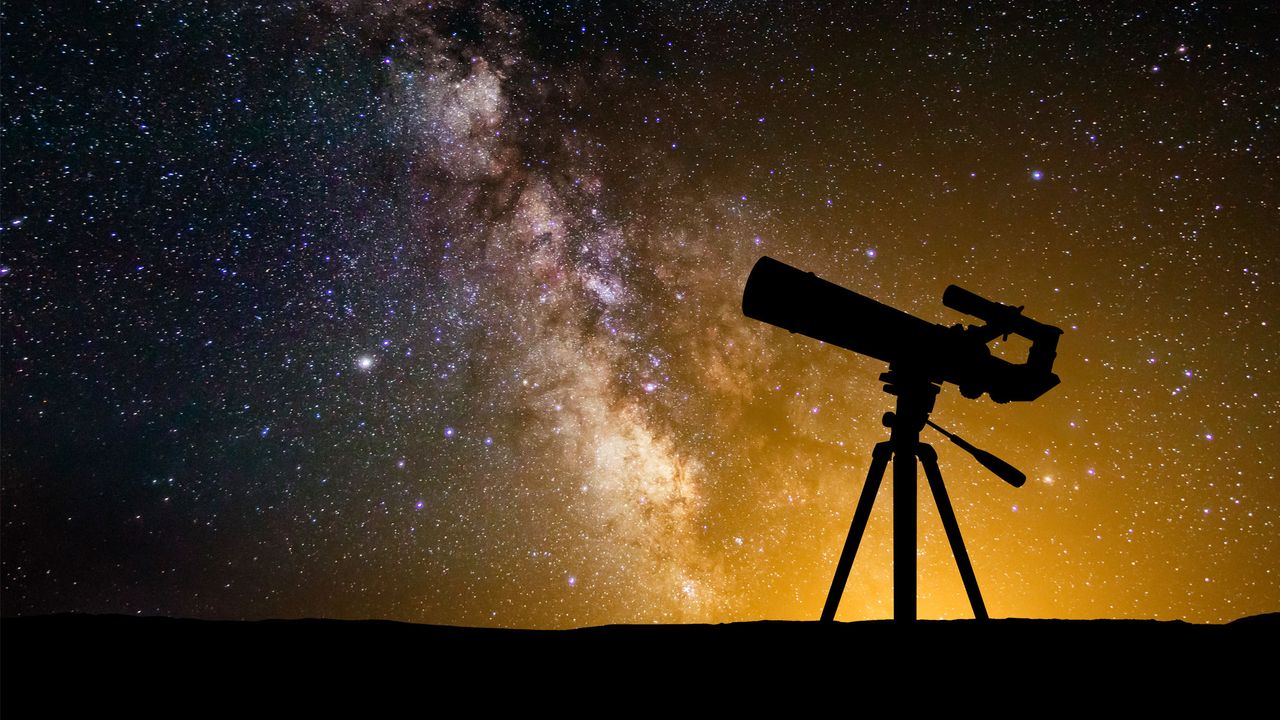
As the holiday season approaches, many enthusiasts are unboxing new telescopes, eager to explore the cosmos. For those who have received a telescope for Christmas 2025, this period offers an excellent opportunity to view celestial wonders. With a waxing crescent moon gracing the evening sky and Jupiter appearing prominently—often referred to as the “Christmas Star”—the month is ripe for astronomical observation. Additionally, the Wolf Supermoon will illuminate the sky in the first week of January 2026.
Taking the time to familiarize oneself with the telescope is crucial for a rewarding experience. The first few nights should focus on comfort and understanding, rather than an exhaustive search for distant galaxies. New users should aim for bright, easily identifiable objects, allowing them to build confidence and skill in navigating the night sky.
Setting Up Your Telescope
Before stargazing, it is essential to properly set up the telescope while there is still daylight. Following the assembly instructions carefully will ensure all components are correctly positioned. It is advisable to level the tripod and tighten all clamps before heading outside. Familiarizing oneself with the knobs and levers is key, as is aligning the finder scope with a distant object, such as a tree. Once the views through the finder and the eyepiece match, the telescope will be ready for use.
Setting up during daylight hours allows the telescope to cool down, enhancing clarity during observations. A cold telescope provides sharper views, making for a more enjoyable experience.
First Targets: The Moon and Planets
The crescent moon serves as an excellent first target for new telescope owners. During the last week of December 2025, the moon will transition from a thick crescent visible in the southwest on Christmas Day to a first quarter moon on December 27. This makes it an ideal time for beginners to practice pointing and focusing.
Most beginner telescopes come equipped with two eyepieces, typically 10mm and 25mm. Starting with the low-power 25mm eyepiece, users can easily locate the moon. By using a red dot finder to center the moon in the eyepiece, beginners can then adjust the focus until it appears sharp. Focusing on the terminator—the line separating light and dark on the moon—reveals shadowed craters and mountains. Switching to the medium-power 10mm eyepiece can enhance the viewing experience.
As the moon approaches its first quarter phase, shadows become shorter, making it less ideal for observing. A full moon can appear too bright and flat, but it can still be enjoyable to view during moonrise.
In addition to the moon, planets like Jupiter and Saturn are prominent in the winter sky. Jupiter, particularly, will reach opposition on January 10, 2026, when it will be at its closest and brightest. Observers should look east in the early evening for this bright “star” that does not twinkle. Once located, centering it in the finder scope and switching to the 25mm eyepiece will allow users to see its disk, cloud bands, and possibly four of its largest moons—Ganymede, Callisto, Europa, and Io.
Saturn also deserves attention, particularly in the early evening. While it is lower and fainter than Jupiter, even modest telescopes reveal its iconic ring structure. Locating Saturn can be done in the same manner as Jupiter, utilizing the low-power eyepiece for initial viewing before switching to higher magnification.
Exploring Iconic Deep-Sky Objects
The winter night sky, particularly in the Northern Hemisphere, is rich with iconic constellations and deep-sky objects ideal for novice telescope users. The Orion Nebula (M42) stands out as one of the most easily recognizable deep-sky targets, particularly during December and January. Other notable objects include the Pleiades (M45) open cluster in Taurus, the Double Cluster in Perseus, and the Andromeda Galaxy (M31).
For those observing from the Southern Hemisphere, the Carina Nebula (NGC 3372) is a breathtaking sight during this same period. Other significant targets include the Southern Pleiades (IC 2602) and Omega Centauri (NGC 5139).
Having successfully navigated the moon and key planets, along with notable star clusters and nebulae, new telescope owners should take their time to deepen their knowledge. Clear nights, particularly those between the last quarter moon and the new moon, provide ideal conditions for observation.
With practice, what initially appears as an overwhelming expanse of stars can transform into a familiar landscape, allowing for deeper exploration and enjoyment of the universe. Embracing patience and gradual learning will enrich the astronomical experience, transforming a new telescope into a powerful tool for discovery.