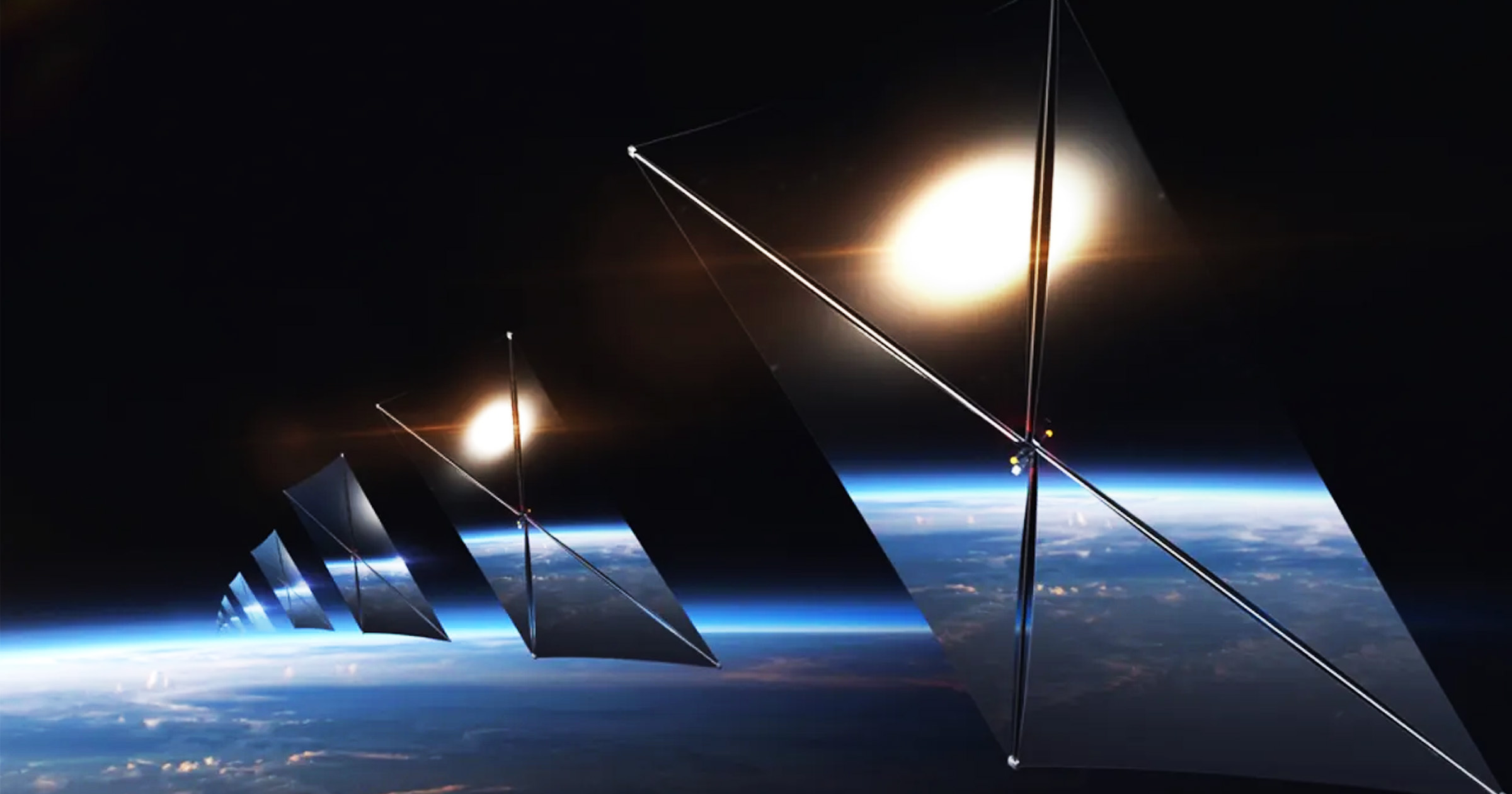
The Federal Communications Commission (FCC) is currently reviewing a proposal from the startup Reflect Orbital to launch a large mirror satellite designed to reflect sunlight onto Earth during nighttime. This initiative aims to illuminate urban areas and provide energy for solar farms or emergency lighting. The startup’s vision includes deploying up to 50,000 satellites, significantly exceeding the number of satellites currently operated by the largest constellation, SpaceX.
Reflect Orbital’s prototype features a 60-foot mirror, and the company envisions charging around $5,000 per hour for the light provided by a single satellite. CEO Ben Nowack has ambitious plans to launch 1,000 satellites by the end of 2028. “We’re trying to build something that could replace fossil fuels and really power everything,” Nowack told The New York Times.
Controversial Technology with Environmental Concerns
While the concept of using satellites to illuminate cities is innovative, it has raised significant environmental concerns. Historical attempts, such as the 1993 Russian satellite Znamya, which deployed a 65-foot-wide mylar sheet to reflect light, proved impractical. Observers reported minimal visibility, and the costs were prohibitive.
Experts warn that Reflect Orbital’s venture could disrupt natural ecosystems. Martha Hotz Vitaterna, a research professor of neurobiology at Northwestern University, expressed concerns about the potential impacts on animal behaviors and plant life. “The implications for wildlife, for all life, are enormous,” she noted. Changes in light exposure could confuse breeding cycles in animals and disrupt the life cycles of insects and birds.
Astronomers also fear that the satellites could interfere with astronomical observations. Roohi Dalal, an astronomer and director of public policy at the American Astronomical Society, pointed out that the FCC’s focus is currently limited to ensuring communication signals do not interfere with existing services. “We just don’t have a regulatory process for these types of novel space activities yet,” Dalal stated.
Technical Feasibility and Challenges
The feasibility of Reflect Orbital’s plan has also been called into question. Michael Brown, an astronomer at Monash University, analyzed the proposal and determined that even with tens of thousands of satellites, the project would have limited effectiveness. According to his calculations, over 3,000 satellites would be needed to replicate just 20 percent of the sun’s midday brightness at a single location. To achieve a fifth of the sun’s illumination for 27 sites, approximately 87,000 satellites would be required.
Brown emphasized that while the idea is intriguing due to its simplicity, the numbers reveal significant challenges. “When you start crunching the numbers… there’s a lot of serious issues with it,” he remarked.
The FCC’s decision on Reflect Orbital’s application will not only impact the future of this ambitious project but may also set a precedent for similar space activities. As the world continues to explore innovative solutions for energy and sustainability, the implications of such technologies on the environment and society must be carefully considered.