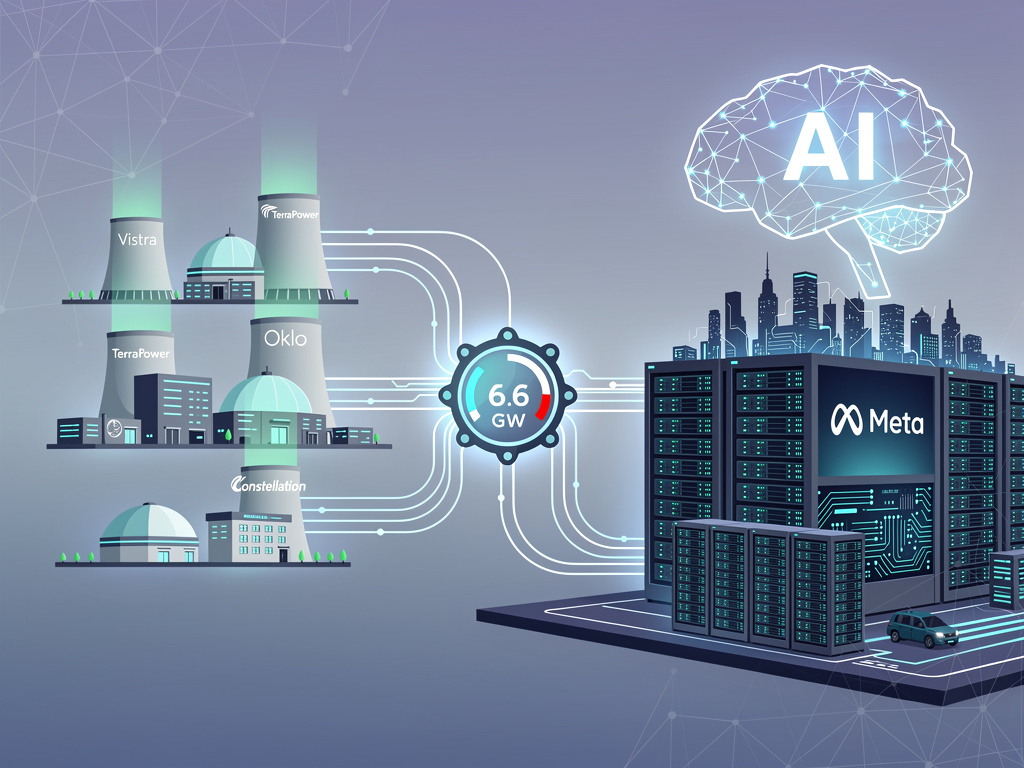
Meta Platforms Inc. has initiated a groundbreaking energy procurement strategy that aims to secure up to 6.6 gigawatts of nuclear power to support its artificial intelligence infrastructure. Announced on January 9, 2026, the agreements with Vistra Corp., TerraPower LLC, Oklo Inc., and Constellation Energy Corp. mark a significant step in enhancing U.S. nuclear capacity in response to increasing electricity demands driven by AI technologies. This move positions Meta as a pivotal player in the energy sector, particularly as major tech companies face rising power needs.
The agreements involve long-term power purchase contracts from three existing Vistra nuclear plants located in the heartland of the United States. Additionally, Meta will support the development of advanced small modular reactors through partnerships with TerraPower and Oklo. The company described these agreements as “landmark,” emphasizing their potential to expand nuclear operations, advance technology, and create jobs in local communities.
The surge in AI workloads has significantly increased the power requirements for major technology firms. Meta’s upcoming Prometheus AI supercluster, designed for scaling AI models, necessitates a reliable and carbon-free energy source—a need that intermittent renewable energy sources cannot entirely fulfill. According to industry estimates, U.S. data centers could consume as much as 8% of the national electricity supply by 2030.
Details of the Agreements
Meta’s contracts with Vistra include 20-year power purchase agreements for electricity generated from plants in Illinois, Pennsylvania, and Texas, which will extend their operational lifespans. Constellation Energy, the largest nuclear operator in the U.S., is engaged in capacity expansions related to these agreements. Meta executive Joel Kaplan highlighted the company’s strategic position as “one of the most significant corporate purchasers of nuclear energy in American history” in a post on X.
Moreover, partnerships with TerraPower, backed by Bill Gates, and Oklo, supported by Sam Altman, focus on next-generation reactor technologies. These small modular reactors are designed for faster deployment and lower costs. Meta’s financial commitments will aid in site development and licensing, expediting projects expected to become operational in the late 2020s.
Economic and Strategic Implications
Joel Kaplan stated on X, “Our agreements with Vistra, TerraPower, Oklo, and Constellation… will help power our AI future, strengthen our country’s energy infrastructure, and provide clean energy.” This statement reflects alignment with national energy priorities and highlights support from key governmental figures. The agreements also signify a decisive shift away from dependency on natural gas, as nuclear power provides consistent output that is unaffected by weather conditions.
Following the announcement, Vistra’s market capitalization rose by $10 billion in a single day, underscoring investor enthusiasm for nuclear energy’s revival. The technical advantages of small modular reactors include enhanced safety features and the potential for energy storage integration. For instance, TerraPower’s Natrium reactor utilizes liquid sodium coolant and is designed to produce 345 megawatts per unit.
Meta’s involvement in these projects may mitigate the financial risks associated with developing new nuclear technologies, which have previously faced regulatory and financing challenges. The ongoing tightening of uranium fuel supply chains, with prices doubling since 2023, could find stability through Meta’s scale, potentially reviving mining activities in regions such as Wyoming and Utah.
While the Trump administration’s pro-nuclear stance, including expedited approvals from the Nuclear Regulatory Commission, facilitates these developments, challenges remain. Concerns regarding regulatory risks and waste management must be addressed. Nevertheless, Meta’s substantial financial resources—estimated at $50 billion in capital expenditure for 2025—place it in a strong position to navigate these obstacles.
The move signals a broader trend among tech giants to explore nuclear energy. Companies like Microsoft and Google are also pursuing similar nuclear initiatives, setting a precedent in the industry. Meta’s commitment to securing 6.6 gigawatts of nuclear energy puts it ahead of its competitors, establishing it as one of the world’s largest corporate buyers of nuclear power.
Overall, these projects are expected to generate thousands of high-wage jobs in construction, operations, and supply chain management. The expansions at Vistra’s plants alone could potentially double their workforce. Meta has emphasized the importance of “job growth in American communities” in its communications.
As the U.S. aims for cleaner energy sources, Meta’s nuclear strategy could contribute to significant reductions in carbon dioxide emissions. By 2035, the company’s nuclear fleet could offset as much as 20 million tons of CO2 annually compared to gas alternatives. This shift could elevate nuclear energy’s share in the U.S. power mix from 19% to potentially higher levels.
As competition among tech firms intensifies, Meta’s comprehensive energy strategy may redefine corporate approaches to energy procurement on a global scale, advocating for a sustainable future while meeting the pressing demands of AI technologies.