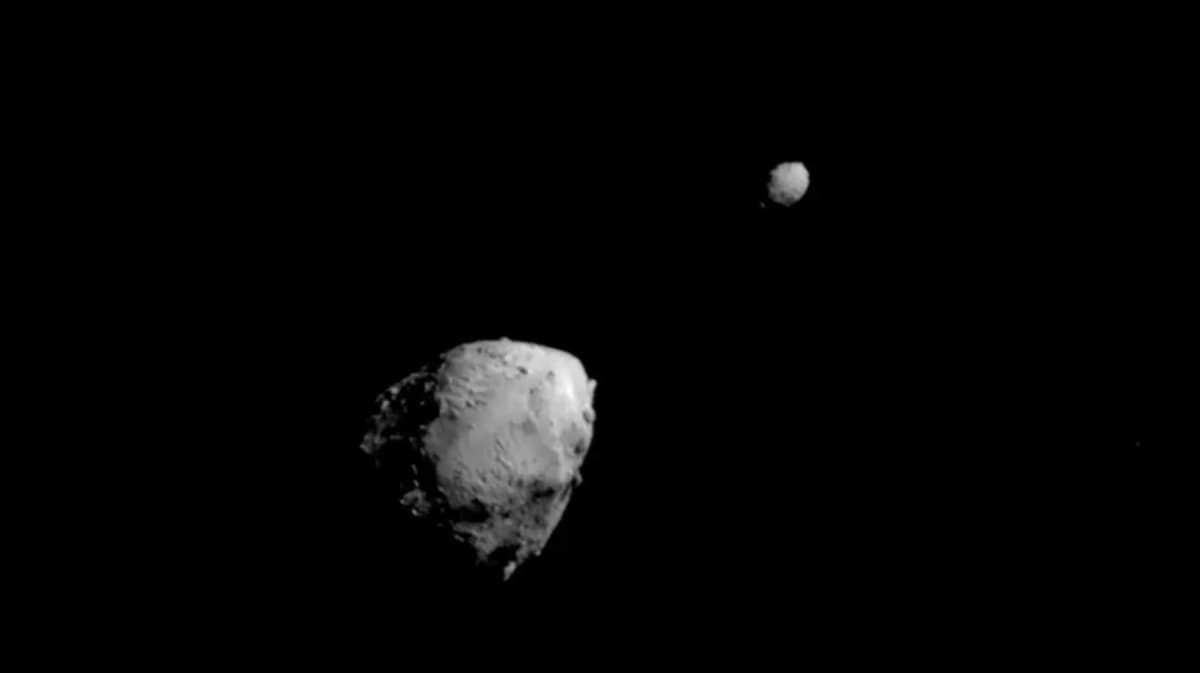
NASA has achieved a significant milestone in planetary defense by successfully altering the course of a giant asteroid. This groundbreaking test, part of the Double Asteroid Redirection Test (DART) mission, demonstrates that the deflection of space rocks is a feasible strategy to protect Earth from potential asteroid impacts.
In September 2022, NASA’s DART spacecraft collided with the asteroid Dimorphos, a moonlet orbiting a larger asteroid known as Didymos. The impact resulted in a measurable change in Dimorphos’s orbit, confirming the effectiveness of kinetic impactor technology. This method could be crucial for future asteroid threats, showcasing that deflecting an incoming asteroid is not merely a concept out of science fiction.
Significance of the DART Mission
The DART mission, which was coordinated with the help of the Johns Hopkins University Applied Physics Laboratory, marks a pivotal moment in the history of space exploration and planetary defense. Scientists observed that the collision altered Dimorphos’s orbital period around Didymos by approximately 33 minutes. This outcome exceeded expectations and validates the potential for similar missions to safeguard Earth.
The data collected from this operation will inform future planetary defense strategies. NASA plans to use the findings to develop a comprehensive approach for responding to asteroids that could pose a threat to Earth. The success of DART bolstered confidence in the capability to divert hazardous asteroids, reinforcing the idea that advanced technology can mitigate risks from space.
International Collaboration and Future Prospects
NASA’s efforts are supported by collaborations with international partners, including the European Space Agency (ESA). ESA plans to follow up with its Hera mission in 2024, which will study Dimorphos in detail to better understand the effects of the DART impact. This cooperative approach highlights the global urgency of planetary defense and showcases the importance of shared knowledge in addressing potential threats.
As asteroid tracking and monitoring technologies improve, scientists are optimistic about their ability to identify hazardous objects well in advance. This foresight is critical, as even a small asteroid could cause devastating consequences depending on its size and impact location.
NASA’s successful demonstration of asteroid deflection has significant implications for the future of planetary safety. By proving that it is possible to steer a potentially destructive object away from Earth, the agency has taken a substantial step toward ensuring the safety of our planet. As research and technology continue to evolve, the vision of a protective shield against space threats is becoming increasingly attainable.
The successful outcome of the DART mission represents a blend of scientific innovation and international collaboration, marking a new chapter in humanity’s efforts to protect the Earth from cosmic hazards.