A recent study has unveiled significant findings from NASA’s Parker Solar Probe, which conducted a close pass of the Sun in December 2024. Researchers, led by Angelos Vourlidas from Johns Hopkins University, documented remarkable magnetic phenomena occurring in the Sun’s atmosphere. This research, published in The Astrophysical Journal Letters, enhances our understanding of solar activity and its implications for space weather.
The Parker Solar Probe, which approached within approximately 4 million miles of the Sun, captured high-resolution images of what have been termed “magnetic tadpoles.” These formations appear as dark shapes in solar magnetic loops that seem to swim back toward the Sun’s surface. This study marks the first time that scientists have observed these “inflow swarms” with such clarity. Researchers believe these structures are crucial in influencing solar storms, which can have significant effects on Earth’s space environment.
In addition to the discovery of tadpoles, the probe also observed a phenomenon known as “tearing-mode instability” within the Heliospheric Current Sheet (HCS). The HCS serves as a boundary between the Sun’s north and south magnetic fields, and during the observation, part of this sheet was seen stretching and ultimately tearing apart, resembling how a flag reacts in strong winds. This event is particularly notable as it is rarely witnessed directly and contributes to our understanding of solar dynamics.
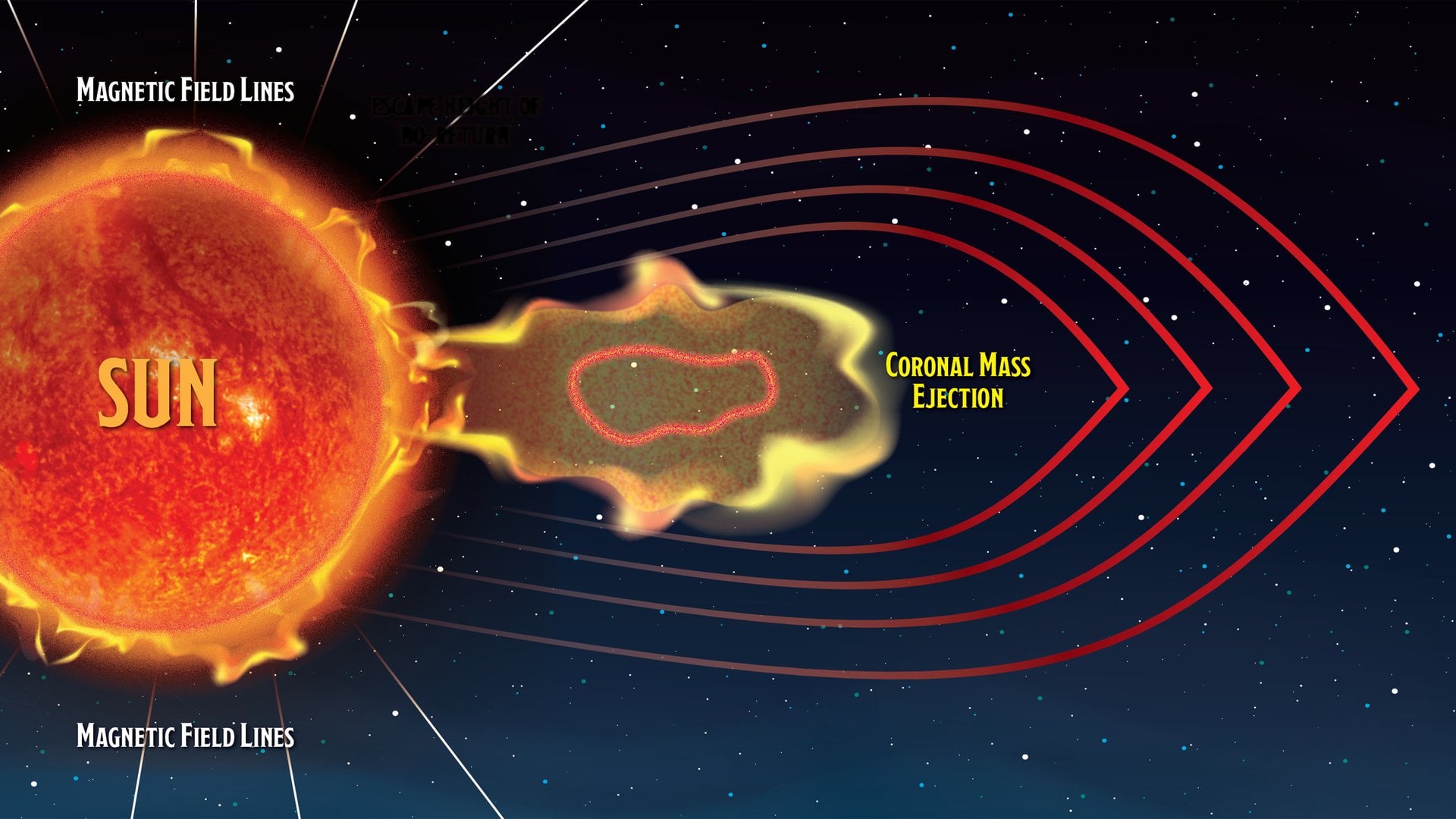
Another groundbreaking observation involved the “birth” of in/out magnetic pairs. The probe captured a magnetic structure in the Sun’s corona that was pinched in the middle, resulting in two separate entities: one moving back toward the Sun and the other ejected into space at an astonishing speed of 560 km/s. This speed exceeds previous models’ predictions, suggesting that researchers will need to revise their understanding of solar storm mechanics, particularly concerning the generation of potentially hazardous particles during coronal mass ejections (CMEs).
The Parker Solar Probe’s mission officially concluded in June 2024; however, it will continue its observations, making perihelion passes approximately four times a year until its fuel is depleted. This ongoing exploration promises to yield even more valuable insights into solar activity and its effects on the solar system.
These findings not only highlight the advanced capabilities of the Parker Solar Probe but also underscore the importance of continued research in heliophysics. As scientists analyze the detailed images and data collected, they aim to deepen our understanding of the Sun’s behavior and its impact on Earth’s environment. The legacy of the Parker Solar Probe may ultimately serve as a testament to human ingenuity in the quest for knowledge about our solar neighbor.