A groundbreaking study from Lund University has revealed how cells protect themselves by closing off access to harmful free radicals. Published on December 22, 2025, in the journal Nature Communications, this research provides new insights into cellular mechanisms that could have significant implications for understanding diseases such as cancer and diabetes.
Cells must maintain a delicate balance between beneficial and harmful oxygen molecules known as free radicals. Among these, hydrogen peroxide plays a crucial role. While it is used in small amounts by cells to send important signals, excessive concentrations can lead to damage or even cell death.
According to Karin Lindkvist, the lead researcher and a professor at Lund University, “Our cells produce free radicals when we inhale oxygen. Previously, it was thought that hydrogen peroxide could flow freely through channels in the cell membrane. Our findings suggest that these channels have a protective system.”
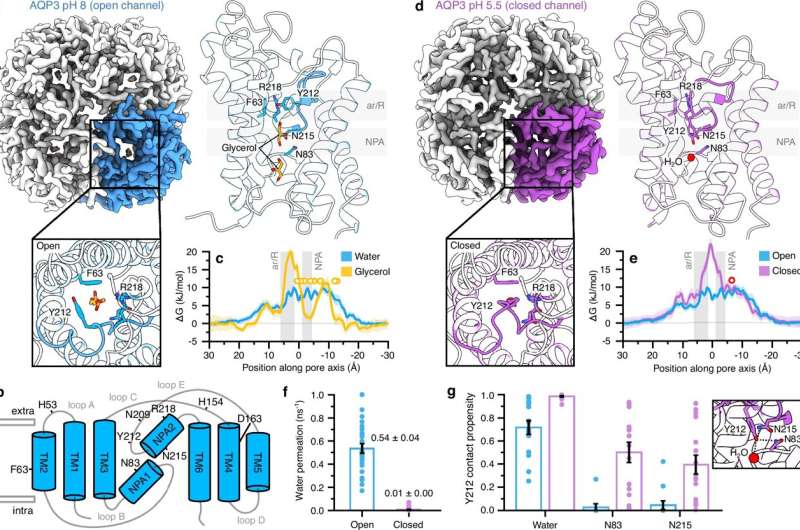
Utilizing advanced cryo-electron microscopy, the researchers discovered that the channels typically remain open, allowing molecules like hydrogen peroxide, water, and glycerol to enter the cell. However, when external levels of hydrogen peroxide become too high, these molecules can adhere to the channel’s exterior, effectively acting as a “lock” that keeps the door closed and prevents potential damage.
The team was taken aback by their findings. Lindkvist described it as “witnessing, in the moment, the cell closing the channel on something that could otherwise cause it harm.” This automatic response serves as a vital defense mechanism against dangerous levels of free radicals.
The implications of this discovery extend beyond basic cellular function. Understanding how cells manage stress and regulate free radicals could enhance research into various health conditions. For instance, cancer cells produce large amounts of free radicals during rapid growth yet manage to survive. Lindkvist noted, “One possibility is that they use similar channels to expel excess free radicals and avoid being overwhelmed.”
The research team plans to investigate the potential of targeting these channels to disrupt cancer cell survival. Lindkvist stated, “In our next study, we want to explore whether it is possible to kill cancer cells by blocking the channels.”
This study not only enhances our understanding of cellular protection but also provides a pathway for future research that could lead to innovative therapies for diseases characterized by elevated oxidative stress.
For more detailed information, refer to the original research by Peng Huang et al, titled “Structural insights into AQP3 channel closure upon pH and redox changes reveal an autoregulatory molecular mechanism,” published in Nature Communications (2025). DOI: 10.1038/s41467-025-67144-2.