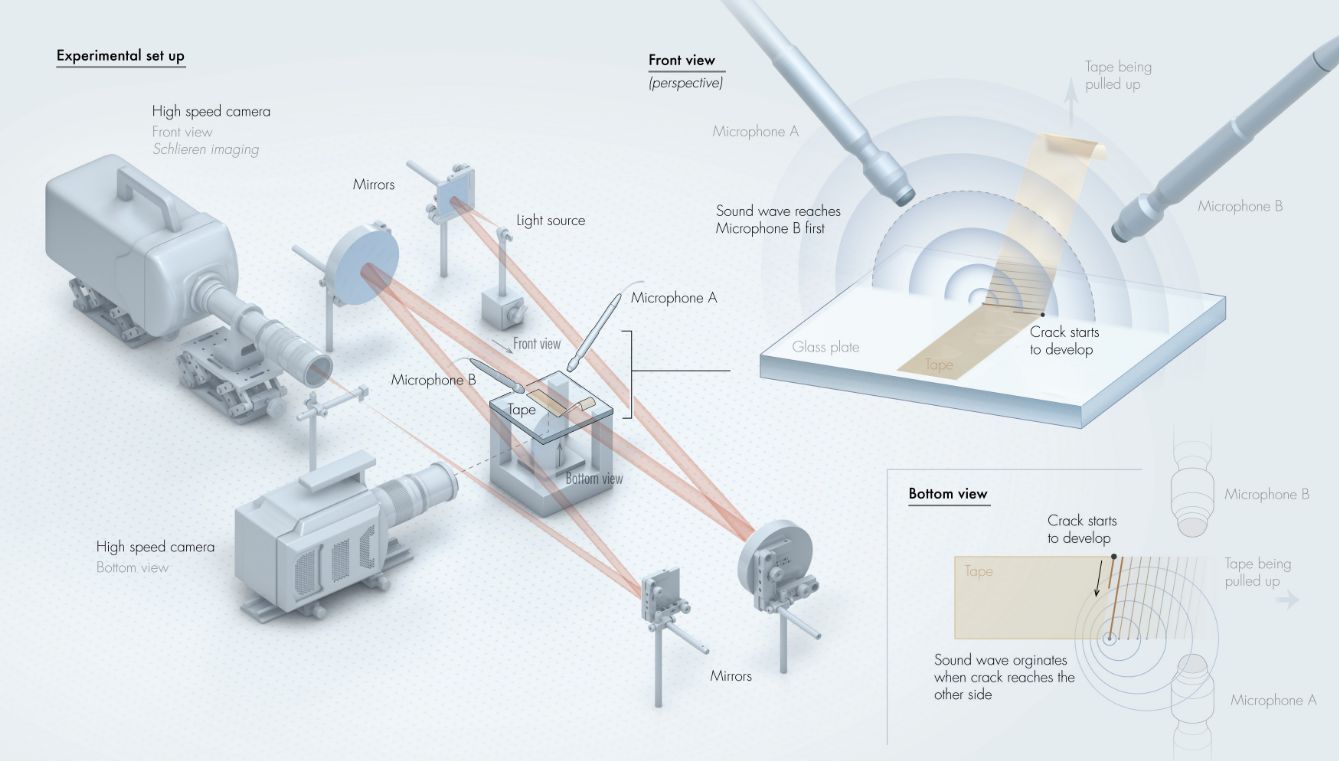
The distinct sound produced when peeling adhesive tape has long intrigued both scientists and casual users alike. A recent study led by Er Qiang Li and colleagues, published in Physical Review E, explores the underlying physics of this phenomenon, revealing that the surprising noise is linked to shockwaves generated during the tape’s removal from its roll.
To investigate this auditory effect, researchers utilized rolls of adhesive tape in a carefully designed experimental setup. They synchronized two microphones with high-speed cameras within a Schlieren imaging framework, allowing them to capture high-resolution data on what is known as the stick-slip mechanism. This method provided insights into the forces at play when tape is peeled.
The research team discovered that as the tape is pulled away, transverse fractures form after a prolonged sticking phase. These fractures create a vacuum that instantly collapses at the end of the slip phase, generating a pressure of 9600 Pa. This sudden release produces the loud sounds often associated with peeling tape, which can be heard across a room or an open-plan office.
In addition to its notable noise, adhesive tape is also recognized for its triboluminescence, the ability to emit light when torn or stressed, as well as the generation of X-rays. These characteristics make adhesive tape an interesting subject in scientific demonstrations, illustrating physical principles in a readily accessible form.
The findings from this research not only clarify why peeling tape is so noisy but also highlight how everyday objects can serve as valuable tools for scientific exploration. While the noise itself is unlikely to diminish, the study adds a fascinating layer of understanding to a common experience.
This research underscores the intersection of science and everyday life, showcasing how even simple actions can reveal complex physical phenomena. The work of Li and his team serves as a reminder of the wonders that can be uncovered in the most ordinary aspects of our daily routines.