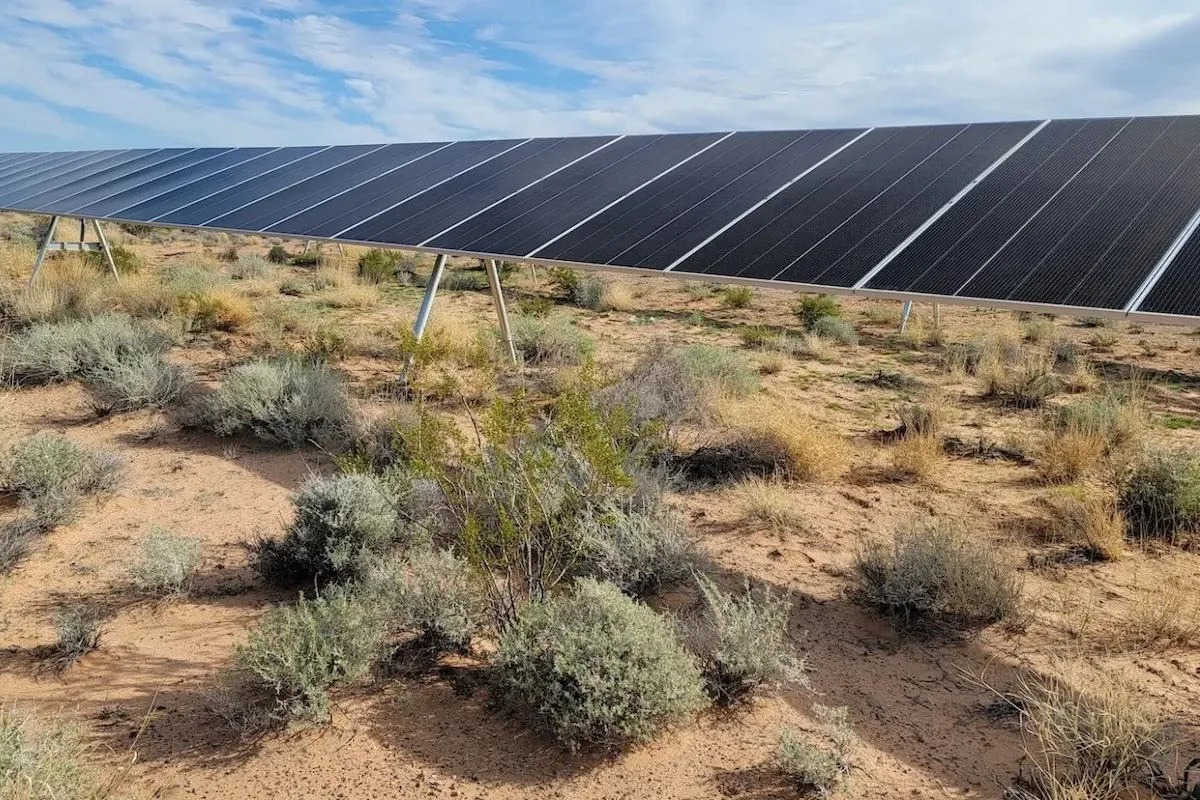
A recent study highlights the positive impact of solar farms on rare desert plants, particularly the threecorner milkvetch, near Las Vegas. Contrary to the notion of the Mojave Desert as a barren landscape, it supports a diverse ecosystem. The study indicates that this plant, which is being considered for protection under the Endangered Species Act, has seen a significant increase in population at the Gemini Solar Project.
Researchers noted that prior to the project, only twelve threecorner milkvetch plants were found at the site. By 2024, that number surged to 93, demonstrating the resilience of this species. The increase is attributed to the project’s commitment to preserving the ecosystem rather than disrupting it through traditional construction methods, which often involve cutting vegetation and leveling the soil.
Innovative Approaches to Solar Development
The Gemini Solar Project employed techniques known as ecovoltaics, which prioritize the preservation of native species. Instead of the conventional “blade and grade” approach, the developers aimed to maintain the seed banks crucial for plant regeneration. According to Tiffany Pereira, an ecologist at the Desert Research Institute and lead author of the study, the solar panels create shaded environments that reduce evaporation rates, thus providing more water for the plants.
Pereira stated, “So you just have the potential for a lot more plants.” This finding is significant as it not only showcases the survival of the threecorner milkvetch but also indicates the potential for a greater diversity of species thriving in solar farm environments.
The success at Gemini adds to a growing body of evidence suggesting that solar farms can be designed to minimize ecological disturbances. Primergy, the company behind the Gemini project, did not respond to inquiries for comment regarding their practices.
Broader Impacts on Biodiversity
The implications of such projects extend beyond the immediate area. Similar studies conducted in other regions, including Minnesota, have revealed substantial increases in biodiversity surrounding solar installations. Research led by Lee Walston of Argonne National Laboratory demonstrated that unique flowering plant species increased sevenfold, while insect pollinator populations tripled over five years.
These findings underscore a crucial relationship: increased plant growth leads to a rise in pollinator numbers, which in turn supports bird and bat populations. Walston noted, “We’ve seen positive outcomes sort of across the board.” He emphasized that the success of these projects is contingent upon careful management, including appropriate panel heights and vegetation selection to accommodate various species’ needs.
Despite the potential benefits, challenges remain. Some plant species may thrive under solar panels, while others may require sunnier conditions. Proper planning is vital to ensure that the diverse needs of the ecosystem are met.
The concept of agrivoltaics is also gaining traction, where crops are grown alongside solar panels. Studies indicate that crops such as cucumbers benefit from the microclimate created by the panels, which helps regulate temperature and moisture levels. This dual-use approach not only generates clean energy but also enhances food production.
Johanna Neumann, senior director at Environment America, remarked on the potential of solar farms in fostering biodiversity, particularly in prairie ecosystems. She noted that unlike traditional methods that disrupt habitats, ecovoltaics can restore former agricultural fields to a more natural state.
The ongoing evolution of solar farm development practices illustrates a growing recognition of the importance of biodiversity. As Pereira aptly put it, “It’s a wild and beautiful place that we live in, and it’s our job to look out for these species as well.” By combining renewable energy generation with ecological preservation, the industry can strive for a more sustainable future.