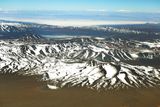
The Atacama Desert in northern Chile, renowned for its extreme dryness and home to one of the world’s leading astronomical observatories, recently experienced an unusual snowfall. This unexpected weather event forced the Atacama Large Millimeter/submillimeter Array (ALMA) observatory to enter a state of emergency, halting its operations temporarily.
Situated at a high altitude, the Atacama Desert spans roughly 40,000 square miles and is one of the driest places on Earth, with some areas receiving just 0.5 millimeters of rain annually. Its unique climate makes it an ideal location for astronomical observation, largely due to minimal atmospheric interference.
Snowstorm Hits High-Altitude Observatories
In late June and early July 2025, ALMA, located on the Chajnantor plateau, was caught off guard by a rare snowstorm. The observatory comprises 66 antenna dishes that capture faint signals from distant cosmic phenomena. To safeguard the equipment from accumulating snow, the research team repositioned the dishes, tilting them appropriately. This maneuver led to a temporary suspension of observations.
Notably, the storm did not affect other major telescopes in the region. The Southern Astrophysical Research (SOAR) Telescope and the Vera C. Rubin Observatory, located a few hundred miles southwest of ALMA, continued their operations unaffected. Despite the disruption, the intense solar radiation typical of the Atacama quickly began to mitigate the impact of the snowfall, with most of it disappearing within a month. Some of the snow likely underwent sublimation, a process where solid turns directly into gas, influenced by the desert’s dry conditions and strong sunlight, according to the NASA Earth Observatory.
Shifting Climate Patterns in the Atacama
The Atacama’s climate, historically characterized by extreme aridity, appears to be undergoing subtle changes. The region did not record any precipitation from October 1903 to January 1918, but instances of snow in 2011, 2013, and 2021 suggest a shift in weather patterns. Recent unseasonal rains have prompted desert flowers to bloom earlier than expected, showcasing the resilience of local flora and microbial life beneath the surface.
However, these changing patterns have also resulted in severe consequences. In March 2015, heavy rainfall led to devastating floods, particularly in the coastal city of Chañaral, where the Salado River swelled to a depth of approximately 4.5 meters. The flooding resulted in substantial property damage and, tragically, the loss of 31 lives.
These recent events highlight the potential implications of climate change on the Atacama Desert. As the region contends with increasingly erratic weather, ALMA and other observatories may face more frequent challenges due to snow and precipitation.
The observations and data collected by ALMA remain critical for advancing our understanding of the universe. As the climate continues to evolve, adaptability in these high-altitude research facilities will be essential to maintaining their invaluable contributions to astronomy.
For more on this topic, visit Discover Magazine for articles grounded in peer-reviewed studies and high-quality sources.