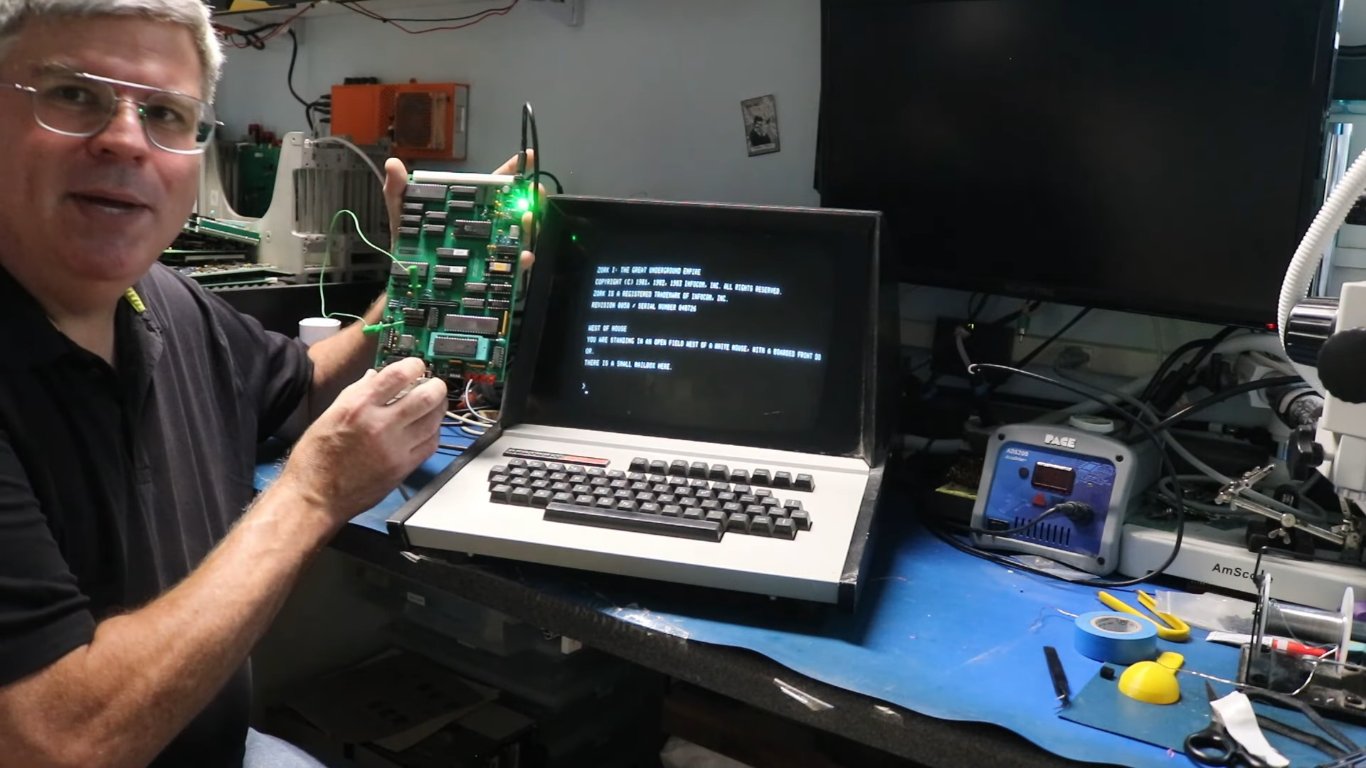
In a remarkable feat of retro computing, a classic text-based adventure game, Zork, has been successfully run on the Intel 4004, one of the earliest general-purpose microprocessors. The Intel 4004, which debuted in 1971, is a four-bit machine that predates the release of Zork by approximately eight years. This achievement highlights the enduring legacy and adaptability of early computing technologies.
Originally published in the late 1970s, Zork is notable for its ability to operate across various platforms, thanks to the innovative virtual machine, known as the Z-machine. This design allowed programmers to create a new interpreter for each platform, rather than needing to port the entire game. The project was undertaken by an enthusiast known as [smbakeryt], who aimed to explore the limits of this design by getting Zork to function on the Intel 4004.
Technical Challenges and Innovations
Working on a Heathkit H9 terminal, [smbakeryt] encountered significant challenges, particularly concerning the amount of RAM required to run the game. To address this limitation, he extended the address bus, which allowed for increased memory capacity. Despite these hardware upgrades, getting the Z-machine operational in software proved to be a complex task.
The endeavor involved multiple layers of software abstraction, an aspect that may surprise those familiar with 1970s computing. These technical layers made the project not only challenging but also an engaging exploration of historical computing methods. As [smbakeryt] continues to refine his setup, he seeks to identify the minimal computing requirements necessary to run Zork, pushing the boundaries of what is possible with such early technology.
A Legacy of Adaptation
This achievement echoes a broader trend in computing history, where games like DOOM have also been adapted to run on systems well below their original minimum requirements. A notable example is DOOM’s successful operation on the Nintendo Entertainment System (NES). Such projects highlight the ingenuity and creativity within the computing community, encouraging further experimentation with legacy systems.
While it may be challenging to find a pre-4004 machine that can deliver a reasonable user experience for Zork, [smbakeryt]’s milestone opens the door for others to explore similar challenges. The successful operation of Zork on the Intel 4004 is a testament to the enduring appeal and adaptability of classic games, as well as the innovative spirit of retro computing enthusiasts.