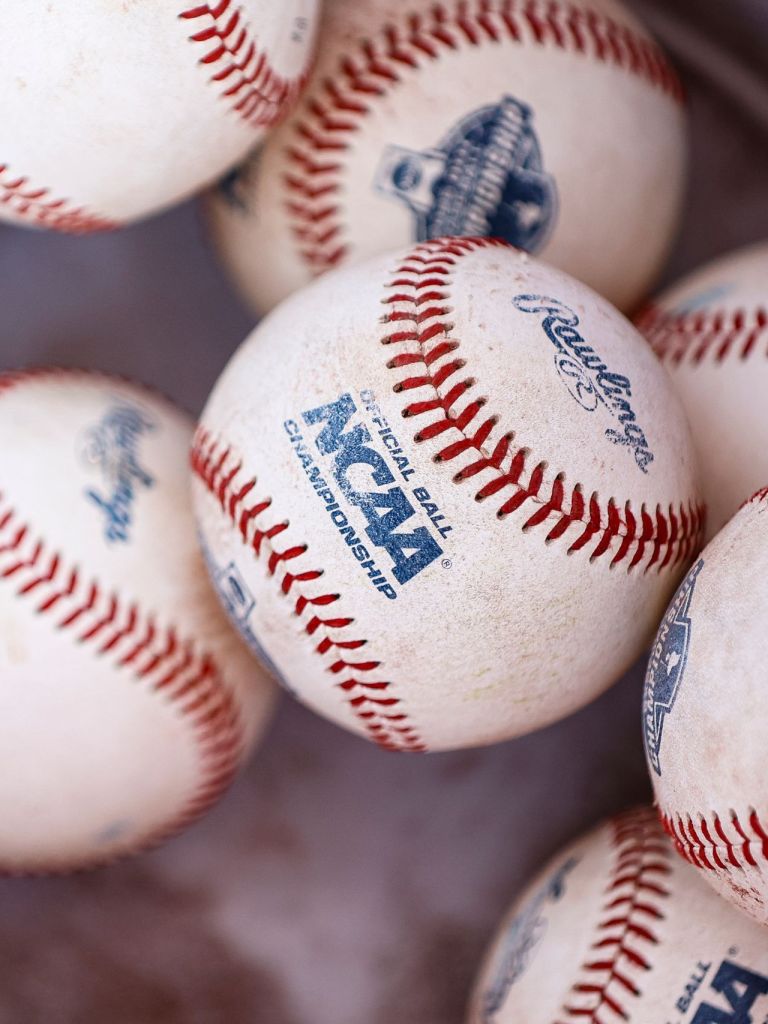
The recent midweek games in college baseball exposed vulnerabilities among top-ranked teams, raising questions about their postseason potential. On Tuesday night, five of the top ten teams in Baseball America’s latest poll faced defeats. Notably, No. 1 UCLA lost 4-3 at home to unranked San Diego State, while No. 2 LSU suffered its first loss of the season, falling 7-6 to McNeese. Additionally, No. 4 Georgia Tech experienced a significant setback, losing 9-4 at home against Georgia Southern.
Such defeats often ignite discussions among fans and analysts alike. Immediate questions arise: Is the bullpen adequately prepared? Are players becoming too predictable? Could these losses signal deeper issues as the season progresses? Yet, the history of college baseball reveals a more nuanced perspective on the importance of midweek games in determining postseason seeding.
The Weight of Midweek Performance
While Tuesday games contribute to overall standings, their impact on postseason placement is less significant than weekend series. In the past five seasons, evidence has shown that performance in midweek contests rarely defines a team’s postseason fate. Instead, weekends, particularly within powerful conferences, play a critical role in shaping a team’s resume.
For instance, last year, Coastal Carolina held a 7-5 midweek record but still earned the No. 13 national seed, making a remarkable run to the national championship series. In contrast, Tennessee, with a dominating 13-1 midweek record, was seeded lower than Coastal Carolina.
In 2024, NC State secured the No. 10 national seed despite a 3-6 midweek performance, alongside Arizona (6-5), UC Santa Barbara (6-4), and Oklahoma (6-4), all of which garnered top 16 seeds without impressive midweek records.
Looking back to 2022 and 2023, teams like Stanford, Oklahoma State, and East Carolina reached the top eight national seed threshold despite enduring four or more midweek losses. Since 2021, only one top-eight seed concluded the regular season with fewer than four games above .500 in midweek contests; that was Stanford, which finished 5-4 in 2023, primarily bolstered by weekend achievements.
According to a member of the NCAA selection committee, who spoke to Baseball America on the condition of anonymity, the context of midweek games complicates their evaluation.
“From a pure wins-and-losses standpoint, midweeks matter. They matter in the aggregate, in other words. But in a vacuum, it’s hard to get hung up on them,” the committee member stated.
Conference Dynamics and Midweek Games
For teams in the Southeastern Conference (SEC), Atlantic Coast Conference (ACC), Big 12, and the upper tier of the Sun Belt, conference performance largely dictates postseason outcomes. These leagues offer ample opportunities against top-ranked teams, meaning a single midweek loss typically does not undermine a team’s hosting prospects.
The Sun Belt Conference presents a case study. In 2022, Georgia Southern achieved the No. 16 national seed with an 8-5 midweek record. Although five of their 17 regular-season losses occurred in midweek games, their overall performance secured them a hosting position, as those losses were contextualized within a more substantial body of work.
In contrast, the impact of midweek performance increases as teams move away from power conferences. For example, Lamar University in 2025 posted a commendable 40-17 overall record and a 13-3 midweek mark. However, losses against Houston, Texas A&M, and Texas, combined with victories over non-tournament teams, ultimately excluded them from an at-large bid. This emphasizes the limited value of midweek wins against lesser opponents in shaping a postseason resume.
Xavier coach Billy O’Connor recognizes the complexities of midweek games and their implications. “You can’t ignore a game on Tuesday just because it’s on a Tuesday and not a Saturday or a Sunday,” O’Connor remarked. “We don’t value a Saturday win or loss any more than a Friday win or loss, and we don’t value a Sunday win or loss any less than a Friday or Saturday.”
He also acknowledges the inherent imbalance in how victories and losses are perceived between stronger and weaker programs. “When Xavier wins at Vanderbilt, the victory lingers. When Vanderbilt loses, it dissolves quickly,” he noted.
O’Connor elaborated on the importance of scheduling tough midweek games: “We want to show the committee that we are committed to playing the best teams we can all the time. There’s a lot more value for us to win a midweek game at Vanderbilt than it is for Vanderbilt to lose that game.”
At the highest level, midweek games are seen as manageable setbacks. For teams in the middle of the pack, they represent opportunities, while for those at the bottom, poor midweek performances can be detrimental.
“If we go 3-10 in midweeks, we probably aren’t anywhere near at-large consideration because the math doesn’t work,” O’Connor explained. “I bet an SEC team could go 3-10 in the midweeks and still make it to the tournament field. That’s just how it works.”
Despite the statistical implications, coaches still regard these games with earnestness. After UCLA’s recent defeat, Bruins coach John Savage emphasized the value of midweek games beyond just seeding implications.
“We had a plan to throw some guys who didn’t pitch,” Savage said. “I’ve always taken a lot of value in Tuesdays. I think it establishes the week. Very hard to do in the West. I love Tuesdays in Southern California. There’s no better challenge.”
These midweek contests hold emotional significance, establishing rhythm and testing team depth. They allow for valuable innings for younger players and require coaches to manage their pitching staff without relying on their top performers. While losing a midweek game might stir concern, historical data suggests that such outcomes rarely derail a team’s postseason ambitions.
In conclusion, while the emotional weight of midweek games is undeniable, their structural impact on postseason seeding is limited. As the season progresses, teams must navigate the intricacies of these contests while focusing on the larger picture of their overall performance.