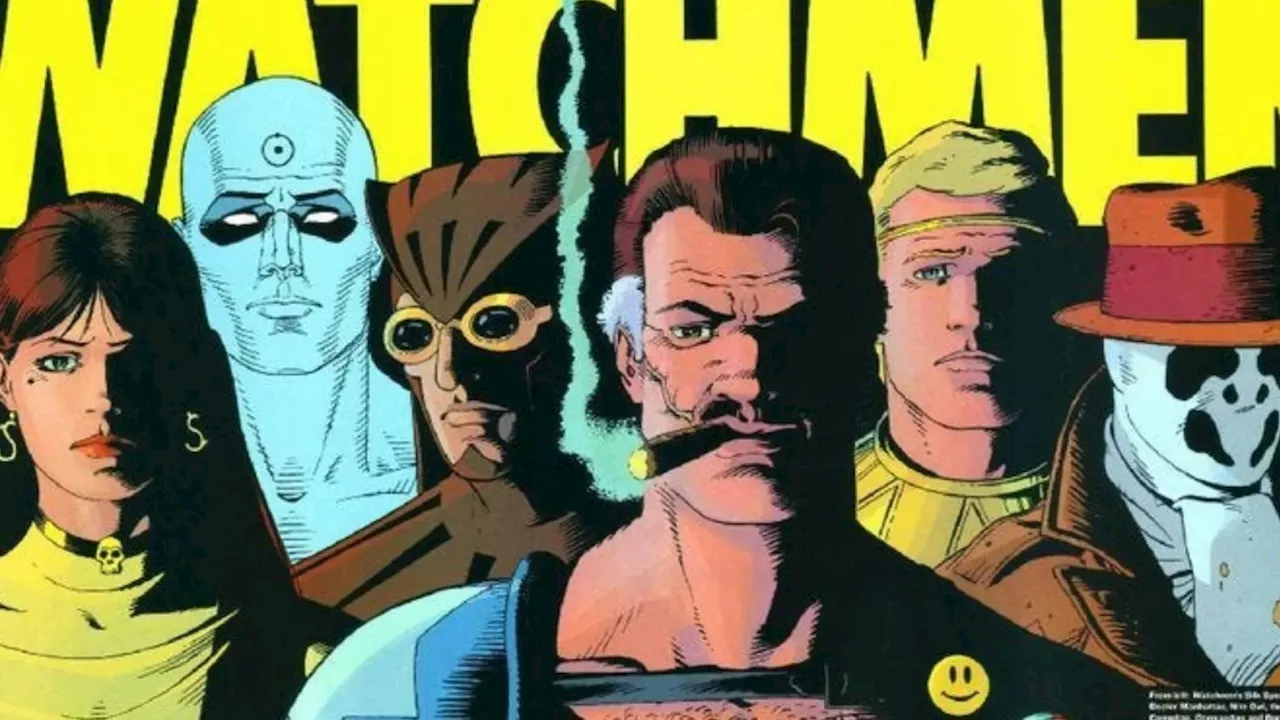
UPDATE: Today marks the 40th anniversary of the groundbreaking comic series Watchmen, created by Alan Moore and Dave Gibbons. As discussions ignite around its profound influence on the superhero genre, experts urge a critical re-evaluation of its legacy in contemporary culture.
Official sources affirm that since its initial release in 1986, Watchmen has been hailed as a masterpiece, reshaping the landscape of comics and literature alike. Serialized across twelve issues and compiled in 1987, its narrative serves as a satirical deconstruction of superhero archetypes, reflecting the socio-political anxieties of the Cold War era.
Critics are questioning whether the book’s legacy has been inflated or misinterpreted in today’s context. The comic’s intricate storytelling and artistic innovation, including the use of a nine-panel grid, are undeniable achievements. Yet, some argue that its dense narrative and historical roots position it more as a time capsule than a timeless classic.
The book encapsulates the moral complexities and government distrust rampant during its creation, influenced heavily by significant events like the Watergate scandal and the Vietnam War. As conversations unfold, many are left pondering how this influential work relates to today’s societal shifts.
While the narrative’s themes resonate with the fears of a past generation, modern audiences face a different reality. The 1990s and beyond introduced substantial changes in societal norms, raising the question of whether the themes explored in Watchmen still hold relevance in our current landscape.
Moreover, the influence of Watchmen on subsequent comic book creators raises concerns. Many have adopted its darker, grittier tone without fully grasping the depth and context of Moore’s original work. The result? A proliferation of morally ambiguous heroes often lacking the critical examination that Watchmen intended to provoke.
As we celebrate its anniversary, the focus shifts to the **cultural impact** of Watchmen and its potential misinterpretation. The fear is that newer works may be overshadowed by its legacy, leading to a stagnation in the exploration of complex narratives within the genre.
Moving forward, industry experts encourage readers and creators alike to engage with a broader array of comics that challenge the established norms set by Watchmen. As the superhero genre continues to evolve, it’s crucial to recognize and celebrate the diverse voices that push the medium forward.
In the coming weeks, discussions and panels are expected to unfold across various platforms, inviting fans and critics to reflect on the enduring legacy of Watchmen. This anniversary serves as a call to action for both readers and creators to embrace innovation while respecting the past.
Stay tuned for more developments as the comic book world reflects on what Watchmen means today and how its story continues to shape the future of superhero narratives.