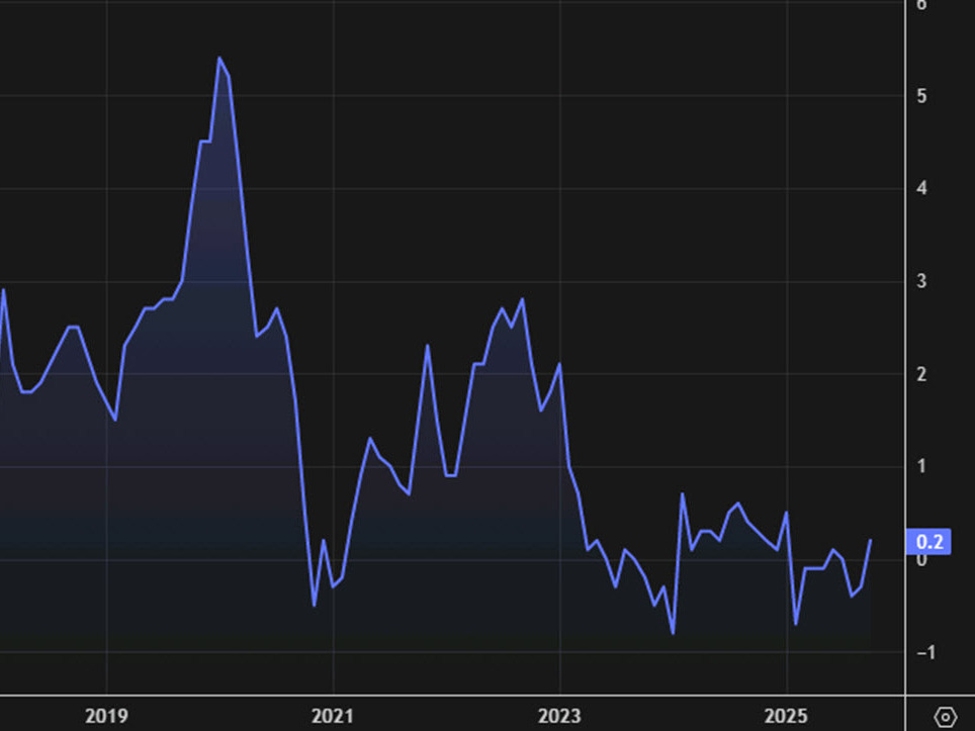
UPDATE: China has just announced a significant increase in its Consumer Price Index (CPI) for November, reporting a rise of +0.7%, matching expectations. This development, reported earlier today, marks a recovery from the previous month’s increase of only +0.2%.
Despite this positive movement in CPI, the Producer Price Index (PPI) reveals a concerning trend, continuing its decline at -2.2%, exceeding the anticipated -2.0%. This disparity indicates ongoing deflationary pressures within the economy, as PPI reflects falling prices at the producer level.
The implications of these figures are profound, suggesting that while consumer prices may be stabilizing, producers are facing significant challenges, which could impact future economic growth. Experts warn that persistent deflation in producer prices could lead to reduced investments and hinder overall economic recovery.
According to economic analyst Adam Button from InvestingLive.com, “While the CPI increase is a step in the right direction, the falling PPI is a red flag for the economy.” This sentiment underscores the importance of monitoring these indices as indicators of the broader economic climate.
The November CPI and PPI results come at a critical time, as policymakers and financial markets are closely watching for signs of inflation or deflation that could influence monetary policy decisions.
As these developments unfold, markets may react swiftly, and investors are encouraged to stay informed. The combination of rising consumer prices and declining producer prices presents a complex scenario for economic strategists.
Next Steps: Analysts will be closely monitoring upcoming economic data and government responses to these trends. Stakeholders are urged to pay attention to potential policy adjustments that could arise in response to this data.
Stay tuned for further updates as this situation develops.