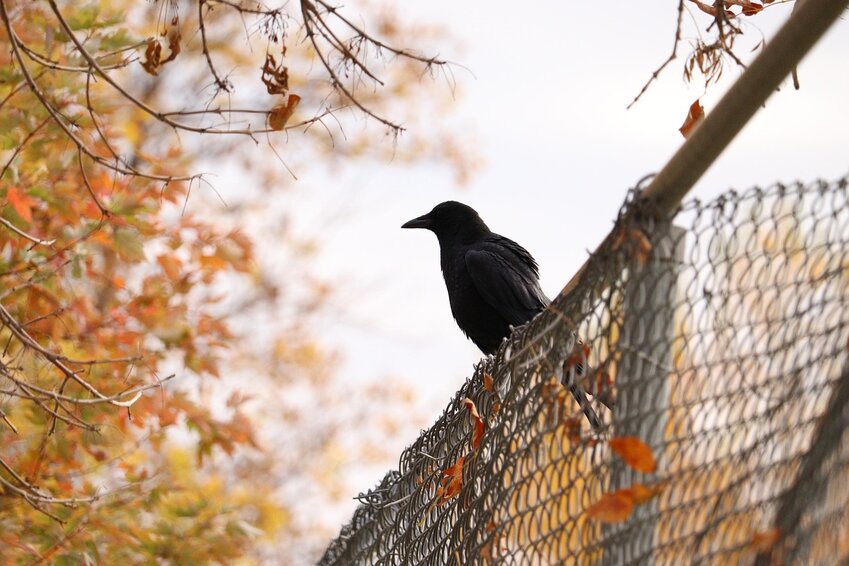
URGENT UPDATE: Homeowners in Washington state are facing an alarming situation as crows wreak havoc on lawns, but they are not the true perpetrators. The real culprits behind the destruction are the larvae of the European chafer, an invasive beetle that has rapidly spread across the region.
Residents are noticing their once lush lawns transformed into patches of dirt, prompting concerns over the mysterious digging by crows. However, experts confirm that these birds are actually performing a vital role in controlling the pest population. “The crows are killing the invasive pest that’s really destroying the lawn,” stated John Marzluff, emeritus professor of wildlife science at the University of Washington.
The European chafer larvae feed on turf roots, leading to significant grass damage. As the crows forage for these larvae, they inadvertently reveal an ecological imbalance that homeowners need to address. Marzluff emphasizes that while the loss of a pristine lawn is disheartening, the crows’ actions are a natural form of pest control.
In addition to crows, raccoons and skunks are also hunting for the invasive beetles, although their nocturnal habits make them less visible during the day. Homeowners may be frustrated as their lawns suffer, but experts like Jim Kropf, Washington State University Pierce County Extension Director, advise simple preventive measures.
Watering your lawn can help keep beetle populations in check, especially during summer when mating occurs. “When the lawn is most susceptible is also when the beetles are expanding their territory,” Kropf explained. Registered insecticides can provide relief, but timing is crucial; treatments applied in fall or winter will likely be ineffective.
Another strategy to combat the European chafer is to diversify landscaping. Marzluff suggests that a varied ecosystem reduces the chance of pests overwhelming a single species of plant. “Having a diverse ecosystem in your lawn reduces the chance of a pest getting in there and just wiping out the whole thing,” he noted.
Residents can find guidance on native plants suitable for Western Washington by visiting King County’s online resource at green2.kingcounty.gov/gonative. This site offers tips on nurturing diverse plant life that can help maintain lawn health.
It’s critical to remember that feeding wildlife can lead to aggressive behavior, especially in raccoons. Kropf warns that if you stop feeding them, they may become more dangerous.
As the situation develops, homeowners are urged to take immediate action to protect their lawns and promote a healthy ecosystem. Stay informed and ready to act—your lawn’s health may depend on it!