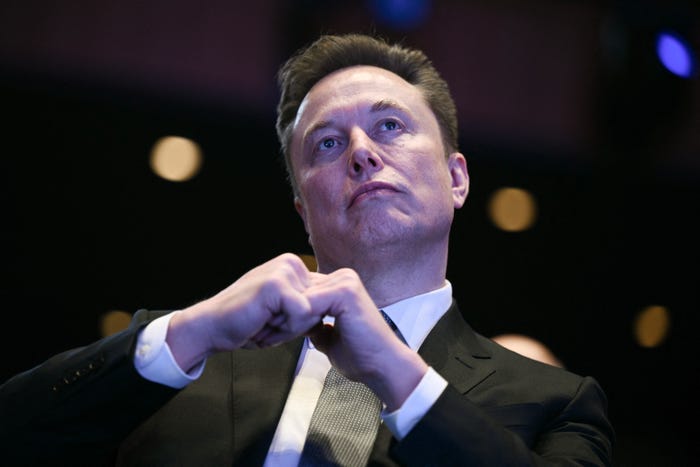
UPDATE: Elon Musk has just announced a significant leap forward for his Neuralink startup, with plans for “high-volume production” of brain chips beginning this year. The groundbreaking development, revealed in a post on X, also includes an ambitious move towards automating the surgical procedure for implanting these devices by 2026.
Neuralink, co-founded by Musk in 2016, focuses on creating brain-chip implants aimed at assisting individuals suffering from severe neurological conditions such as Parkinson’s, Alzheimer’s, and paralysis. The company aims to empower these patients to regain independence and communicate more effectively, using technology that enables control of computers through implanted microchips.
In his announcement, Musk stated that the surgical process will transition to a “streamlined, almost entirely automated” procedure. This innovation means that device threads will be introduced into the brain without the need to remove the dura, the protective outer membrane, making the procedure less invasive. Musk emphasized, “This is a big deal,” showcasing the transformative potential of Neuralink’s technology.
The current Neuralink chip is roughly the size of a coin, featuring an array of ultra-thin threads—each about 20 times thinner than a human hair—that extend into the brain. Previously, implanting the device required a human surgeon to remove a section of the skull, with a robotic arm taking over for the insertion.
Neuralink’s impact on patients has already begun to surface. Noland Arbaugh, a quadriplegic who became the first human recipient of the implant in January 2024, shared his experience, stating that the device has significantly enhanced his control over daily activities and social interactions. As of now, Neuralink reports that 12 patients around the globe are using the implants, with Musk projecting that the number could exceed 1,000 by 2026.
In a previous hiring initiative in November 2024, Neuralink sought manufacturing technicians and microfabrication specialists to support its scaling efforts. This surge in production capability marks a critical step toward making brain-computer interfaces more accessible to those in need.
The urgency of this development cannot be overstated. Musk’s vision for Neuralink extends beyond medical applications; he has hinted at the possibility of melding human consciousness with artificial intelligence, a prospect that raises both excitement and ethical considerations.
As Neuralink prepares to revolutionize the field of neurology and beyond, the medical community and potential patients alike are keenly watching developments. The next major milestones to look for include updates on the automation of the surgical procedure and the expansion of patient trials.
Stay tuned for further updates as Neuralink continues to push the boundaries of technology and human capability.