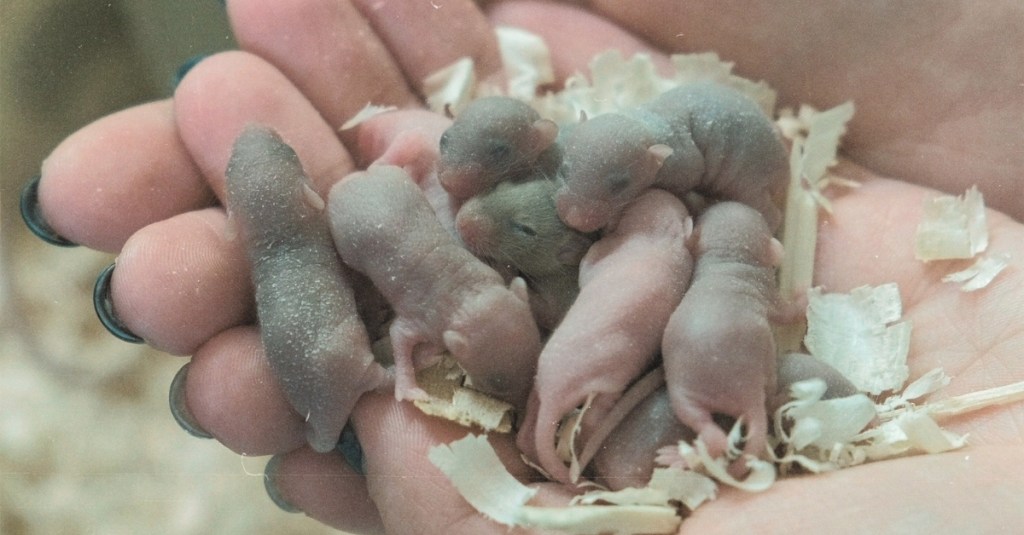
BREAKING NEWS: A female mouse has successfully given birth to nine pups after returning from space, marking a significant milestone for scientists studying the potential for life beyond Earth. This stunning development occurred on December 10, 2023, following the mouse’s journey aboard China’s Shenzhou-21 mission, which launched on October 31 and lasted for two weeks.
For researchers, this birth is not just a charming story; it has profound implications for future long-duration space missions. The female mouse and her litter were part of a vital experiment aimed at understanding whether reproduction is viable in space conditions. The mission reached the Chinese space station located 400 kilometers above Earth, where the mice endured microgravity and exposure to space radiation.
After their safe return on November 14, scientists were eager to see if the effects of spaceflight impacted the reproductive capabilities of the mice. According to Wang Hongmei, a researcher at the Chinese Academy of Sciences, the successful birth suggests that short-term exposure to space did not harm the mouse’s ability to reproduce. This finding is crucial as it addresses fundamental questions about mammalian reproduction in space—questions that remain largely unanswered as humanity eyes missions to Mars and beyond.
The mission faced challenges, including a change in the return schedule that forced the mice to stay in orbit longer than planned. Ground teams were prepared with emergency rations, including astronaut provisions like compressed biscuits and soy milk, which were used to ensure the mice’s survival during their extended stay. An AI system monitored their behavior, including movement, eating, and sleeping patterns, maintaining an Earth-like day-night cycle in orbit.
Now, scientists will closely observe the surviving pups for growth patterns and physiological changes, ultimately testing their ability to reproduce. This ongoing research is essential to identify any long-term effects of space exposure that may not manifest immediately but could surface across generations.
While this successful birth does not conclusively prove that mammals can conceive and gestate in reduced gravity, it does eliminate one concerning possibility. With the prospect of human trips to Mars on the horizon, ensuring that reproduction remains viable in space is critical. For now, this mouse and her healthy litter provide a glimmer of hope that space does not immediately disrupt fundamental biological processes.
This small but significant event underscores the importance of ongoing research in space biology and its implications for future human endeavors in the cosmos. As scientists continue to monitor the pups and their development, the world watches closely, eager for updates on the next steps in this groundbreaking research.