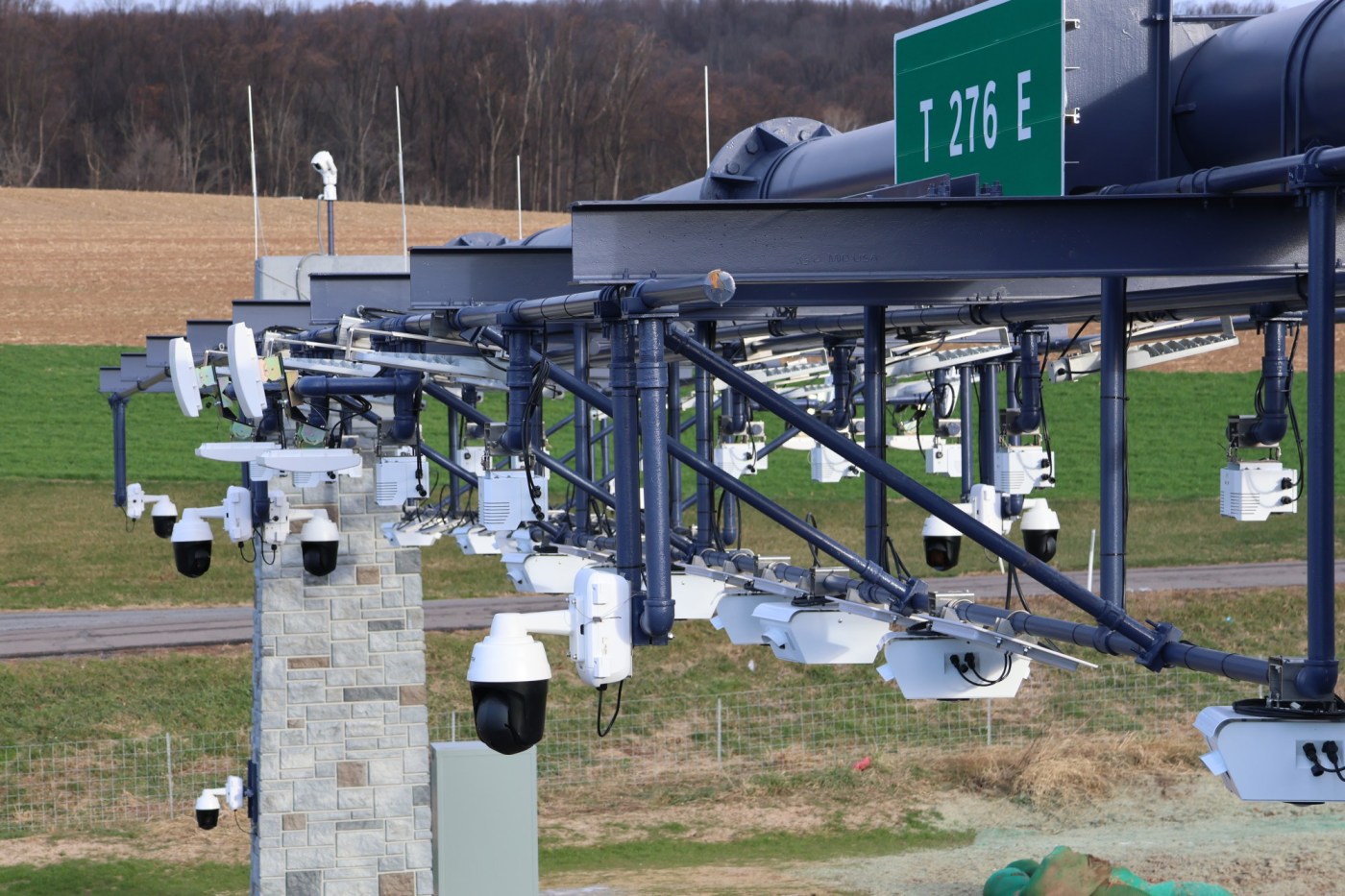
UPDATE: Major changes are rolling out on the Pennsylvania Turnpike as officials announce the completion of equipment installation for the new open-road tolling system. This system, set to transform travel for countless motorists, has reached milepost 276.2 between the Reading and Lebanon-Lancaster interchanges, with additional installations underway at milepost 250.3.
As the installation continues westward toward the Ohio border, officials confirm that the new tolling system will not go live until 2027. Mark Compton, CEO of the Pennsylvania Turnpike, expressed excitement about this transition: “We are excited to continue our preparations for 2027’s systemwide launch of open-road tolling. This evolution aims to modernize our operations, enhancing safety and efficiency for all drivers.”
The open-road tolling system enables drivers to pay tolls electronically while maintaining highway speeds, eliminating the need to stop or slow down at traditional toll plazas. Instead, overhead structures known as gantries will capture E-ZPass and toll-by-plate transactions as vehicles pass beneath them. This new method reduces confusion and lane switching, making travel smoother and less stressful.
Officials emphasize the importance of properly mounting E-ZPass devices and keeping account information updated to avoid potential billing issues. Motorists who do not adhere to these guidelines may receive toll-by-plate invoices at higher rates.
In addition to improving driver experience, the transition to open-road tolling promises significant financial benefits. The Pennsylvania Turnpike estimates annual savings of $25 million in interchange maintenance and operations, alongside $50 million in operational costs compared to traditional toll collection methods.
As preparations continue, demolition of the Morgantown toll plaza commenced in September, with completion expected by 2026. The removal of toll booths is designed to create safer travel conditions, improving sight lines for drivers and reducing distractions at interchanges.
This shift towards open-road tolling is more than just a technological upgrade; it represents a significant change in how motorists interact with the turnpike. With the promise of a safer and more efficient travel experience, these developments are poised to have a lasting impact on Pennsylvania’s roadways.
Stay tuned for further updates as the Pennsylvania Turnpike progresses toward its ambitious 2027 launch.