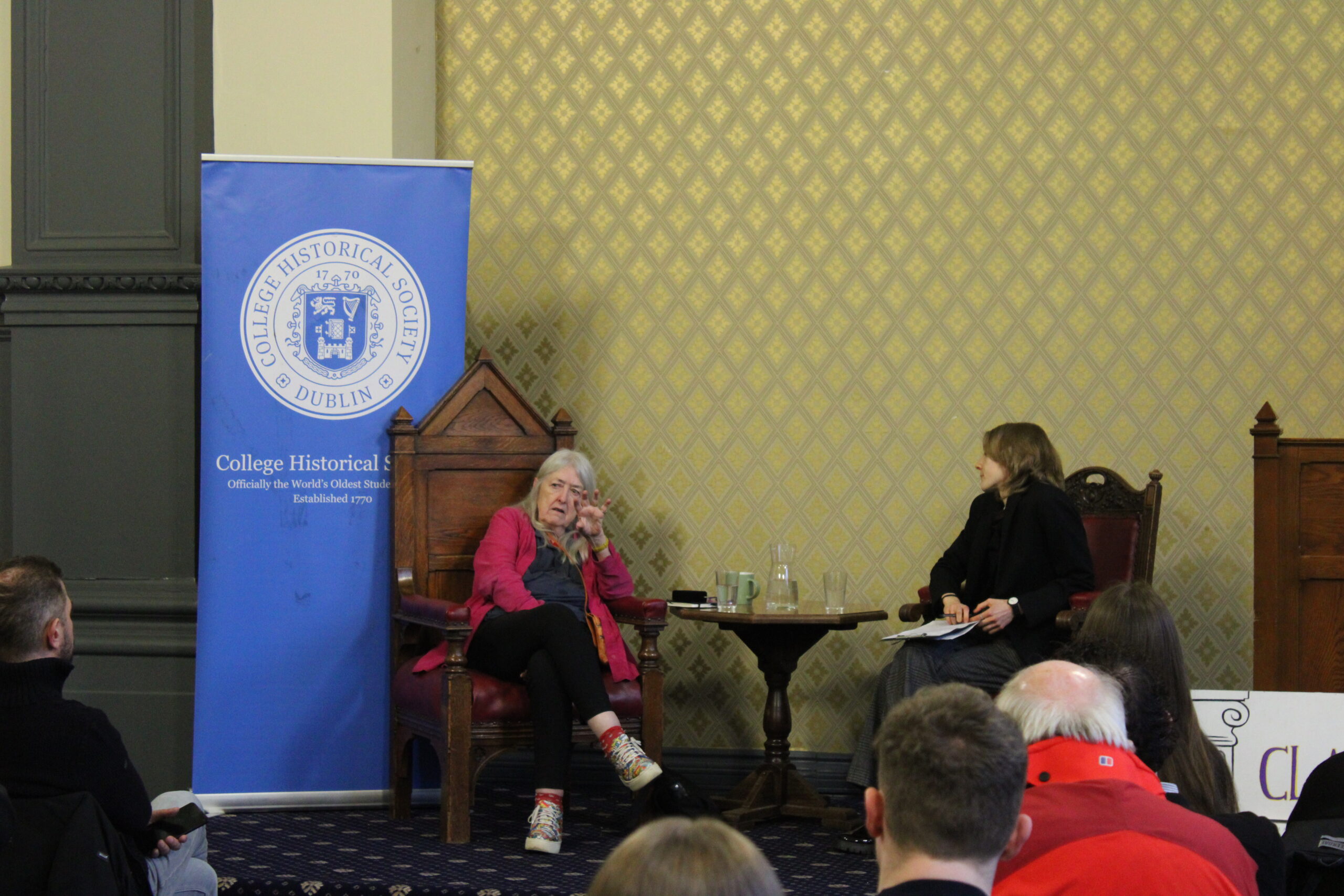
UPDATE: Renowned classicist Professor Mary Beard was awarded the Gold Medal for Outstanding Contributions to Public Discourse by the College Historical Society at Trinity College Dublin on February 6, 2023. This recognition highlights her transformative impact on academia and public understanding of history.
During her acceptance discussion, Beard shared a poignant childhood memory of visiting the British Museum, where she was captivated by a 4,000-year-old piece of bread among Egyptian mummies. This experience, she emphasized, fueled her belief that academics must share knowledge and make history accessible. “I have never forgotten this little piece of bread,” Beard remarked, stressing the importance of breaking down barriers to knowledge.
Beard criticized the current public debate landscape, stating, “The world of public debate is dominated by those who have never thought about what it would be like to think differently.” She argued that humanities degrees are crucial for fostering responsible citizenship and understanding diverse perspectives.
In a bold statement, Beard pointed out that “some of the monsters of world history have studied Latin,” underscoring the need for more comprehensive education in the humanities. She referenced her notable debate with former UK Prime Minister Boris Johnson in 2015, illustrating the ongoing struggle to defend the relevance of humanities education amidst funding cuts proposed by political leaders.
As a Trustee of the British Museum, Beard voiced her concerns on conservation practices, advocating for a more interactive approach that allows people to connect with artifacts directly. “It’s a risk I’m prepared to take,” she stated, emphasizing that engaging with history can profoundly impact young minds.
Beard also discussed the portrayal of Ancient Classics in modern cinema, noting that adaptations like Christopher Nolan’s upcoming film based on the Odyssey can spark renewed interest in classic literature. “More people are going to read the Odyssey in 2026 than ever,” she predicted, despite acknowledging some historical inaccuracies in costume design.
Touching on the complexities of historical truth, Beard described herself as a “post-truth historian,” expressing interest in narratives that deviate from strict accuracy. “When untruths are cut out of historical narratives, we are left with boring information,” she explained, suggesting that societal values shape what stories are told.
In a humorous yet critical commentary, Beard shared her recent experience using AI to write an essay on the death of Nero. She noted that while technology can reveal clichés in academic writing, it lacks the personal touch that makes historical narratives engaging.
Beard’s insights also extend to contemporary politics, where she was asked about parallels between historical figures and modern leaders. Responding to the frequent query of which Roman Emperor resembles Donald Trump, she identified Elagabalus, illustrating the complexities of equating historical personalities with current ones.
Beard concluded her session by encouraging curiosity and critical thinking, urging academics to “speak the truth more often.” As discussions around the value of humanities continue, her call to action resonates profoundly, highlighting the essential role of history in understanding ourselves and our world.
As the conversation around humanities education and public discourse evolves, Professor Beard’s contributions remain vital. Her passionate advocacy for the humanities and accessible education invites everyone to engage with history and its relevance in today’s society.