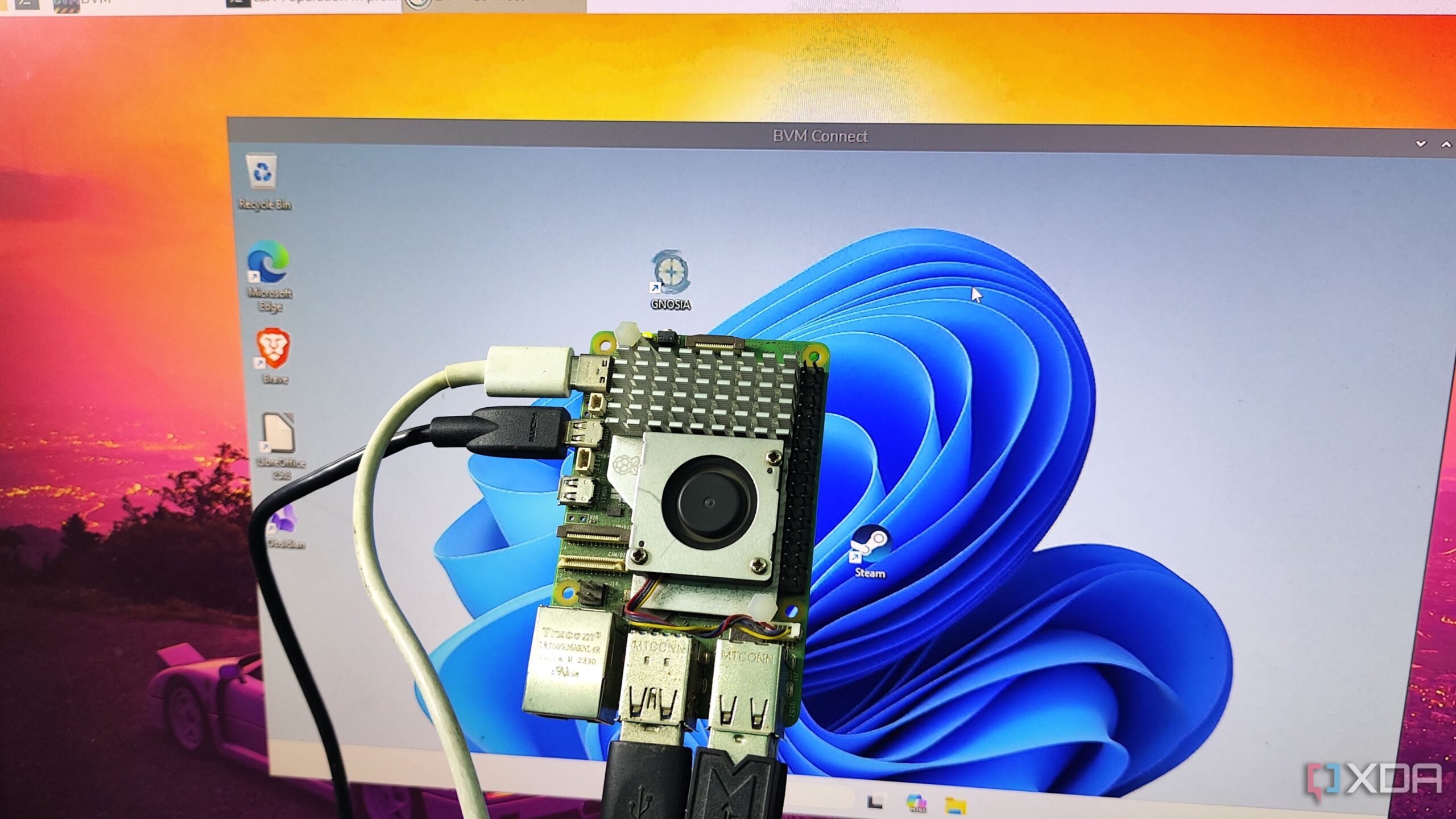
BREAKING: Exciting new capabilities have emerged for Raspberry Pi enthusiasts as developers successfully deploy virtual machines (VMs) on the popular single-board computer. This unexpected advancement could revolutionize how users harness the power of this compact device.
Latest reports confirm that users can now run multiple VMs on a Raspberry Pi, particularly the Raspberry Pi 5. While traditionally limited in processing power, innovative solutions like Canonical’s MicroCloud and Botspot VM have enhanced its performance, enabling users to run both Linux and even Windows 11 virtually.
The implications are significant. As of October 2023, Raspberry Pi users can create a lightweight virtualization environment, making it possible to run two to four VMs without substantial performance issues. This breakthrough opens doors for developers and hobbyists seeking to explore advanced computing tasks on a budget.
The experience is particularly compelling for those experimenting with Ubuntu Server. Users report that the installation of MicroCloud packages is smooth, allowing for seamless VM deployment. “I was amazed at how effectively it worked on my Raspberry Pi,” one user stated, emphasizing the efficiency of running virtual machines on such a compact platform.
Moreover, the ability to run Windows 11 on a Raspberry Pi, albeit through a VM, offers a unique twist. Using the Botspot VM, users can access Microsoft’s flagship operating system. Though performance dips at higher resolutions, switching to a 1080p display restores responsiveness, making it suitable for light tasks such as running PowerShell scripts or Visual Studio projects.
While the performance of VMs is impressive, experts still advocate for the use of containers over full virtualization. The lightweight nature of Docker and Kubernetes allows for running numerous containers, providing flexibility for various projects without overwhelming the Raspberry Pi hardware.
With this development, the Raspberry Pi community is buzzing with excitement, eager to explore the potential of running VMs and containers alike. As this technology evolves, it promises to empower more users and enhance creative projects across the globe.
Stay tuned for more updates as the Raspberry Pi continues to push the boundaries of DIY computing. The future looks bright for this tiny powerhouse!