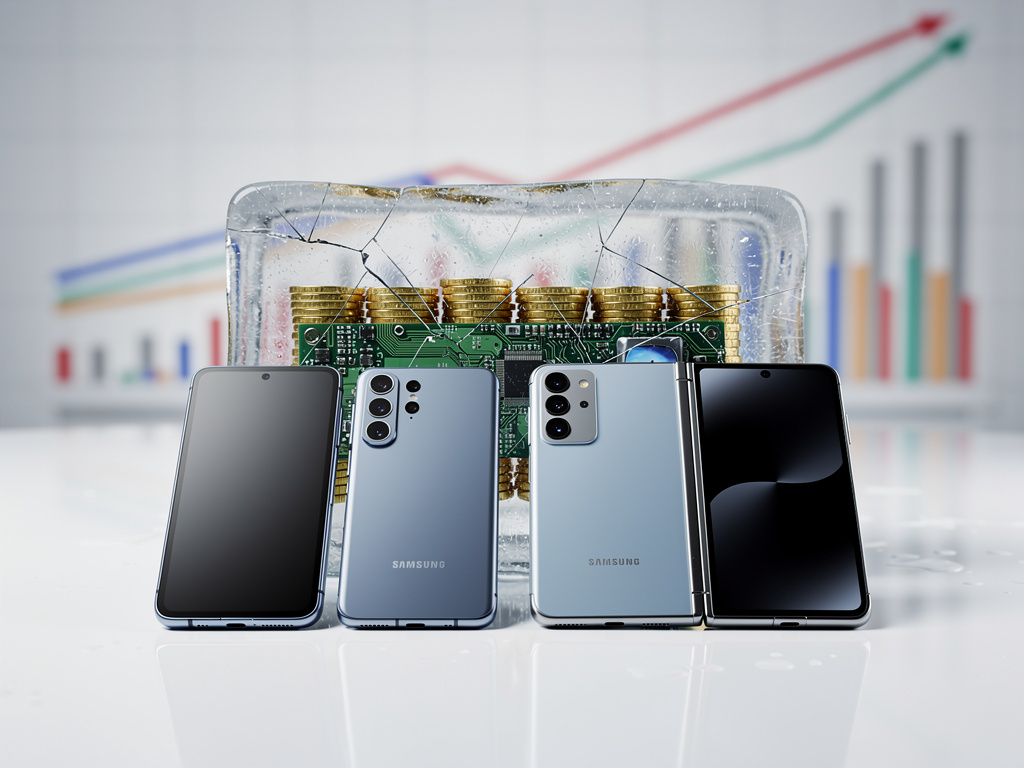
UPDATE: Samsung Electronics has just announced a groundbreaking decision to freeze prices on its highly anticipated Galaxy S26 lineup and next-generation foldable devices. This bold move comes at a time when component costs are soaring, affecting the entire tech industry.
The Galaxy S26 series will maintain the same price points as its predecessor, the Galaxy S25, with the base model starting at $799, the Plus at $999, and the Ultra at $1,299. Additionally, the Galaxy Z Fold 8 and Z Flip 8 will remain at $1,999 and $1,099 respectively. This price halt represents a significant departure from Samsung’s history of incremental price increases based on new features and innovations.
Industry experts highlight that this strategic decision comes amid broader economic challenges in the tech sector, where rising costs for chips and memory have forced many companies to reconsider their pricing strategies. Analysts speculate that Samsung is making a calculated effort to maintain its market share against competitors like Apple, which continue to charge high prices for their iPhones without facing significant consumer backlash.
Internally, Samsung’s leadership is reportedly divided over pricing strategies. Sources suggest that executives are pushing for price stability to avoid alienating budget-conscious consumers. This is critical as global smartphone shipments are projected to decline in 2026 due to escalating component costs.
Reactions from the tech community have been largely positive, with many praising the price freeze as a win for consumers. Influencers on social media are discussing how this could enhance Samsung’s competitiveness against innovative rivals without losing its core audience. However, some analysts express concerns that stagnant prices might signal a lack of ambition in innovation, potentially pushing consumers toward competitors that offer more substantial improvements.
Samsung’s decision could also set a precedent for the broader market. If successful, it may encourage other manufacturers to follow suit, stabilizing the premium segment amid rising costs. Yet, if component prices continue to increase, Samsung may face tough decisions regarding marketing budgets and pre-order incentives.
Delving deeper into the economic factors, Samsung’s pricing freeze is rooted in a challenging supply chain environment. Reports indicate shortages of legacy memory chips, exacerbated by a shift towards AI-focused production. Analysts predict a 2.1% decline in global smartphone shipments for 2026, largely due to these economic pressures.
Despite its in-house semiconductor capabilities, Samsung faces challenges in maintaining cost control. Executives are reportedly prioritizing efficiency, potentially keeping existing camera components to enable slimmer designs without escalating expenses. This strategy could also extend to their foldable devices, with the Z Fold 8 and Z Flip 8 potentially seeing enhancements like reduced weight and larger batteries, all while holding their price points.
As Samsung navigates this complex landscape, competitors are closely monitoring the situation. Apple’s consistent pricing for its iPhone lineup sets a benchmark, while aggressive Chinese manufacturers are undercutting on price, which could threaten Samsung’s market share. Analysts speculate that Samsung may rely more on its Exynos processors to maintain margins, but this raises concerns about performance consistency compared to Qualcomm’s Snapdragon chips.
Looking ahead, Samsung’s price freeze could redefine value in the flagship smartphone market. If the S26 series delivers rumored enhancements such as improved battery life and camera capabilities, it could bolster consumer loyalty and interest. The official launch is expected in late February or March, marking a critical moment for the tech giant.
Samsung’s decision reflects a commitment to balancing innovation with economic realities, striving for sustainable growth in a market that increasingly values affordability and reliability. As the landscape evolves, this price strategy may also facilitate greater integration across Samsung’s product ecosystem, enhancing user experiences and potentially boosting revenues from accessories and services.
In conclusion, Samsung’s assertive stance on pricing amidst rising costs is not only a tactical move but also a significant shift in its long-term strategy, potentially influencing the entire premium smartphone market. As consumers seek value in an uncertain economic environment, Samsung’s actions may resonate well beyond its flagship products.