UPDATE: President Donald Trump is set to meet with Israeli Prime Minister Benjamin Netanyahu on Monday, October 23, 2023, at his Mar-a-Lago estate in Florida. This meeting comes as urgent efforts to secure a U.S.-brokered ceasefire in Gaza face significant challenges, with reports indicating that the ceasefire’s progress may be stalling.
The meeting aims to leverage Trump’s close relationship with Netanyahu to accelerate the peace process. While the ceasefire between Israel and Hamas remains largely intact, tensions have escalated as both sides accuse each other of violations, complicating the situation further.
As the first phase of the truce commenced in October, following the two-year anniversary of a devastating Hamas-led attack that resulted in approximately 1,200 deaths, the focus now shifts to the next phase, which promises to be far more complex. Currently, all but one of the 251 hostages taken during that attack have been accounted for, raising the stakes for both parties.
Trump’s ambitious 20-point plan, recently endorsed by the U.N. Security Council, outlines a vision for dismantling Hamas’ control in Gaza and proposes the establishment of a “technocratic, apolitical” committee to oversee daily affairs, further emphasizing the need for international supervision.
However, experts warn that Netanyahu may not fully support key aspects of the ceasefire’s next phase. Mona Yacoubian, a director at the Center for Strategic and International Studies, expressed skepticism about whether Trump can persuade Netanyahu to align with the proposed strategies. “This is going to be a really tall order. How he does that is going to be important to watch,” Yacoubian stated.
If successful, the second phase would involve rebuilding a demilitarized Gaza under a new initiative led by the proposed Board of Peace, chaired by Trump. The plan aims to normalize relations between Israel and Arab nations while establishing a pathway to Palestinian independence.
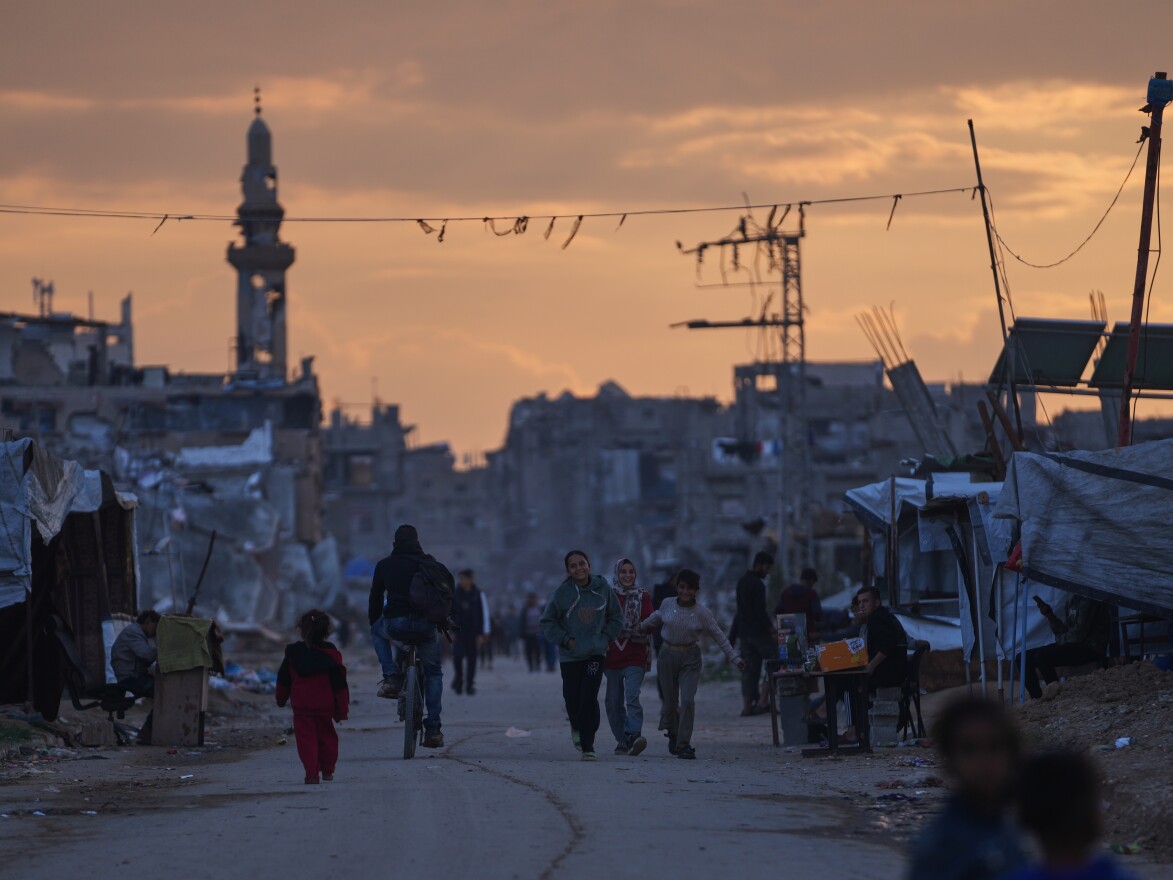
Key humanitarian challenges loom ahead, including the urgent need to reconstruct war-torn Gaza and disarm Hamas, amidst ongoing military operations. Trump’s plan also calls for the creation of the International Stabilization Force, which has yet to be formed, raising concerns among potential troop-contributing countries over its intended role.
In the lead-up to this pivotal meeting, U.S. Mideast envoy Steve Witkoff and Trump’s son-in-law, Jared Kushner, have held discussions with officials from Egypt, Qatar, and Turkey, who are attempting to mediate the ceasefire. However, complications have arisen due to delays in vetting members for the Palestinian committee and ongoing Israeli military actions.
As reconstruction efforts remain uncertain, Arab nations, including Saudi Arabia and Turkey, are advocating for a deal that addresses disarmament and further withdrawal of Israeli forces from Gaza. Meanwhile, the U.S. proposes quickly establishing temporary housing for Palestinians, a move that has not been universally accepted.
A proposed map indicates plans for a “UAE Temporary Emirates housing complex” within Israeli-controlled Gaza, highlighting ongoing discussions about reconstruction funding. The United Arab Emirates has reportedly agreed to finance these efforts, although the specifics are still under negotiation.
As Trump and Netanyahu prepare to meet, the international community will be closely monitoring the outcomes, particularly regarding critical issues like the formation of the International Stabilization Force and the future of Gaza. The urgency of the situation cannot be overstated, as both leaders face mounting pressure from various stakeholders in the region.
Stay tuned for updates following the meeting, as significant developments are expected that could change the trajectory of the Gaza ceasefire.