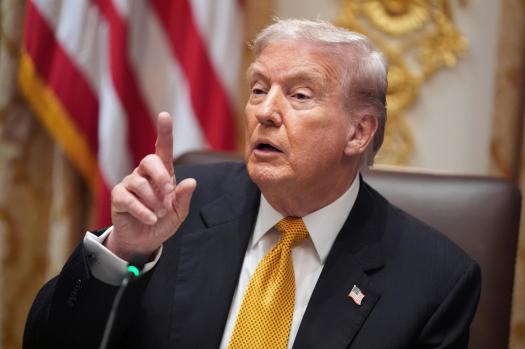
UPDATE: Former President Donald Trump is facing renewed scrutiny over his controversial stance on drug policy, as current drug-related deaths continue to surge in the United States. During a luncheon with the Miami Herald in April 1990, Trump boldly declared, “We’re losing badly the war on drugs,” advocating for the legalization of drugs to dismantle the profits of drug traffickers.
This urgent message resonates today as the nation grapples with a devastating opioid crisis, largely driven by synthetic opioids like fentanyl. The Cato Institute reports that the U.S. has spent over $1 trillion on the war on drugs since the 1970s, yet drug-related deaths have only increased.
In an alarming twist, Trump recently reverted to extreme measures, claiming that sinking boats in the Caribbean connected to drug trafficking could save thousands of American lives. “Every boat that we knock out we save 25,000 American lives,” he stated at an October 15 press conference. This assertion has raised eyebrows, with critics questioning the validity of his claims and the lack of evidence linking these boats to drug trafficking.
Prominent economist Milton Friedman shared similar views on drug legalization in the early 1990s, drawing parallels between the current drug crisis and the historical failures of alcohol prohibition. He argued that prohibition leads to increased deaths from overdoses and impurities in illicit substances, a claim echoed by many advocates for drug policy reform today.
As drug-related fatalities continue to rise, the need for a comprehensive overhaul of American drug policy becomes increasingly critical. Experts and advocates are urging politicians to prioritize treatment and harm reduction over punitive measures. The current approach, they argue, is simply not working.
In light of escalating drug-related deaths, it may be time for leaders, including Trump, to reconsider their strategies. The ongoing crisis demands immediate action, and many are calling for a radical shift towards legalization and regulation to address the root causes of addiction and violence.
As the debate intensifies, the public and policymakers alike are urged to reflect on the lessons of the past and consider viable solutions to a problem that has plagued the nation for decades. The time for change is now, and the impact on countless lives hangs in the balance.
What’s next? Advocates are pushing for discussions on drug policy reform to gain momentum in the upcoming legislative sessions. With drug-related issues at the forefront of public concern, the urgency for change has never been more pressing.
Stay tuned for further updates as this critical issue develops.