UPDATE: In an urgent operation on January 3, 2024, U.S. forces executed strikes in Venezuela, successfully removing President Nicolás Maduro from power. This decisive action, framed as a necessary intervention to combat drug trafficking and restore order, has sparked immediate discussions regarding the implications of foreign military involvement in domestic governance.
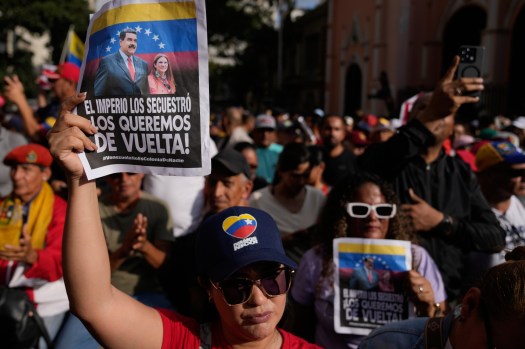
Venezuelans are reacting to the removal of Maduro, a leader widely regarded as a dictator. His regime has been marked by repression of political opposition and an economic collapse that has forced millions to flee the country. While many celebrate his ousting, questions loom about the long-term consequences of U.S. intervention. Will this military action bring lasting stability, or does history suggest a different outcome?
Officials emphasize that the operation aims to dismantle criminal networks and restore democratic governance. However, critics highlight that past U.S. interventions, from Guatemala in 1954 to Iraq in 2003, have often left nations in chaos rather than fostering stable democracies. The concern is that Venezuela could follow a similar path.
As the situation unfolds, experts warn that the U.S. must avoid repeating the mistakes of previous interventions, which have created further instability and weakened local institutions. The focus on military solutions can obscure deeper political issues, risking more conflict in the region.
The geopolitical importance of Venezuela, sitting atop some of the world’s largest oil reserves, adds complexity to the situation. President Trump’s post-invasion rhetoric has hinted at potential actions against other countries perceived as threats, including Cuba, Mexico, and Colombia. This could escalate tensions in the Western Hemisphere, as military interventions rarely address the root causes of instability.
As Venezuelans brace for the aftermath of Maduro’s removal, many are left wondering: what comes next? Will the U.S. support the development of legitimate local institutions, or will the focus remain on military control?
The urgency of this situation cannot be overstated. As the world watches, the future of Venezuela hangs in the balance, dependent not on foreign military might but on the ability of its people to rebuild their nation. History has shown that liberation through invasion is often an illusion, and the true test lies in whether Venezuelans can forge their own path to democracy.
The humanitarian crisis in Venezuela demands immediate attention, and while removing a dictator is a significant step, it does not guarantee a smooth transition to democracy. The lessons of the past warn against hasty military actions that lack local support and understanding.
As developments continue to unfold, the international community must pay close attention to the implications of this intervention and consider how to support the Venezuelan people in their quest for a stable and democratic future.