BREAKING: New reports confirm that the Chesapeake Bay, long shrouded in mystery, is home to a staggering 8,000 shipwrecks and untold treasures just waiting to be discovered. This urgent revelation has captured the attention of marine archaeologists, divers, and treasure hunters alike, eager to unveil the secrets hidden beneath the waves.
The Chesapeake Bay, spanning 4,080 square miles, is a treasure trove of maritime history. According to renowned diver and marine archaeologist Don Shomette, each shipwreck serves as a “time capsule” from the moment it sank, offering a unique glimpse into human history. “A shipwreck is a unique component of human society,” he emphasizes, highlighting the importance of these underwater relics in understanding our past.
Among the most notable wrecks is the Herbert D. Maxwell, a four-masted schooner that sank on March 16, 1912, after colliding with the steel-hulled steamship SS Gloucester near Kent Island. The vessel was transporting 1,150 tons of fertilizer when it went down, taking the lives of four crew members. The wreck, located about 70 feet underwater, remains a popular site for divers despite its odorous cargo.
The Maryland Maritime Archaeology Program (MMAP) has dedicated over three decades to uncovering these historical sites. Former director Susan Langley notes, “Every shipwreck tells its own amazing story,” underlining the emotional connection to these remnants of the past. The MMAP collaborates with various stakeholders to protect and study these sites, often in response to construction projects that threaten their integrity.
A significant discovery in the mid-1970s transformed the field of underwater archaeology. A fisherman’s sonar hit led Shomette to the wreck of the SS New Jersey, a steamship that sank in a fire in 1870. This find prompted legislative action to protect underwater sites, culminating in the Abandoned Shipwreck Act of 1987, which has since safeguarded numerous wrecks from unauthorized salvage.
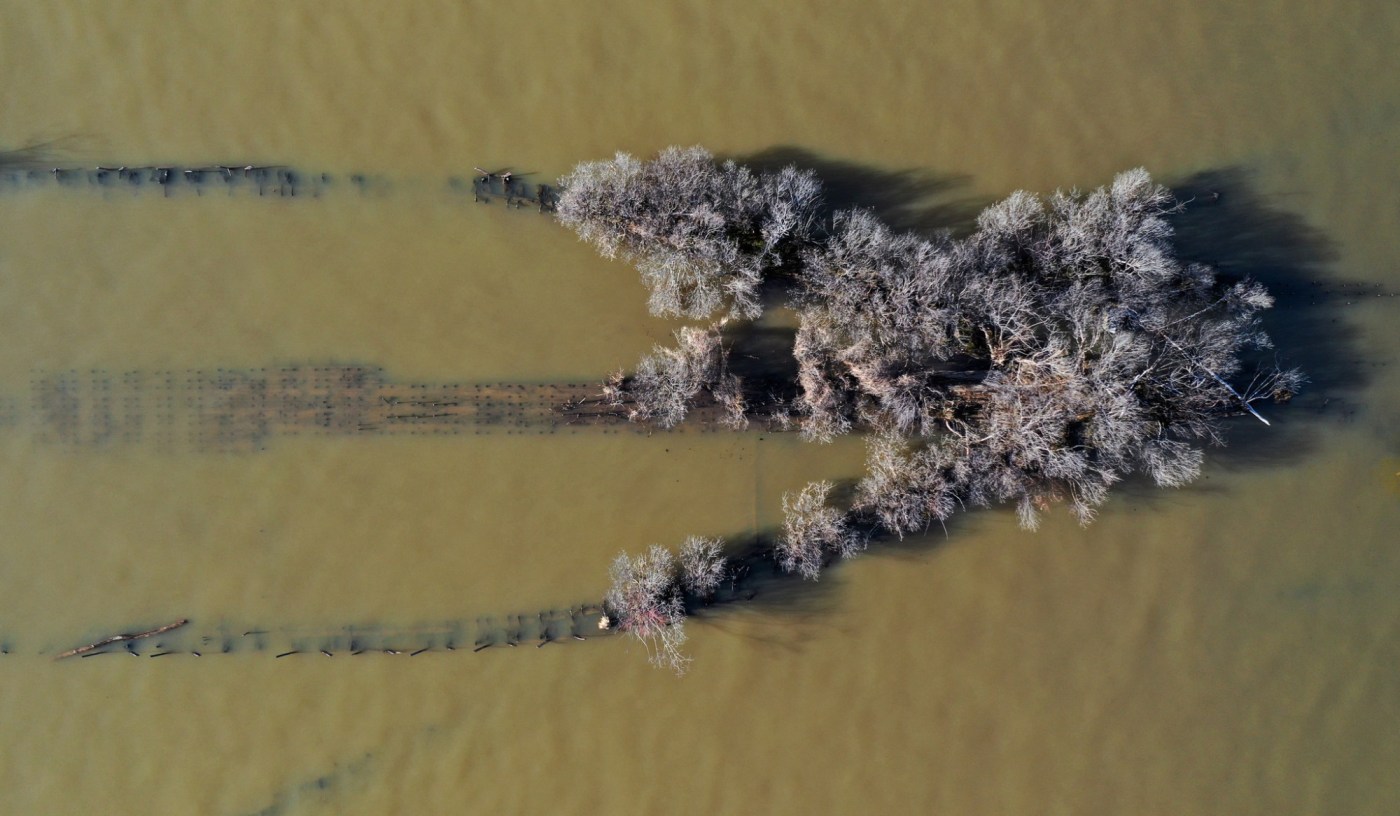
The Chesapeake Bay also houses the Ghost Fleet, a collection of World War I-era wooden steamships scuttled in the Potomac River. These vessels, once part of a wartime buildup, now serve as a National Marine Sanctuary, attracting kayakers and fishermen eager to explore their haunting beauty.
Another remarkable site is the U-1105, a Nazi U-boat resting in the Potomac River since its scuttling in 1949. This underwater preserve, the first of its kind in Maryland, offers divers a chance to explore the remnants of a “superweapon” from WWII, further enriching the region’s maritime narrative.
As divers and enthusiasts continue to explore the depths of the Chesapeake Bay, the potential for new discoveries remains high. The MMAP encourages public engagement through initiatives like the Shipwreck Tagging Archaeological Management Program (STAMP), allowing citizens to contribute to the preservation of these historical sites.
The ongoing efforts to document and safeguard the Chesapeake Bay’s shipwrecks not only preserve our maritime heritage but also provide profound insights into the lives of those who ventured across its waters. As Shomette aptly puts it, “These shipwrecks mark out the history of the bay,” reminding us of the rich tapestry of human stories woven through time.
Stay tuned for more updates on this developing story as researchers and treasure hunters continue their quest to uncover the mysteries of the Chesapeake Bay.