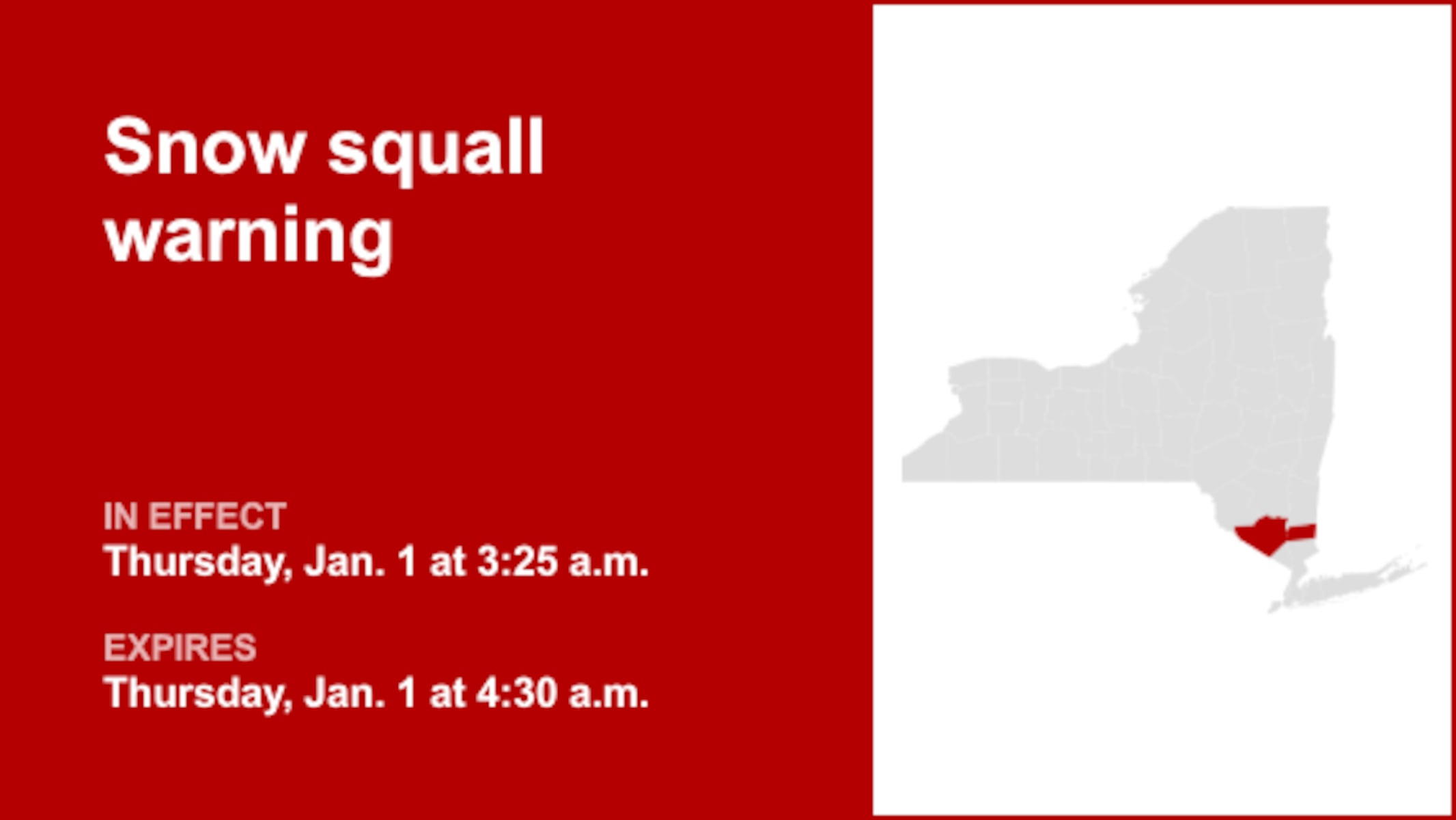
URGENT UPDATE: A snow squall warning is now in effect for Orange and Putnam counties, issued by the National Weather Service at 3:25 a.m. and set to last until 4:30 a.m. This critical warning comes as a snow squall was detected near Highland Lake, just 9 miles southwest of Monticello, moving east at a dangerous speed of 40 mph.
Travel conditions are expected to deteriorate rapidly, with officials warning that visibility will plummet and roads could become treacherous within minutes. “Travel will become difficult and potentially dangerous,” the weather service cautioned.
Prepare for intense bursts of heavy snow accompanied by gusty winds of up to 35 mph, leading to blowing snow and sudden whiteout conditions. Authorities urge residents to heed this warning and take immediate precautions to ensure safety.
What You Need to Know:
– **Travel Advisory:** If you are in the affected areas, please avoid or delay travel until after the snow squall has passed. No safe place exists on the highway during such severe weather.
– **Driving Safety:** For those already on the roads, reduce your speed, activate your headlights and hazard lights, and maintain a safe distance from other vehicles. Avoid sudden braking to prevent losing control on icy roads.
– **Emergency Preparedness:** Make sure your vehicle is equipped with an emergency kit containing blankets, non-perishable food, water, a flashlight, a first-aid kit, and essential tools like jumper cables and an ice scraper. These items can be crucial in case of a breakdown or emergency.
Snow squalls are brief but intensely hazardous weather events that can blanket roads with snow and ice quickly, often without any prior winter storm alert. They typically last less than an hour but can lead to serious accidents due to reduced visibility and icy conditions.
Officials emphasize that understanding snow squalls and responding appropriately can mitigate risks significantly. The difference between a snow squall and a traditional snowstorm lies mainly in their duration—while snow squalls are short-lived, they can be more intense, posing unique dangers.
For more detailed safety tips, visit the National Weather Service’s Winter Weather Safety page.
Stay alert and stay safe as this situation develops. Share this information with friends and family to help everyone stay informed during this urgent weather event.