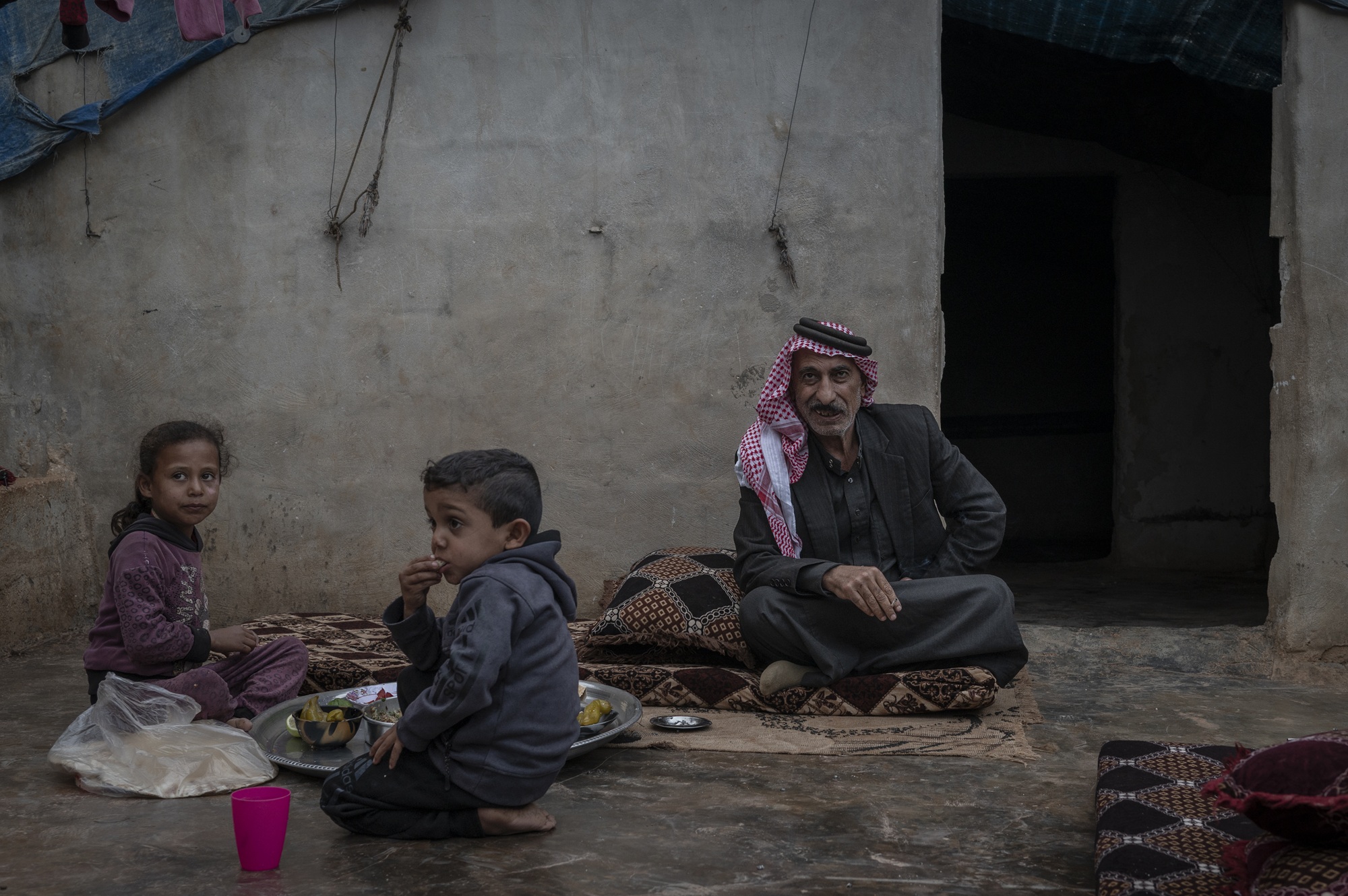
URGENT UPDATE: USAID funding cuts have plunged millions of Syrians into a dire water and humanitarian crisis, just as winter approaches. The sudden suspension of U.S. aid has left families like that of Mustafa Abdelqader in Atmeh facing imminent disaster, with critical resources dwindling.
Just yesterday, on February 27, 2025, hundreds of aid organizations in Syria received alarming notifications of the funding halt. This drastic measure has halted essential operations, pushing over 16 million people—nearly 70 percent of the population—closer to catastrophe. “We’re left with no aid, just a little food trickling in,” Abdelqader lamented, capturing the desperation felt by many.
The situation has escalated as the winter months draw near. Families in camps, like those in Karameh, are already struggling to secure basic necessities. “Before, we had water for an hour a day; now it’s just ten minutes,” said Abu Muhammad, a father of six living in one of the many camps. “We can’t drink it; it’s contaminated.”
The implications of these funding cuts are staggering. Critical health facilities, such as the Sarmin Health Center in Idlib, have been severely affected, with staff going months without supplies. “The funding cuts were brutal,” stated Mohamed Fadel, the center’s director. “Workers stopped receiving their salaries, but they continued as volunteers to avoid cutting off services to patients.”
In the wake of these decisions, humanitarian workers report that 80 percent of water and sanitation services have ceased. The streets of Atmeh are now cluttered with garbage, creating a breeding ground for disease. “Almost all organizations have left,” lamented Abu Muhammad, highlighting the dire need for immediate assistance.
As of now, the U.S. was the largest donor to U.N.-coordinated aid, accounting for 25 percent of contributions in 2024. However, this funding landscape has drastically shifted following President Donald Trump’s decisions to dismantle aid operations. Critics argue that these actions undermine the stabilization efforts crucial for Syria’s recovery.
With the fall of Bashar al-Assad last December, the transitional government led by Ahmad al-Shara is tasked with rebuilding a country ravaged by over 14 years of conflict. Yet, as aid diminishes, the challenge of recovery becomes increasingly complex. “The needs are enormous and increasing, but the money is dwindling,” noted Youssef Khoury, a coordinator from a local NGO in Atmeh.
The situation is further complicated by the ongoing political landscape. Western countries are recalibrating their approach to aid, with many fearing that the cuts will only exacerbate tensions and lead to increased instability. “This lack of reliability from the United States undermines efforts to stabilize Syria,” stated Sara Stachelhaus, Syria program coordinator at the Heinrich Böll Foundation.
As humanitarian needs spiral, experts warn that failing to address these cuts could lead to more violence and displacement. “We’re at a critical moment where international aid is key to the success of this transition,” said Mahmoud, a humanitarian consultant.
With the population already experiencing extreme poverty and lack of basic services, the repercussions of these funding cuts could be catastrophic. The humanitarian crisis is not just a local issue; it has repercussions that reverberate through the region and beyond.
What happens next: As winter sets in and conditions worsen, the international community must respond swiftly to prevent further disaster. The fate of millions hangs in the balance as aid organizations scramble to adapt to funding shortages.
The world watches as Syria teeters on the brink, with its people desperate for the support that has been so abruptly withdrawn. The time to act is now.