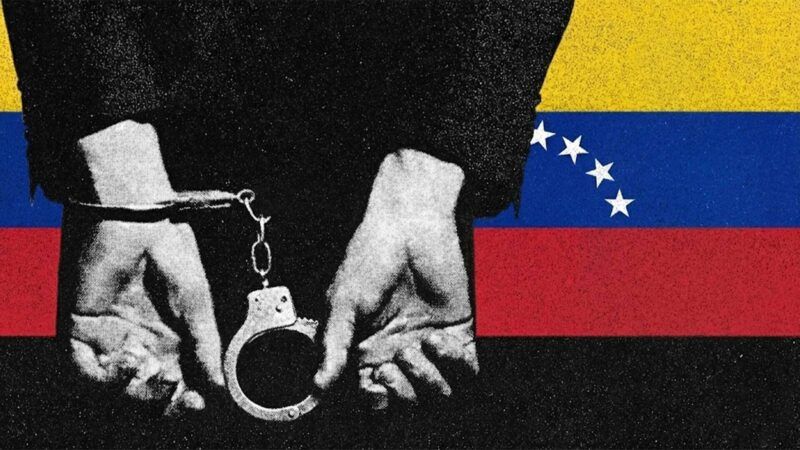
URGENT UPDATE: The Venezuelan socialist regime has just announced the release of a “number of important” political prisoners. Jorge Rodríguez, president of Venezuela’s National Assembly, revealed this significant move aimed at promoting “peace” during a press conference on Thursday.
While Rodríguez did not specify the names of those being released, human rights lawyer Rocío San Miguel has already been freed, according to family sources. San Miguel was detained last February at Caracas’ main airport alongside five relatives. Accused of plotting to assassinate dictator Nicolás Maduro, she faced serious charges of treason and conspiracy, enduring months of isolation in the notorious El Helicoide prison without access to her legal counsel.
Another notable case involves María Oropeza, a young libertarian activist arrested in 2024 for denouncing the regime and declaring Edmundo González as the legitimate president-elect on social media. Oropeza famously livestreamed her arrest on Instagram, and shocking footage later surfaced showing her detained in an armored vehicle with eerie music playing in the background. As of now, there is no confirmation regarding her release.
In a troubling development, brothers Pablo and Lubin Montilva were arrested just days ago for allegedly firing a revolver into the air amid celebrations of Maduro’s capture. They face severe charges including terrorism, treason, and illegal possession of weapons, with potential sentences reaching up to 30 years.
The situation is dire: over 53,000 Venezuelans have reportedly faced political imprisonment under Maduro’s regime, according to Provea, a local human rights organization. The regime’s controversial “revolving door” tactic has led to a cycle of releasing some political prisoners while simultaneously arresting new ones.
Conditions for prisoners in Venezuela are harrowing. The late Fernando Albán, an opposition councilman, was reportedly tortured to death in 2018 after being arrested for denouncing the regime at the United Nations. His tragic case highlights the brutality faced by political dissidents.
Since the recent incidents surrounding Maduro’s capture, political repression has intensified. Rodríguez swiftly declared a state of emergency, instructing police to arrest anyone suspected of supporting the armed attack against the regime. The crackdown has resulted in numerous arrests, including that of Marioxis Martínez, a woman taken into custody for a social media post celebrating Maduro’s downfall.
Adding to the climate of fear, on Monday, authorities detained 14 journalists during the swearing-in of the newly elected National Assembly, including international correspondents. While most were released after a few hours, CNN correspondent Steffano Pozzebon was deported, further illustrating the regime’s hostility toward independent media coverage.
The release of political prisoners raises pressing questions: Is this a strategy to ease U.S. sanctions or a genuine move toward democratic reform? The international community watches closely as the situation unfolds.
As this story develops, it remains crucial for those concerned about human rights in Venezuela to stay informed. The regime’s pattern of systematic repression continues to threaten the very fabric of Venezuelan society, leaving many to wonder what the future holds for those fighting for freedom.
Stay tuned for updates as we continue to monitor this rapidly evolving situation.