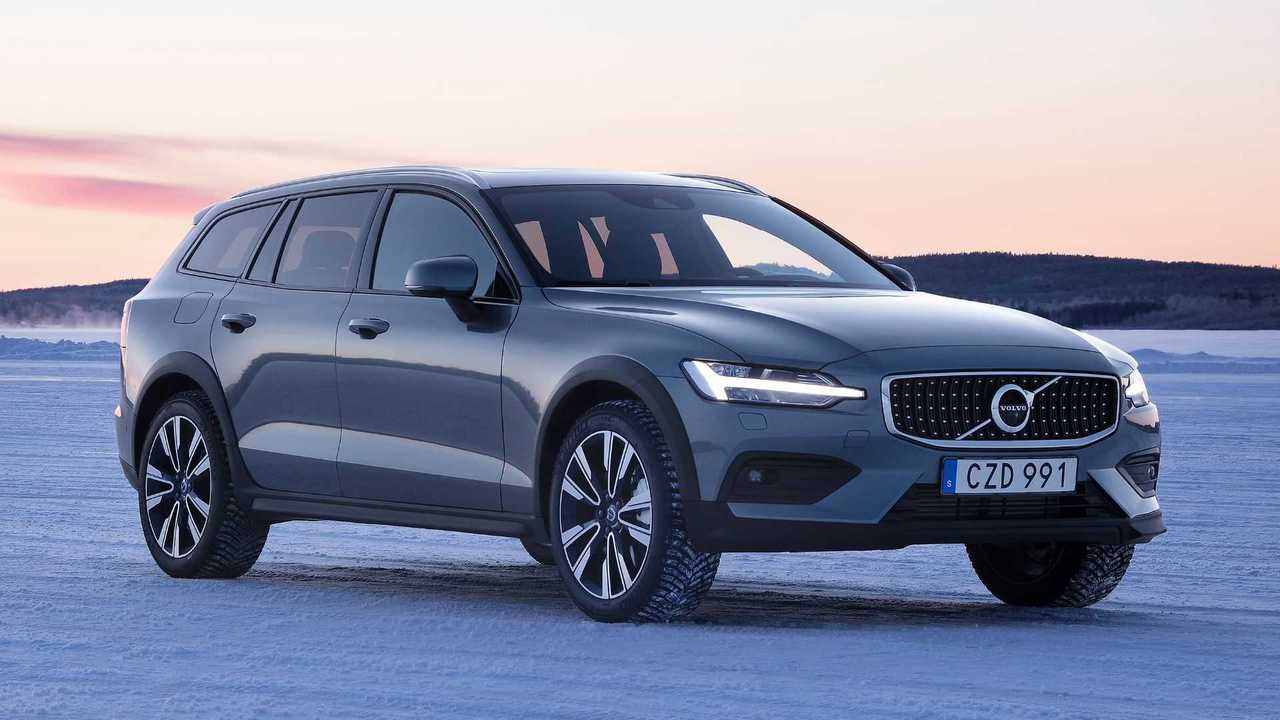
UPDATE: Volvo is set to become an all-SUV brand in the United States as it confirms the discontinuation of the last remaining wagon, the V60 Cross Country. Order books will close in late January 2024, with U.S. production officially ending in April 2024.
This marks a pivotal moment for Volvo, as the company shifts its focus entirely to SUVs in response to overwhelming consumer preferences. The V60 Cross Country’s cancellation follows the earlier retirement of the V60 Polestar Engineered, leaving avid wagon enthusiasts with limited options.
For those still hoping to snag a V60 Cross Country, dealers may have stock for a short time, but the clock is ticking. The starting price for the V60 Cross Country is $53,495 for the Plus trim, while the Ultra version begins at $58,795.
Volvo’s decision reflects a broader trend in the automotive industry. As of November 2025, only 3,630 units of the V60 Cross Country were sold in the U.S., alongside just 30 regular V60s. The larger V90 Cross Country managed only 731 sales before its discontinuation, with traditional sedans like the S60 and S90 also struggling to maintain relevance in a rapidly changing market.
According to Volvo, buyers are “overwhelmingly” opting for SUVs, prompting the brand to focus its resources on models like the XC series. While this shift is viewed as “bittersweet,” Volvo acknowledges the reality of consumer demand, stating that maintaining slow-selling models is no longer feasible.
Despite the loss of its wagon lineup in the U.S., Volvo plans to continue offering the V60 in other markets, and there’s a faint glimmer of hope for wagon enthusiasts. The brand hinted at the possibility of a next-generation model in the future, referring to the V60 CC as “this generation of Volvo wagons.”
The end of the V60 Cross Country represents a significant cultural shift for Volvo, a company historically associated with wagon designs, particularly in its home country of Sweden. The brand’s commitment to innovation means it won’t completely abandon traditional cars; the S90 sedan will still be available in select markets, along with the electric ES90 liftback.
As the automotive landscape continues to evolve, Volvo’s move underscores a critical juncture in consumer preferences. With SUV sales continuing to dominate, the fate of traditional vehicles remains uncertain.
Next Steps: For those interested in the V60 Cross Country, act quickly, as availability is limited. The transition to an all-SUV lineup is now imminent, shaping the future of Volvo in the U.S. and beyond. Stay tuned for updates on potential new models that may revive the wagon legacy in the future.