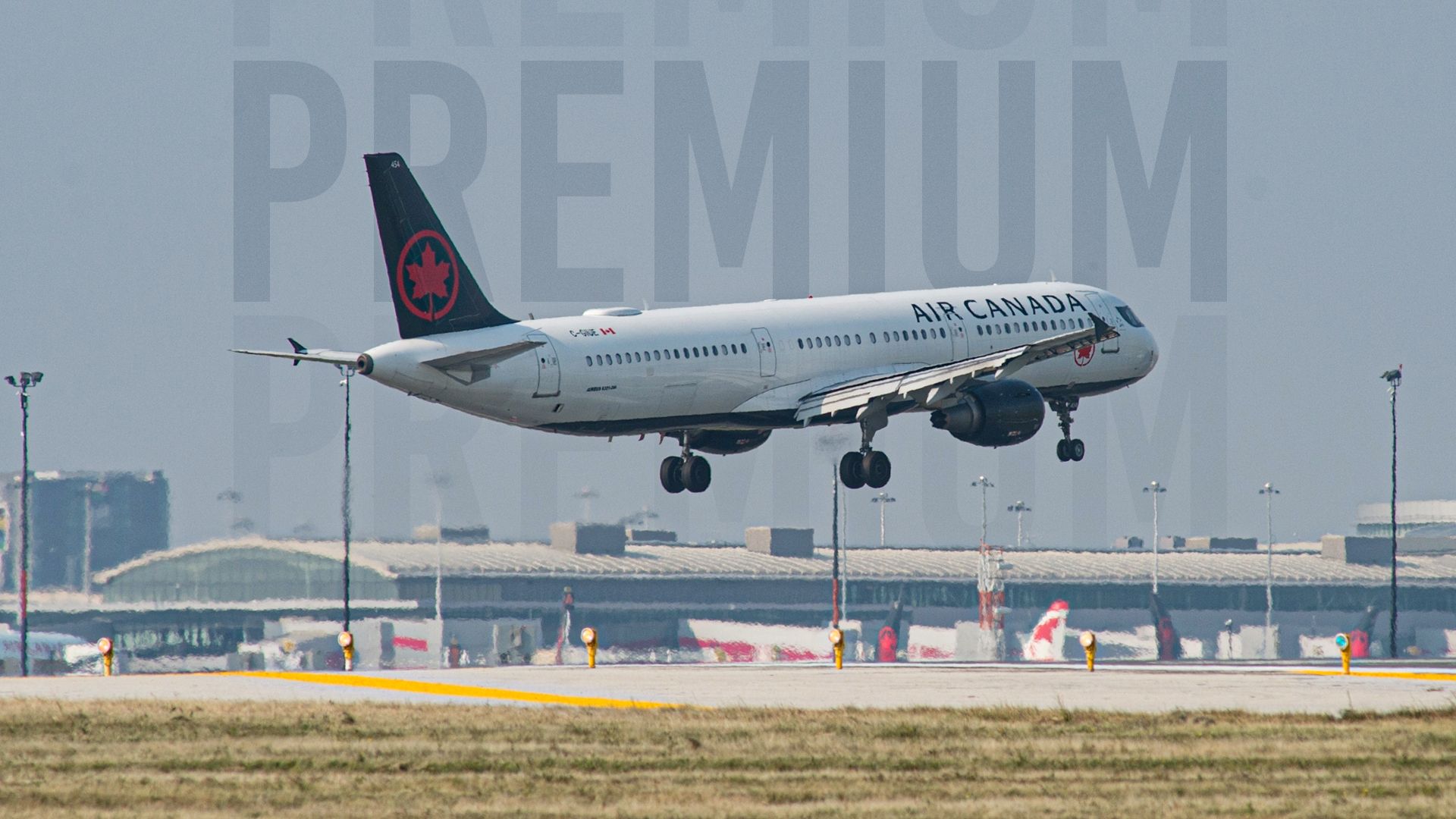
Air Canada is set to enhance its operations with a significant expansion of its Airbus A320 family fleet, which currently comprises 37 jets. This fleet includes the A320-200 and A321-200 models, with a strategic shift to transfer all A320-200s and A321-200s to mainline service. Concurrently, the airline plans to move its Boeing 737 MAX 8 aircraft to its Rouge subsidiary. This transformation positions Air Canada to operate its narrowbody flights exclusively with the Airbus A220-300, A320-200, and A321-200 in the near future.
In North America, there is a growing demand for premium seating, which not only enhances passenger experience but also significantly increases revenue margins for airlines. Air Canada’s commitment to this lucrative market is evident as it continues to bolster its A320 family fleet. The airline has placed orders for 30 Airbus A321XLRs, with deliveries scheduled to commence in 2026 and extend through 2029.
Current Fleet Composition
According to data from Planespotters.net, Air Canada currently operates 37 Airbus A320 family jets, part of a larger fleet of 218 aircraft. This fleet includes 16 Airbus A320-200s and 21 Airbus A321-200s, marking it as the smallest narrowbody segment in Air Canada’s operations. By contrast, the airline’s Airbus A220-300 fleet consists of 42 aircraft, while its Boeing 737 MAX 8 fleet comprises 48 jets. Looking ahead, all Boeing 737 MAX 8s are expected to be transitioned to Air Canada Rouge by the end of 2026. Air Canada’s restructuring will result in a final count of 21 A320-200s and 34 A321-200s, totaling 55 aircraft in the A320 family.
All A320 family aircraft in Air Canada’s fleet are powered by CFM56-5 engines. The average age of the A320-200s is approximately 22.5 years, while the A321-200s average 19.9 years. Some of the A320-200s previously served under the airline’s Jetz subsidiary, with others having been operated by Thomas Cook and China Southern Airlines.
Configurations and Premium Seating
Air Canada operates three configurations for its A320-200 fleet. The first two aircraft, identified as C-FCUG and C-FDGQ, feature a compact layout with only eight business class seats and 144 economy seats, accommodating a total of 152 passengers. These jets, formerly operated by China Southern, retain their original configuration, which does not include any economy Preferred seats.
In contrast, the standard configuration of Air Canada’s A320-200 includes 14 business class seats, providing a more premium experience. This model also features 36 Preferred seats in the economy cabin, although only half of these offer additional legroom. This makes the A320-200 the most premium option among the current fleet, with the potential for upgrades being more favorable compared to the A321-200.
The A321-200 fleet represents a larger segment of the A320 family, although not all aircraft have a higher premium seat count. Five A321-200s, previously operated by EVA Air, maintain a configuration with only eight business class seats, along with 176 economy seats. The remaining A321-200s feature 16 business class seats and 180 economy seats, totalling 196 seats, and are equipped with Air Canada’s latest ‘Dream Cabin’ amenities, including updated seats and modern in-flight entertainment.
As the airline transitions its Rouge operations, it will also incorporate five A320-200s that currently feature 12 business class seats and 156 economy seats for a combined capacity of 168. This new configuration will enhance Air Canada’s mainline offerings.
Air Canada’s commitment to modernizing its fleet is further illustrated by its focus on the upcoming Airbus A321XLRs, which are designed for long-haul operations and are expected to deliver exceptional passenger experience and efficiency.
In summary, Air Canada’s strategic fleet expansion and emphasis on premium seating options underscore its dedication to meeting the evolving demands of air travel while positioning itself competitively in the market. With ongoing developments, passengers can expect a more refined and comfortable flying experience in the near future.