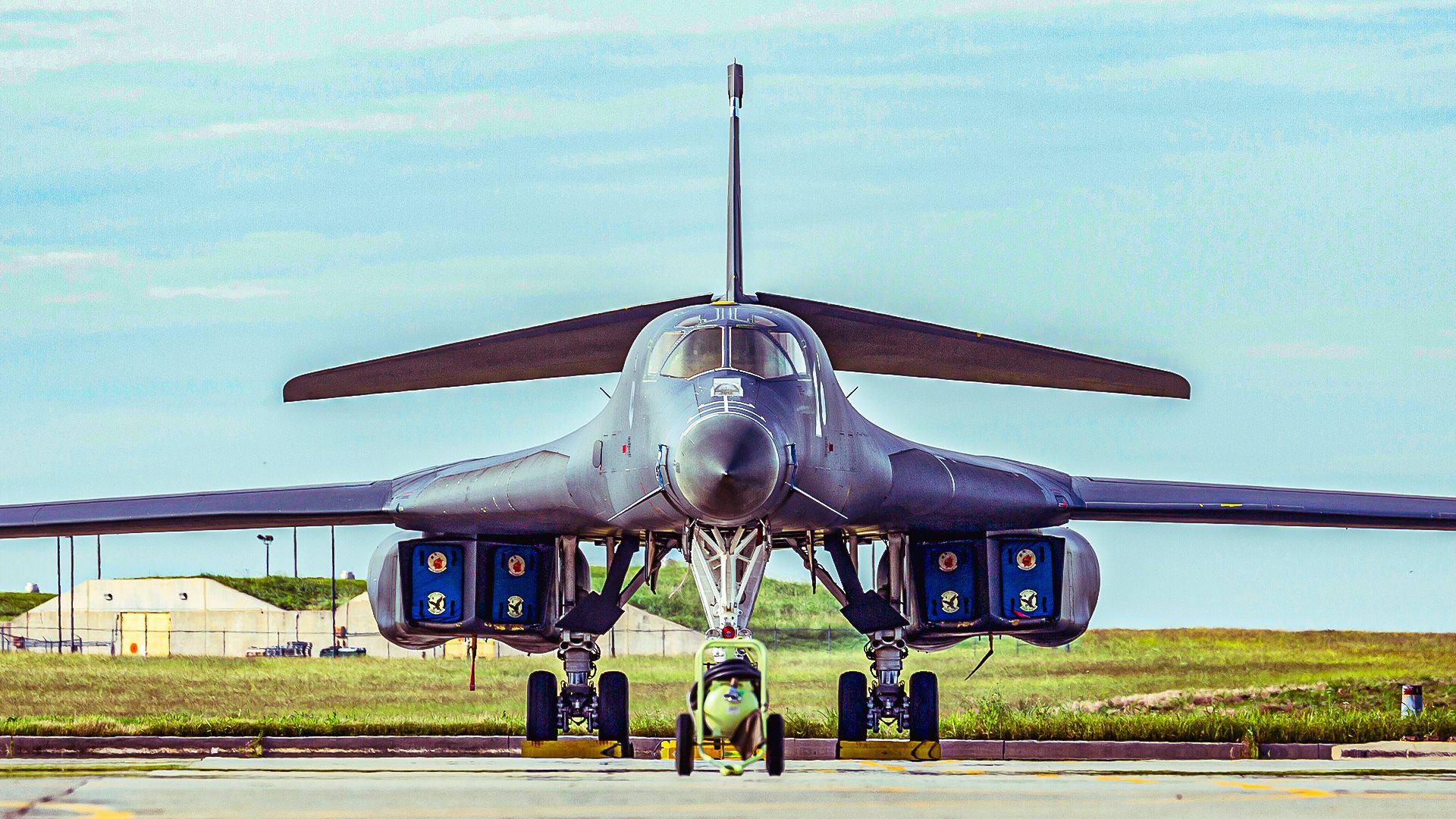
The Rockwell B-1 Lancer has transitioned from a canceled project to a vital component of the United States Air Force’s long-range bomber fleet. Initially faced with cancellation, the B-1 program was revived, resulting in significant redesigns that have shaped its current capabilities. Understanding the B-1 Lancer’s journey requires a look into the historical context of its predecessors, the challenges it was designed to meet, and the adaptations it underwent to maintain relevance in modern warfare.
Historical Context and Early Challenges
The B-1 Lancer’s lineage can be traced back to the B-52 Stratofortress, which represents the last significant iteration of World War II-style bombers. The B-52 was designed for strategic bombing missions, capable of carrying substantial payloads and operating at high altitudes. However, the introduction of advanced air defense systems, such as the Soviet SA-2 Guideline surface-to-air missile, rendered the B-52 increasingly vulnerable. The U.S. Air Force realized that reliance on massed formations was no longer viable.
In response, the Air Force developed the B-58 Hustler, which could reach speeds of Mach 2 at high altitudes. Despite its initial promise, the B-58 struggled against evolving air defenses. This prompted the design of the XB-70 Valkyrie, intended to fly at Mach 3 and 70,000 feet, but it too became obsolete due to advancements in Soviet missile technology. Ultimately, the Air Force sought a new approach, leading to the development of the B-1A Lancer.
The B-1A aimed to penetrate air defenses at low altitudes and subsonic speeds. However, it faced significant challenges, including increasing Soviet missile densities and escalating costs. Only four B-1A prototypes were produced, none of which entered operational service, leading to the program’s cancellation in the late 1970s.
The B-1B Resurgence and Its Role
Following the cancellation of the B-1A, advancements in radar technology and the proliferation of low-altitude surface-to-air missiles prompted a reevaluation of bomber design. In the 1980s, under the Reagan administration, the Air Force revived the B-1 program, leading to the development of the B-1B Lancer. This new version was designed to fly at lower speeds of Mach 1.25, enhancing its survivability against air defenses.
The B-1B’s redesign included a reduced radar cross-section (RCS), making it more difficult for enemy radar to detect. The aircraft’s capability to carry a maximum payload of 75,000 pounds (34,019 kilograms) has positioned it as a critical asset in the Air Force’s inventory. With 100 B-1Bs produced, approximately 45 remain in service today, expected to operate until around 2032, when they will be replaced by the B-21 Raider.
The B-1B has proven its worth in various conflicts, including operations in Iraq, where its ability to deliver substantial munitions has been invaluable. As the only supersonic bomber in the U.S. fleet, it has adapted to changing warfare strategies, functioning primarily as a stand-off missile platform rather than as a penetration bomber.
Despite its successful operational history, the B-1B faces challenges as it approaches retirement. Continued advancements in air defense technology have diminished its effectiveness in contested environments. The Air Force is now focusing on maintaining a dwindling fleet while transitioning to the more advanced capabilities of the B-21 Raider.
The evolution of the B-1 Lancer highlights the dynamic nature of military aviation and the necessity for ongoing adaptation in response to emerging threats. As the Air Force prepares for the next generation of bombers, the legacy of the B-1 will continue to inform future designs and strategies.