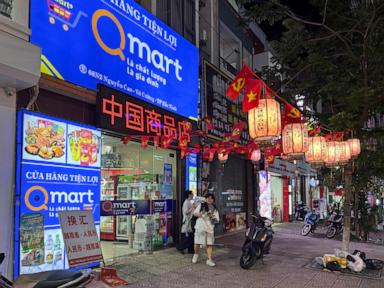
The city of Bac Ninh in northern Vietnam is undergoing a significant transformation, evolving from a region known for its rice fields and traditional folk songs to one of the country’s busiest manufacturing hubs. This shift has been fueled by a wave of foreign investment, particularly from companies moving operations out of China due to increasing tariffs imposed during the administration of former U.S. President Donald Trump. Now, Bac Ninh is grappling with questions about its future as challenges arise.
Historically, Bac Ninh began to flourish around 2008 when Samsung established its first phone factory in the area, making Vietnam its largest offshore manufacturing base. The city’s strategic location and supportive local government have attracted numerous foreign companies, especially from China, eager to tap into Vietnam’s growing electronics supply chain. The normalization of ties between Hanoi and Beijing in the 1990s facilitated an influx of Chinese investment, further integrating Bac Ninh into the global manufacturing landscape.
As the demand for manufacturing shifts, Bac Ninh is not without its challenges. Rising labor costs and worker shortages are beginning to expose the limits of its rapid economic growth. Labor costs have reportedly increased by 10%–15% since 2024, according to industry sources. The competition for skilled workers has intensified, compelling companies to offer higher wages and incentives to attract employees. Peng, an employee at a telecom equipment company that relocated from Shenzhen, noted, “It is becoming difficult to recruit workers.”
In response to these pressures, the Vietnamese government is investing in infrastructure improvements. A new highway connecting to the Chinese border has reduced travel time significantly, while plans for a railway linking Hanoi to Haiphong, the country’s largest seaport, are underway. On December 19, 2025, Bac Ninh broke ground on an industrial zone expansion aimed at high-tech manufacturing sectors, including electronics, pharmaceuticals, and clean energy.
Vietnam’s ambition extends beyond Bac Ninh as the country aims to position itself as a competitive manufacturing hub in Asia. In the lead-up to a pivotal National Party Congress scheduled for January 2026, the government has launched 234 major projects valued at over $129 billion. This nationwide push reflects Vietnam’s desire to climb into higher-value manufacturing and diversify its export markets.
Despite the rapid growth, Vietnam faces fierce competition from countries like Indonesia and the Philippines, which are vying for similar manufacturing investments. The Philippines recently introduced a law allowing foreign investors to lease land for up to 99 years, aiming to attract long-term industrial ventures. Companies are increasingly considering alternatives, with some choosing to relocate production to India to avoid over-reliance on Vietnam.
The overall economic landscape remains favorable for Vietnam, especially as it continues to benefit from trade dynamics resulting from U.S.-China tensions. In 2024, Vietnam recorded a trade surplus of $123.5 billion with the U.S., its largest export market. Despite the existing tariffs, Vietnam managed to maintain a trade surplus of $121.6 billion from January to November 2025.
Vietnam’s leaders are aware that rising costs and increased competition will test the sustainability of its economic growth. As Prime Minister Pham Minh Chinh stated during a recent announcement of hundreds of projects, the country must “reach far into the ocean, delve deep underground and soar high into space” to secure its economic future.
Bac Ninh’s journey from traditional roots to a bustling manufacturing center exemplifies the broader changes occurring across Vietnam. The city now stands at a crossroads, balancing its rapid development with the need for strategic planning to ensure continued growth in an increasingly competitive global marketplace.